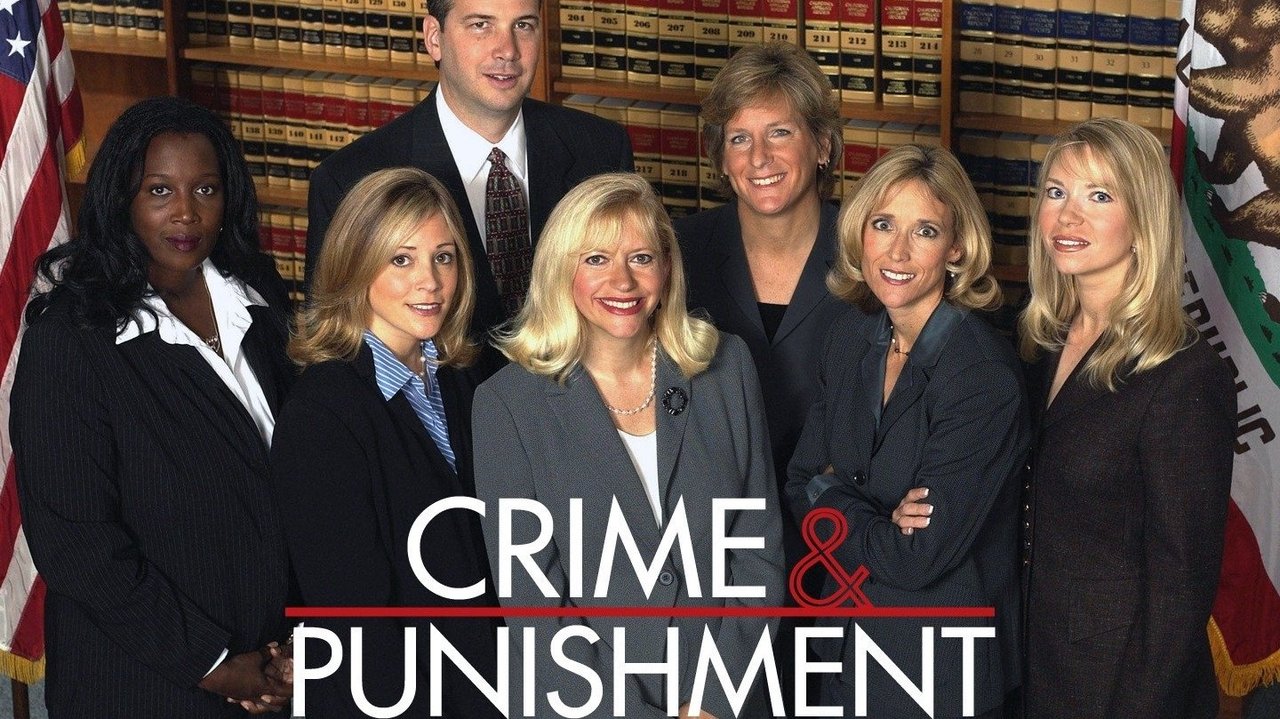
Crime & Punishment
★ 8.5 · 2002 · 60m · Reality · Drama
Crime & Punishment is a 2002 reality television, nontraditional court show spin-off of the Law & Order franchise. It premiered on NBC on Sunday, June 16, 2002, and ran through the summers of 2002, 2003, and 2004.
Episodes
 6. People v. Scheirbaum (and) People v. Villa60m · In the first case of Villa, the defendant is brought up on charges of beating his wife and committing a third strike of domestic abuse. In another case, the Deputy District Attorney tries to get Schierbaum convicted of crimes including kidnapping and sexual assault, and attempted murder. The parallels between the cases can be seen in the domestic abuse of Villa and the violence made by Schierbaum towards his children and wife.▶7. People v. Taitano60m · A girl who had been kidnapped and abused within her own apartment complex comes to the stand to give her attacker a prison sentence. Difficulties arise when the both parties admit to a candy exchange on more than one instance. Given the fact that Taitano's roommate had a record of child abuse, the defense tries to persuade a jury that the roommate had been the perpetrator in the incident. Despite a believable plea, the defense does not sway the jury...fully.▶8. People v. Garcia60m · For a strange twist in the series, this case has a living victim that supports the defendant. When Garcia is found by his wife wearing her lingerie and partaking in controversial activities, he becomes enraged and stabs her. She survives and makes a case against her husband difficult because her guilt compels her to want to save him from a sentence.▶9. People v. Kayser (and) People v. Palomino60m · A District Attorney with a heavy caseload tries two cases in this episode. The first case has a high media spotlight because Kayser is being tried on DWI charges. He had killed a 13 year old boy while driving. emotions are unleashed by the boy's family and the case is followed closely in the news. Bowman's second case deals with Palomino, who is convicted of possessing crystal meth. The case becomes more complicated because it was not his first parole violation.▶10. People v. Wells60m · When a man is killed, matters become complicated when it becomes apparents that California gangs are entrenched in the incident. An eye-witness is killed before the hearing and other witnesses lose any recollection of the murder. Even though there are many charges, Redondo is only found guilty of only one. A mistrial is called due to a deadlock on other charges.▶11. People v. Scott (and) People v. Smith60m · Keeshawn Scott seems anything but innocent when he is accused of an unsolicited premeditated murder. He shoots a man in his girlfriend's home but the crime is deemed a murder in the first-degree. The second case explores a serious offense when a teenager is brought up on charges after purportedly threatening high school students that survived high school shootings through e-mail.▶12. People v. Mayta60m · A drunken murder occurs when an inebriated Mayta becomes upset at a popular gay night club. Mayta is unhappy when a man he is seeking is uninterested which prompts the defendant to kill a bystander. However, the District Attorney is convinced that the murder was not a drunken crime of passion but rather a premeditated crime.▶13. People v. Redondo60m · ▶14. #660m ·
 More Like This

Judge Jerry
2019 · ★ 5.2
Jerry Springer is now moving from the stage to behind the bench in this new court show where he will be presiding cases.
More info →
Eli Stone
2008 · ★ 6.8
Many lawyers consider themselves prophets, but Eli Stone may be the real deal. Eli has built a successful career at a top law firm in San Francisco representing only the biggest and richest corporations that make a habit of screwing over the little guy. But after experiencing a series of odd hallucinations, Eli seeks to find a deeper meaning to life while trying not to lose his job and destroy his relationship with the bosses' daughter. When Eli discovers an aneurysm in his brain, he wonders if his condition is truly medical or if perhaps he now has a higher calling.
More info →
Checkmate Lawyer
2025 · ★ 5.8
Kotaro Fuda, a young lawyer running his late father's law firm, meets Tatsumi Tendo, a shogi player with the uncanny ability to predict trial outcomes. Despite Tatsumi's lack of legal experience, Kotaro hires her as a trial lawyer, setting the stage for an unconventional partnership.
More info →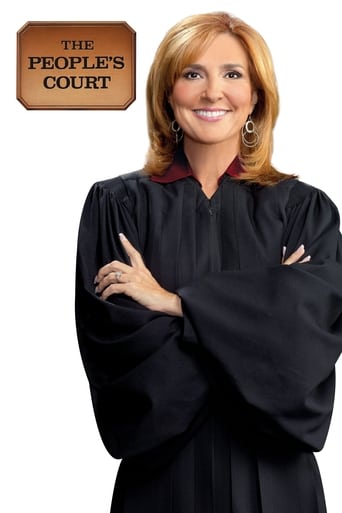
The People's Court
★ 6.9
The People's Court is an American arbitration-based reality court show currently presided over by retired Florida State Circuit Court Judge Marilyn Milian. Milian, the show's longest-reigning arbiter, handles small claims disputes in a simulated courtroom set. The People's Court is the first court show to use binding arbitration, introducing the format into the genre in 1981. The system has been duplicated by most of the show's successors in the judicial genre. Moreover, The People's Court is the first popular, long-running reality in the judicial genre. It was preceded only by a few short-lived realities in the genre; these short-lived predecessors were only loosely related to judicial proceedings, except for one: Parole took footage from real-life courtrooms holding legal proceedings. Prior to The People's Court, the vast majority of TV courtroom shows used actors, and recreated or fictional cases. Among examples of these types of court shows include Famous Jury Trials and Your Witness. The People's Court has had two contrasting lives. The show's first life was presided over solely by former Los Angeles County Superior Court Judge Joseph Wapner. His tenure lasted from the show's debut on September 14, 1981, until May 21, 1993, when the show was cancelled due to low ratings. This left the show with a total of 2,484 ½-hour episodes and 12 seasons. The show was taped in Los Angeles during its first life. After being cancelled, reruns aired until September 9, 1994.
More info →