
Picturing the Presidents
★ 7 · 2009 · 70m · Documentary · History
We go behind the scenes and into the minds of artists as they capture, commemorate, and, at times, condemn our presidents.
More Like This
Arika A.
2013 · ★ 5
“Even in hell, I would still paint.” Dimitris Andrianopoulos paints relentlessly. However, he refuses to sell his artwork, he doesn’t exhibit and he signs his wife’s name. On his 79th birthday he agrees to open up the door to his painting and share his art and thoughts in a documentary film. Over a period of 12 months, the camera records the microcosm of his colors and his life. The film follows his wanderings in search of answers regarding the relationship between the artist and his work, the difficulty of parting with his works, the mystery of inspiration and the unfathomable influence of the unknown
More info →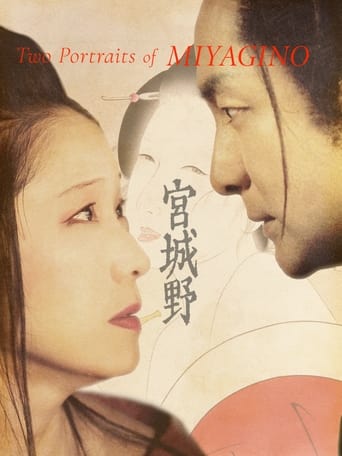
Two Portraits of MIYAGINO
2010 · ★ 7.8
In Edo-era Japan, a ukiyo-e artist languishes in his master’s shadow. Creatively stifled, he finds consolation in the company of a prostitute, and becomes entangled in a love triangle. A mystery emerges involving two portraits and the sudden disappearance of the artist Sharaku. Helmed by Cannes-selected director Tatsuji Yamazaki, the film employs kabuki-inspired sequences and stylised sets.
More info →
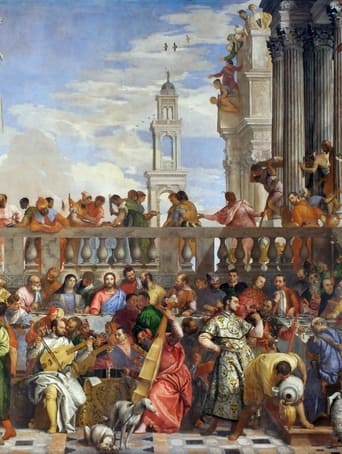
The Wedding at Cana
2009 · ★ 10
A short film by Peter Greenaway. It depicts the painting The Wedding Feast at Cana by Paolo Veronese, through mixed media and shows different perspectives.
More info →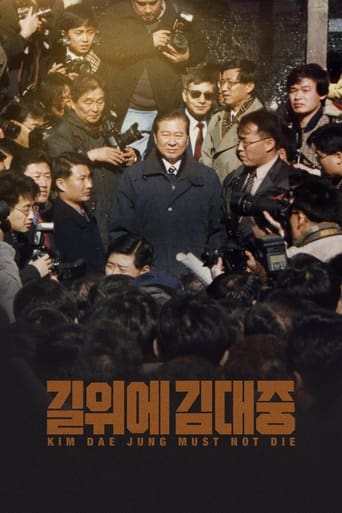
Kim Dae Jung Must Not Die
2024 · ★ 8.2
Kim Dae Jung, who stands next to people in the middle of caotic history! A young businessman Kim Dae Jung recognized the victims of ideology. He decided to be a politician to make his country where people's politic and democracy are rooted. The price of being leave from a guaranteed future and take the first step on a bumby road was kidnapping, death threats, imprisonment, and a death sentence that shook him to the core, but even in his final moments, when he was sentenced to death, Kim never wavered. "Democracy will be recovered. I believe in it." The life of President Kim Dae-jung, a death row inmate who survived from the throes of death, four parliamentary elections, and three unsuccessful presidential campaigns, is etched into the modern history of South Korea.
More info →Brush with Life: The Art of Being Edward Biberman
2007
This documentary brings alive a remarkable artist’s passionate journey through a turbulent century. Both epic and surprisingly intimate, the film presents a classic American immigrant saga, an inspiring search for artistic independence, and a great romance. Along the way, Biberman's growing commitment to social justice and struggle against McCarthy-era repression (his brother, director Herbert Biberman, went to prison as one of The Hollywood Ten) combine with his efforts to create both a loving family life and a groundbreaking body of work. With its grand scope, rich personalities, and vast array of breathtaking artwork, Brush With Life connects us in a deeply personal way to a brilliant artist who lived by the same high standards he set for his paintings.
More info →
Evita
1996 · ★ 6.1
The hit musical based on the life of Evita Duarte, an Argentinian actress who eventually became the wife of Argentinian president Juan Perón, and the most beloved and hated woman in Argentina.
More info →
Bone Wind Fire
2011
A journey into the hearts, minds and eyes of Georgia O’Keeffe, Emily Carr and Frida Kahlo - three of the 20th century’s most remarkable artists.
More info →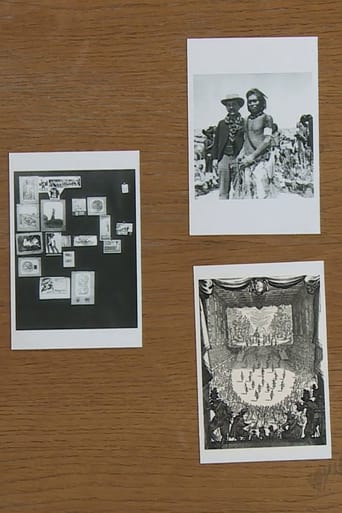
Philippe-Alain Michaud, le réel traversé par la fiction
2016
To be in Venice and see the architecture of New York, to perceive in a painting by Tintoretto the birth of animated images, to look at the burlesque Cretinetti as the ancestor of montage - so many shifts, displacements, and striking telescopings that Philippe-Alain Michaud proposes in this film dedicated to him. To follow this art historian, curator of the cinema collections at the Centre Pompidou, is to go from the oriental carpet to the film, or from the first fireworks to the cinema. And everywhere the animation of the images - projections of Antony McCall, or of Paul Sharits, Column without end of Brancusi, Pasolini's Accatone - everything moves! Under the tutelage of Aby Warburg, the great art historian of the early twentieth century, precursor of iconology and image comparison, to whom Philippe-Alain Michaud was the first in France to devote an important essay, eleven images are placed on the table to describe the singular journey of this art historian.
More info →