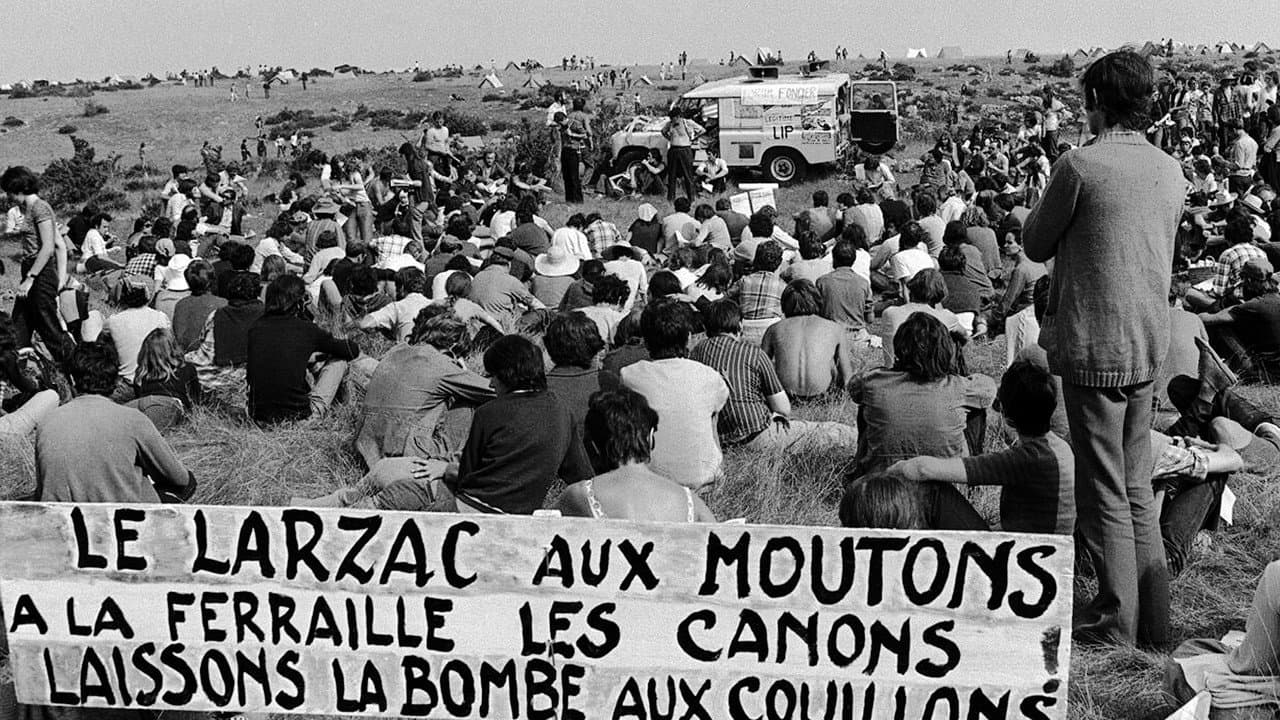
Leader-Sheep
★ 7.1 · 2011 · 120m · Documentary
Marizette, Christiane, Pierre, Léon, José... are some of the actors, funny and moving, of an incredible struggle, that of the peasants of Larzac against the State, confrontation of the weak against the strong, which united them in a merciless fight to save their lands. A determined and joyful fight, but sometimes also trying and perilous. It all began in 1971, when the government, through its Defense Minister Michel Debré, declared that the Larzac military camp must expand. Radical, the anger spreads like wildfire, the peasants mobilize and sign an oath: they will never give up their land. In the daily face to face with the army and the police, they will deploy treasures of imagination to make their voices heard. Soon hundreds of Larzac committees will be born throughout France... Ten years of resistance, collective intelligence and solidarity, which will carry them to victory.
More Like This
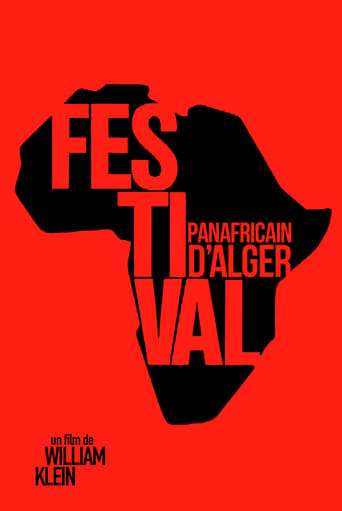
The Pan-African Festival in Algiers
1969 · ★ 6
Festival panafricain d'Alger is a documentary by William Klein of the music and dance festival held 40 years ago in the streets and in venues all across Algiers. Klein follows the preparations, the rehearsals, the concerts… He blends images of interviews made to writers and advocates of the freedom movements with stock images, thus allowing him to touch on such matters as colonialism, neocolonialism, colonial exploitation, the struggles and battles of the revolutionary movements for Independence.
More info →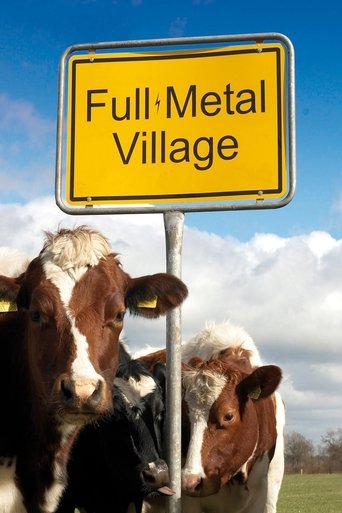
Full Metal Village
2007 · ★ 6.8
The film describes the microcosmos of the small village Wacken and shows the clash of the cultures, before and during the biggest heavy metal festival in Europe.
More info →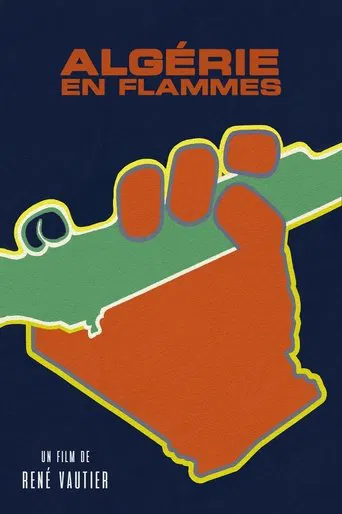
Algeria in Flames
1958 · ★ 8.5
These are the first images shot in the ALN maquis, camera in hand, at the end of 1956 and in 1957. These war images taken in the Aurès-Nementchas are intended to be the basis of a dialogue between French and Algerians for peace in Algeria, by demonstrating the existence of an armed organization close to the people. Three versions of Algeria in Flames are produced: French, German and Arabic. From the end of the editing, the film circulates without any cuts throughout the world, except in France where the first screening takes place in the occupied Sorbonne in 1968. Certain images of the film have circulated and are found in films, in particular Algerian films. Because of the excitement caused by this film, he was forced to go into hiding for 25 months. After the declaration of independence, he founded the first Algerian Audiovisual Center.
More info →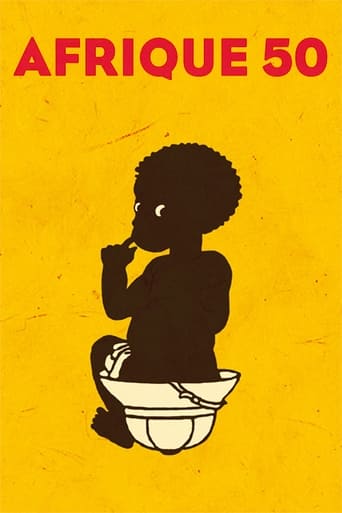
Afrique 50
1950 · ★ 6.8
The first French anti-colonialist film, derived from an assignment in which the director was to document educational activities by the French League of Schooling in West Africa. Vautier later filmed what he actually saw: “a lack of teachers and doctors, the crimes committed by the French Army in the name of France, the instrumentalization of the colonized peoples.” For his role in the film, Vautier was imprisoned for several months. The film was banned from public screening for more than 40 years.
More info →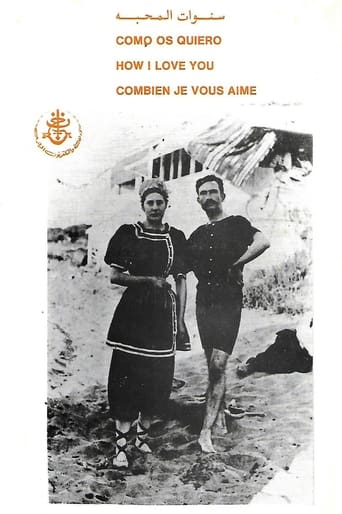
How Much I Love You
1985 · ★ 10
Beginning with a promotional reel encouraging farming investments in Algeria and ending with the secret 1950s nuclear tests that France conducted using Algerian prisoners, How Much I Love You appropriates archival footage produced by the French colonial powers in Algeria. Meddour’s approach is disarmingly simple and yet awe-inspiring—his caustic undoing of colonial discourse is underscored by a liberating release of humor.
More info →
Sociology Is a Martial Art
2001 · ★ 6.8
"I often say sociology is a martial art, a means of self-defence. Basically, you use it to defend yourself, without having the right to use it for unfair attacks." (Pierre Bourdieu) The world has witnesses who speak out loud what others keep to themselves. They are neither gurus, nor masters, but those who consider that the city and the world can be thought out. The sociologist, Pierre Bourdieu is one such witness." Over a three- year period, Pierre Carles' camera followed him through different situations: a short conversation with Günter Grass, a lively conference with the inhabitants of a working-class suburb, his relations with his students and colleagues and his plea that sociology be part of the life of the city. His thinking has a sort of familiarity, which means it is always within our reach. It is the thinking of a French intellectual who has chosen to think his times.
More info →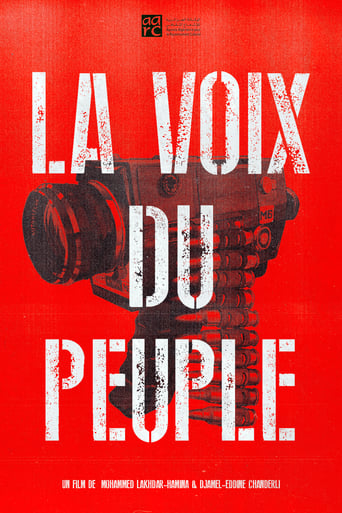
Sawt Echaâb
1961 · ★ 10
“La Voix du Peuple,” composed of archival photographs by René Vauthier and others, exposes the root causes of the armed conflict of the Algerian resistance. Participating in a war of real images against French colonial propaganda, these images aimed to show the images that the occupier had censored or distorted, by showing the extortions of the French occupation army: torture, arrests and arbitrary executions, napalm bombings, roundabout fires, erasing entire villages from the map, etc. This is what the French media described as a “pacification campaign”.
More info →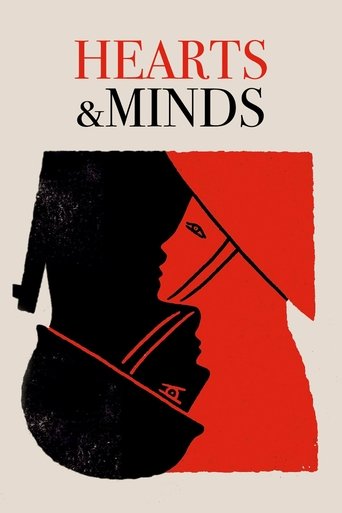
Hearts and Minds
1974 · ★ 7.7
Many times during his presidency, Lyndon B. Johnson said that ultimate victory in the Vietnam War depended upon the U.S. military winning the "hearts and minds" of the Vietnamese people. Filmmaker Peter Davis uses Johnson's phrase in an ironic context in this anti-war documentary, filmed and released while the Vietnam War was still under way, juxtaposing interviews with military figures like U.S. Army Chief of Staff William C. Westmoreland with shocking scenes of violence and brutality.
More info →
Up the Yangtze
2007 · ★ 7.3
At the edge of the Yangtze River, not far from the Three Gorges Dam, young men and women take up employment on a cruise ship, where they confront rising waters and a radically changing China.
More info →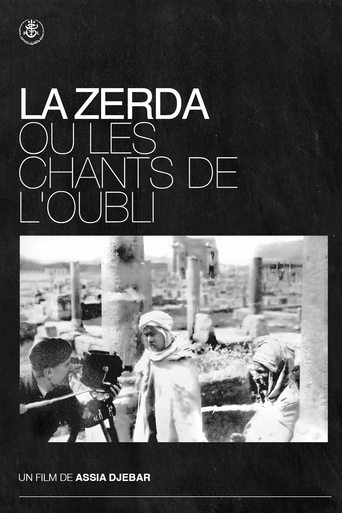
The Zerda or the Songs of Forgetting
1983 · ★ 8.1
“La Zerda and the songs of oblivion” (1982) is one of only two films made by the Algerian novelist Assia Djebar, with “La Nouba des femmes du mont Chenoua” (1977). Powerful poetic essay based on archives, in which Assia Djebar – in collaboration with the poet Malek Alloula and the composer Ahmed Essyad – deconstructs the French colonial propaganda of the Pathé-Gaumont newsreels from 1912 to 1942, to reveal the signs of revolt among the subjugated North African population. Through the reassembly of these propaganda images, Djebar recovers the history of the Zerda ceremonies, suggesting that the power and mysticism of this tradition were obliterated and erased by the predatory voyeurism of the colonial gaze. This very gaze is thus subverted and a hidden tradition of resistance and struggle is revealed, against any exoticizing and orientalist temptation.
More info →Sankofa
A short documentary that emerge at the center of round table debate, participating in it there's three students from the Superior School of Arts and Design, Caldas da Rainha - Portugal. This conversation go along with a video essay about Afrofuturism and Pop Culture. Also, during the debate, an interview with another student gives some real example of how afrofuturism can be applied when it comes to in taking control of the colonial narratives into a black person perspective.
More info →
Les Mains Libres
1965 · ★ 10
In 1964, Algeria, just two years after the end of the war of independence, found itself catapulted into new contradictions, a still rural territory which responded to the modernity brought by the revolution. Filmed during the winter of 1964-1965 by the young director Ennio Lorenzini, it is the first international Algerian production which paints a rare portrait in color of a multifaceted nation, far from the simplistic vision created by the press and the French army. Produced by Casbah Film, Les Mains Libres (initially titled Tronc De Figuier) bears witness to the stigmata of colonization and the future of free Algeria throughout the Algerian territory and reveals the richness of its landscapes and the diversity of its traditions . The documentary, using the aesthetics of militant cinema of the time, is made up of four scenes: Sea and Desert, The Struggle, The Earth, Freedom.
More info →