Immortals
★ 4.8 · 2026 · 94m · Documentary
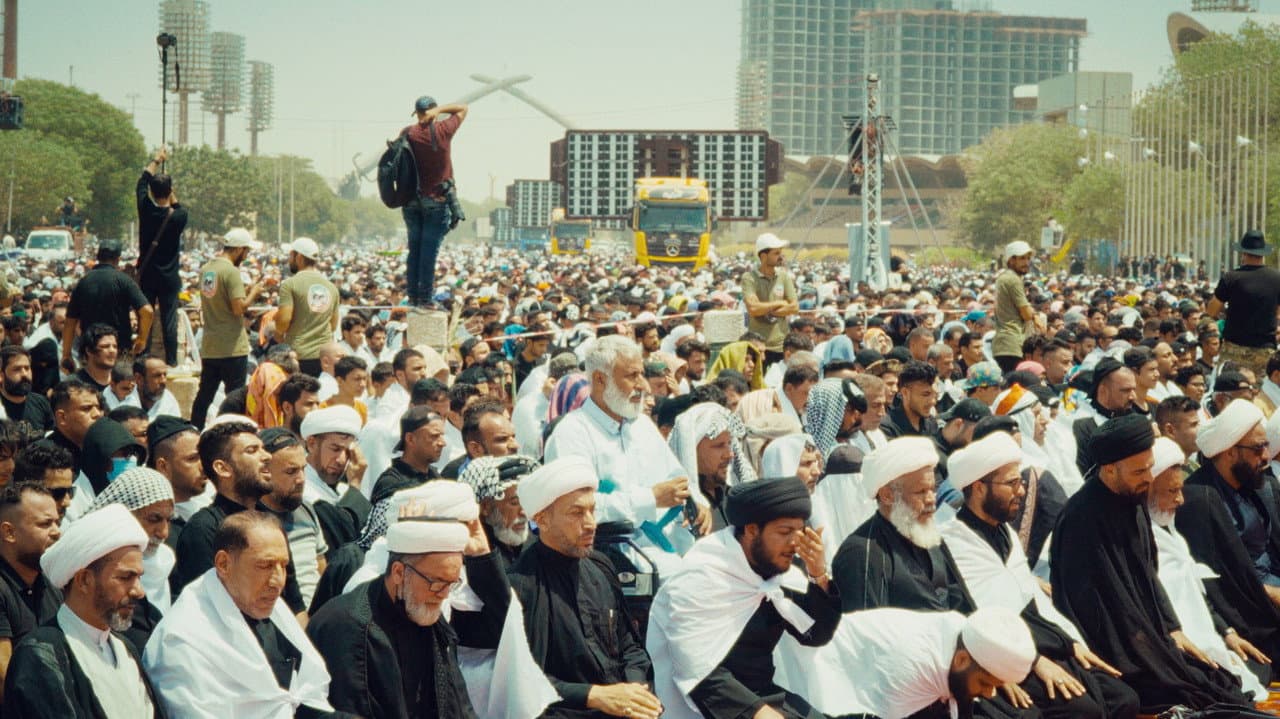
Milo, a strong-willed feminist, discovers the long-sought power to wander around freely in Baghdad by dressing in her brother’s clothes. Khalili, a young and ambitious filmmaker, realises that his camera can be the strongest of all weapons.
More Like This
Control Room
2004 · ★ 7.3
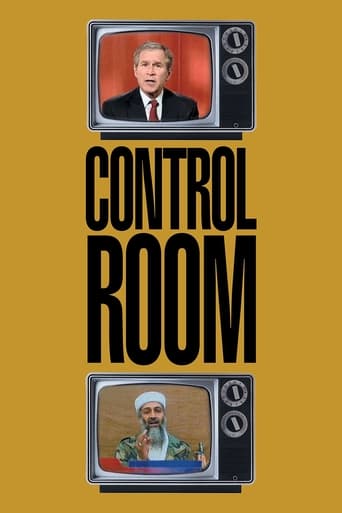
A chronicle which provides a rare window into the international perception of the Iraq War, courtesy of Al Jazeera, the Arab world's most popular news outlet. Roundly criticized by Cabinet members and Pentagon officials for reporting with a pro-Iraqi bias, and strongly condemned for frequently airing civilian causalities as well as footage of American POWs, the station has revealed (and continues to show the world) everything about the Iraq War that the Bush administration did not want it to see.
More info →
Iraq in Fragments
2006 · ★ 6.6
An opus in three parts, Iraq In Fragments offers a series of intimate, passionately-felt portraits: A fatherless 11-year-old is apprenticed to the domineering owner of a Baghdad garage; Sadr followers in two Shiite cities rally for regional elections while enforcing Islamic law at the point of a gun; a family of Kurdish farmers welcomes the US presence, which has allowed them a measure of freedom previously denied. American director James Longley spent more than two years filming in Iraq to create this stunningly photographed, poetically rendered documentary of the war-torn country as seen through the eyes of Sunnis, Shiites and Kurds.
More info →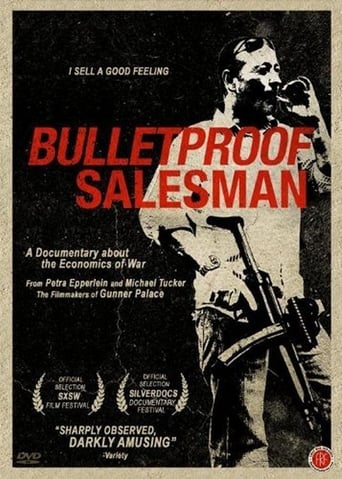
Bulletproof Salesman
2008 · ★ 7.5
Fidelis Cloer is a self-confessed war profiteer who found The Perfect War when the US invaded Iraq. It wasn't about selling a dozen cars, or even a hundred, it was a thousand-car war where security would become the ultimate product.
More info →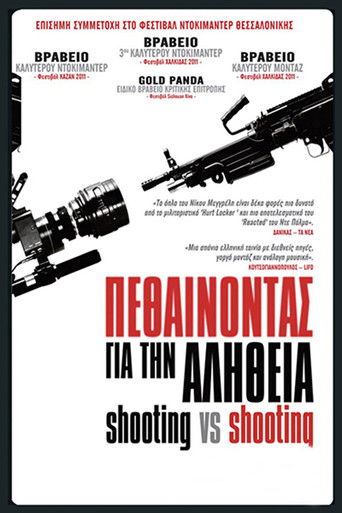
Shooting VS Shooting
2011
The film – documentary “Shooting vs Shooting” presents a group of astonishing stories about journalists who were afflicted in the Iraq war, by following a journalist’s journey in Baghdad in 2009 and the story of a mother who seeks for an answer to the question why her son got killed while his only weapon was his camera. “Shooting vs Shooting” narrates incredible moments and adventures, reveals unknown sides to the facts and shows the dramatic stories of media workers who lost their lives, trying to freely broadcast the truth to the public opinion. Through the documentary, we witness the absurdity of war, the responsibilities of governments and armies and the atrociousness of blinded fanatics.
More info →
Staying
2007
Director Mounaf Shaker lives in the Dora District of Baghdad, which was once a lively area full of palm groves and people of all kinds. Now, US tanks rumble through the streets, sectarian militias exchange gunfire and people find death threats posted on their doors when they awaken in the morning. Shaker details what it’s like to live under these conditions as he struggles to carry on with the tasks of everyday life.
More info →
Omar is my Friend
2005
Omar, a student at Baghdad University, works extra hours as a taxi driver to support his wife and four daughters. While negotiating his dilapidated taxi around checkpoints, traffic jams and US tanks, he talks about his personal aspirations, his difficulty finding work in his field of study, the lack of gasoline and electricity in Iraq, and what it’s like to raise four daughters in a male-dominated society.
More info →
Generation X-Saddam
2003
On the eve of the 2003 U.S. invasion, filmmaker Shelley Saywell traveled to Iraq to film the lives of ordinary people - especially young Iraqis - who were caught between Saddam's tyranny and a devastated economy (for which they blamed the West). Now, Saywell returns to find the people she met and interviewed before the war. What happened to them? Have they survived? Have their feelings about Saddam and the U.S. changed, or remained the same?
More info →16 Hours in Baghdad
2004
After 23 years in exile, Tariq Hashim returned to his homeland, Baghdad, where he encountered political turmoil, perpetual fear and violence. Shot in only 16 hours, Hashim’s film 16 Hours in Baghdad reveals the multi layered social landscape of Baghdad today. The film won the Golden Hawk Award at the 4th Arab Film Festival in Rotterdam, 2004.
More info →
The Tenth Planet: A Single Life in Baghdad
2006
A sparkling young Baghdadi woman, Kawkab, leads us around her city with a mischievous glint. Defying the stereotype of the Muslim woman, she is not afraid to speak her mind about anything, from sex, love, and virginity to her pro-Saddam patriotism. The film paints a unique picture of the current situation in Iraq from her perspective - totally different from the U.S. media's coverage as it measures the cost of war by body counts and dollars spent. Kawkab reveals an intimate and human side of Baghdad, speaking with compelling optimism of her hopes and joys.
More info →
Dr. Nabil
2007
Dr. Nabil is a gentle and committed surgeon and father who works at a small, understaffed Baghdad hospital suffering from a lack of equipment and medicine. Though other doctors have been killed or have fled the country in fear of their lives, Dr. Nabil has decided to stay. He worries, though, what effects the atmosphere of violence and brutality will have on his young son.
More info →
Baghdad Days
2005
Director Hiba Bassem returns to Baghdad from Kirkuk in 2005 to finish her studies at the Academy of Fine Arts. This video diary chronicles her first year in Baghdad as she searches for a place to live, looks for work, attends college, deals with family problems and struggles to come to terms with her position as a woman living on her own. Baghdad Days won a New Horizon Silver Award at the Al Jazeera International Film Festival and a Golden Award at the Rotterdam Arab Film Festival in 2006.
More info →
A Candle for The Shabandar Café
2007
Founded in 1917, the Shabandar Café in Al Mutanabbi Street in the heart of the old centre of Baghdad was a cultural landmark where generations of Iraqis came to discuss and debate literature and politics. The cafe was a living repository of Iraqi intellectual history and one of the last places where people could gather to exchange ideas. Director Emad Ali had nearly completed filming for his project by the end of 2006. Then, in March 2007, a massive car bomb destroyed the Shabandar Café and all the bookshops on Al Mutanabbi Street, killing and wounded scores of people. Days later, Baghdad's poets and artists held a wake in the ruins of the street they loved so much. Emad took a small camera and returned to continue filming. He was attacked as he was leaving, his camera was stolen and he was shot in the legs and chest. Emad Ali’s own story provides a disturbing epilogue to his film about the Shabandar Café and Mutanabbi Street, both before and after they were destroyed.
More info →