Herrings
1940 · 7m · Documentary
This informative herring aid from WWII makes no bones about the need to make the most of every fish.
More Like This

Who Owns New Zealand Now?
2017
Award-winning documentary maker Bryan Bruce investigates New Zealand's housing crisis and what might be done to solve it. Bruce consults with recognised world experts (in Canada, Ireland and Germany) to discuss their global research – this time on foreign capital and housing affordability and the effect of immigration on house prices. Bruce also looks at some of the many possible solutions (available particularly in Germany) that would provide families with stability of tenure that don’t involve private ownership.
More info →Public Shelter Organization and Staff
1963
Created in 1963 at the height of the Cold War, this Civil Defense training film uses a dramatic premise to show how emergency staff should manage and organize a large public fallout shelter during a crisis. A Shelter Manager is shown immediately taking control of the situation in the shelter, speaking calmly to those who have made it into the facility, closing the door promptly once the shelter is full, and sticking to the "shelter plan" as the situation unfolds. Some of the areas discussed in this nuclear war drama are the safety plan, regular inspections, supervised public entry into shelters, ventilation, first aid, sanitation, fire prevention, decontamination of personnel, and more. "Shelter living is different," the Manager states, "But we have a trained staff that will make your stay in this shelter livable for us all."
More info →Planning For Emergence From Public Shelters
1963
A training film for public shelter managers explaining when people should be allowed to leave the shelter after a disaster.
More info →
Planning for Public Shelter Entry
1963
The film features a meeting led by Dave Taylor, the shelter manager, discussing the protocols and responsibilities for staff members involved in managing a public shelter. Key participants, including operations deputy Harvey Johnson and health leader Mrs. Carter, outline their roles in ensuring a smooth entry for occupants during an emergency. The meeting emphasizes the importance of organization, communication, and the distribution of supplies. Staff members are encouraged to familiarize themselves with each other's duties and prepare for potential scenarios, including managing newcomers and ensuring safety and sanitation within the shelter.
More info →
The Creole Pig: Haiti's Great Loss
2025
In the 1980s, a swine flu crossed the Haitian-Dominican border and started to affect the Creole pig, an important commodity in Haiti. The flu also threatened livestock in the United States. As a preemptive measure, the USAID in conjunction with the Haitian government proceeded to exterminate all Creole pigs from the island, leading to a crushing economic blow for an already impoverished country.
More info →Chlorine and the Firefighter
1974
This 1974 film is dedicated by the Chlorine Institute to the public interest. It is specifically intended to assist firefighters and other emergency services. The techniques demonstrated are appropriate for emergency use; different circumstances might require modified or additional procedure. The information is drawn from sources believed to be reliable. The Institute, its members any organizations cooperating in the development of this film, jointly or severally, cannot be responsible for how the information is used and must make this legal disclaimer. This is a 1960s era, color movie about Chlorine and emergency workers… specifically, firefighters. The film is intended to show firefighters what chlorine is, what a chlorine emergency might involve, how a company can plan ahead and how an emergency can be handled safely.
More info →Your Chance to Live: Winter Storm
1972
Intercuts scenes from Jack London's To build a fire with modern urban and rural winter scenes to point out the dangers of winter storms and low temperatures. Designed to stimulate discussion on civil preparedness for winter storms.
More info →Your Chance to Live: Nuclear Disaster
1974
Portrays the challenges of creating a film about nuclear disaster amid public apathy. It captures behind-the-scenes moments as the crew discusses the gravity of nuclear threats, the importance of preparation, and the emotional impact of a nuclear attack. The narrative emphasizes the need for individuals to take responsibility for their safety and community in the event of an attack, blending factual information with a call to action.
More info →Your Chance to Live: Pollution
1973
A surrealistic look at the future if man does not learn to control pollution.
More info →Your Chance to Live: Heat Wave
1973
The film highlights the dangers of extreme heat and the importance of staying hydrated and cool. It portrays a conversation between two friends, one of whom insists on playing basketball despite the oppressive heat. The narrative emphasizes that heat-related illnesses can be avoided by recognizing the body's signals and taking necessary precautions, such as drinking water and staying indoors. The film concludes with a report of record-breaking temperatures, underscoring the seriousness of heat exposure.
More info →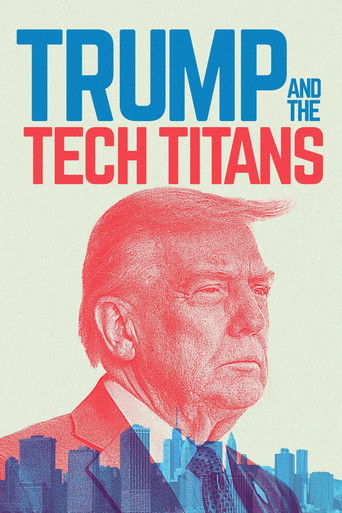
Trump and the Tech Titans
2025 · ★ 7.8
Peter Thiel. David Sacks. Elon Musk. Mark Zuckerberg. Jeff Bezos. These tech titans have pledged their loyalty to President Trump. But what do they really believe and what do they stand to gain? This unfiltered portrait, revealed by insiders, shows where American democracy is heading and how this handful of tech billionaires accumulated such unprecedented power and influence.
More info →