Huérfanos del olvido
2018 · 95m · Documentary
Between 1937 and 1938, during the Spanish Civil War, thousands of minors were evacuated by their own families from the Republican zone to the Soviet Union to prevent them from perishing in the indiscriminate bombings that the rebel army directed against the civilian population. Taking advantage of the 80th anniversary of this epic, a team went to Russia to record the testimonies of some of those “childrens of war.”
More Like This

Días de ira. Helios Gómez. 1905-1956
1998
Biography of the comrade Helios Gómez (1905-1956), painter and draftsman, gypsy and Sevillian, anarchist militant first and then communist.
More info →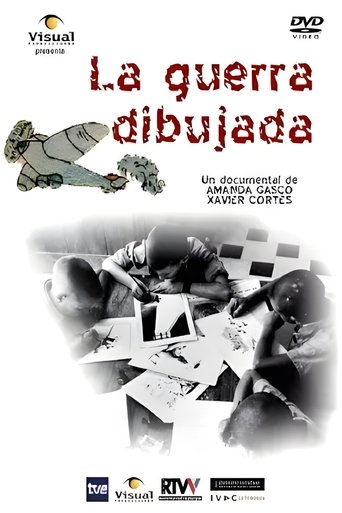
La guerra dibujada
2003
This documentary is a vision of the Spanish civil war seen by the children of that time: sometimes as a game and other times as a dangerous adventure. A mixture of fascination and fear that was captured forever in the form of drawings.
More info →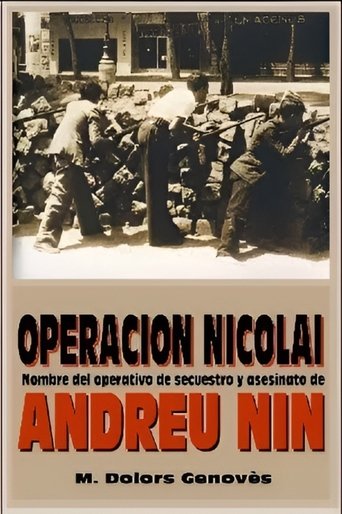
Operación Nikolai
1992
"Operation Nikolai" is a documentary about the kidnapping and murder of Andreu Nin by Stalin's political police during the Spanish Civil War.
More info →
Cicatrices de piedra. La Guerra Civil en Aragón
2006
The story is set in six key scenarios of the conflict in the region: Bielsa, Barbastro, Belchite, Caspe, Teruel and Alcañiz. On this tour we find abundant remains of the war in the landscape and numerous testimonies that narrate this journey through our history.
More info →
El Terrer, un poble emmudit
Between 1939 and 1956, the Franco regime shot more than 2,000 republicans in Paterna. They were years of terror, of silence, of arbitrariness, of planned and systematic elimination of any progressive vestige. The documentary portrays the collective effort of the people of Paterna to recover the memory and dignity of those who died defending democracy. Shown through the point of view of those protagonists who were silenced and those voices condemned to oblivion.
More info →
Febrero 1937. Memoria de una huida
2008
The documentary captures one of the most silenced chapters of the Civil War in Malaga. In fact, barely a line appears about this massive exodus in the history books. However, despite the passage and silence of seven decades, that event remained very much alive within numerous Malaga families.
More info →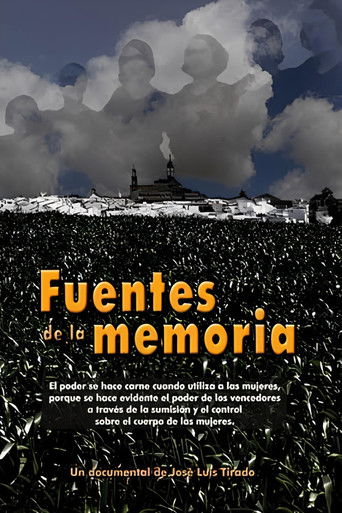
Fuentes de la memoria
2011
t narrates the repression suffered by the local population of Fuentes de Andalucía after the military coup of 1936.
More info →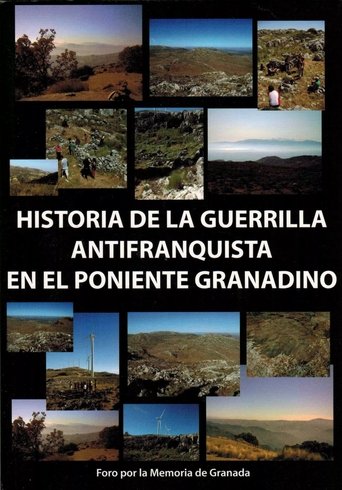
Historia de la guerrilla antifranquista en el Poniente granadino
2011
History of the anti-fascist guerrilla resistance in Granada.
More info →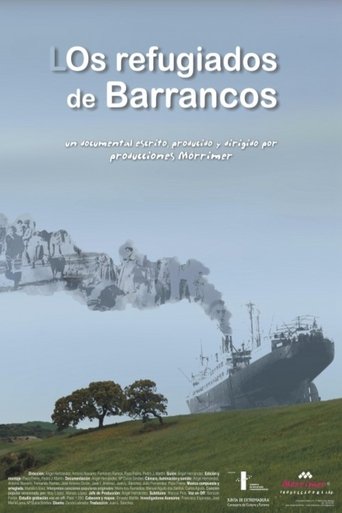
Los refugiados de Barrancos
2009
September 1936. The last republican towns located next to Portugal are conquered by General Franco's troops. As in Badajoz and other towns, the repression they unleash is brutal. The support of the Portuguese dictator Salazar for the coup plotters does not make it advisable to flee to Portugal, but for many it is the only way out. In this way, hundreds of people decide to cross the border, closely pursued by the rebels. The usual procedure of the Portuguese authorities is to hand them over to their Francoist allies. However, thanks to the humanitarian intervention of the Portuguese lieutenant António Augusto de Seixas, two refugee camps were created next to the town of Barrancos to house and protect this group of Spaniards.
More info →
Luisa Rendón Martell: La utopía truncada
2017
Truncated Utopia tells the story of Luisa Rendón Martell, a republican activist who was retaliated against in the province of Cádiz during the civil war and Franco's regime.
More info →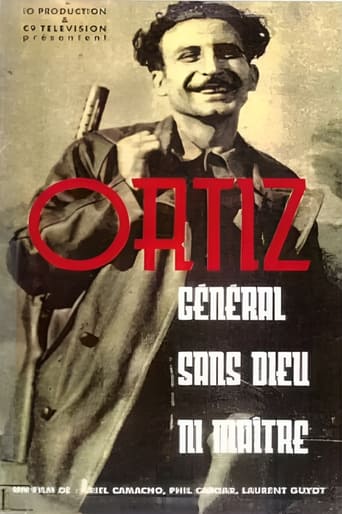
Ortiz, général sans dieu ni maître
1996
Documentary about the anarchist general Antonio Ortiz.
More info →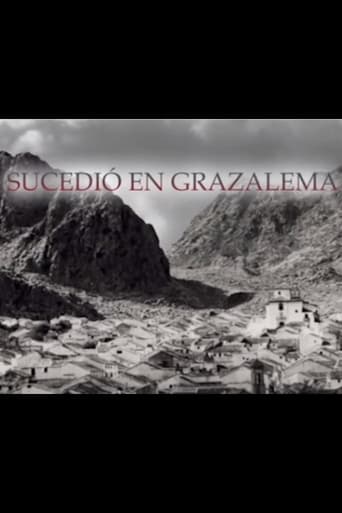
Sucedió en Grazalema
2017
Narration of one of the most lacerating events in the history of this municipality in the Sierra de Cádiz: the murder of 15 neighbors, without trial or formation of any cause. Some of these victims had fled in September 1936 but ended up returning to the municipality, probably in February 1937. It was on that date that the town's Falangists arrested them and executed them, and not as previously thought in the summer of 1936. Several survivors and relatives of those massacres narrate what the arrests of the women and the shootings were like. They also talk about the exhumation of the bodies of these 15 women, where for many years family and friends have brought flowers.
More info →