
M'hamed Issiakhem
★ 10 · 1985 · 43m · Documentary
M'hamed Issiakhem (Kabyle: Mḥemmed Isyaxem; Arabic: محمد إسياخم)—born on June 17, 1928, in Taboudoucht (Aghribs), then part of the Tizi Ouzou Department in Algeria, and who died on December 1, 1985, in Algiers—was an Algerian painter and a leading figure of modern painting in Algeria. In 1943, he handled a grenade stolen from a US military camp, and it exploded; two of his sisters and a nephew were killed. Hospitalized for two years, he underwent the amputation of his left arm. From 1947 to 1951, he studied in Algiers, first at the Société des Beaux-Arts and later at the École des Beaux-Arts. "A country without artists is a dead country... I hope we are alive..." These words were spoken in a film by Fawzi Sahraoui—produced by the RTA in 1985 and shot just months before the painter M'hamed Issiakhem passed away. It is a fascinating docudrama in which Issiakhem opens up with subtlety, passion, and generosity.
More Like This
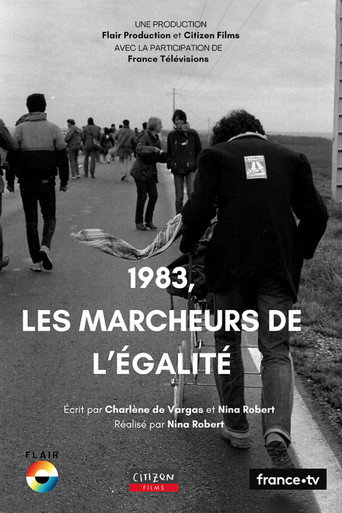
1983, The Marchers for Equality
2023 · ★ 9.5
In the 1980s, young people of North African descent born in France and a priest from the Lyon suburbs organized the "March of the Beurs." Launched on October 15, 1983, by seventeen people from the La Cayolle neighborhood in Marseille following a racist crime, the march concluded two months later—on December 3—on the streets of Paris, with 100,000 participants. This movement demanded equal rights. Was their cry heard?
More info →
The Last Man
2021
Gravedigger is the last name on the list of fighters facing the Corona epidemic. The gravediggers have buried the dead in one corona after another at the call of humanity even though they were not paid. In return, they received some rewards and an invaluable realization. One of them is Aslam of Ray Bazar Cemetery, The Last Man.
More info →
Vote off
2017
Fayçal Hammoum recounts the 2014 presidential election through non-voting inhabitants of Algiers who, like him, are in their thirties. Be it Bilel, a grocer by default exposed to his customers’ political babbling, or the more politically-charged comments of Younes, a militant FM radio journalist opposed to President Bouteflika’s fourth term, the variety of conversational scenes in no way changes the determination not to vote for an old man who has been invisible for almost two years. The rappers Omar and Brahim are as bereft of hope and voter’s cards as the Tellek webradio DJ, since “the match is fixed”. Moving away from his focus on this subject to film their daily life, the filmmaker draws the portrait of a generation who, as Bilal says with poignant simplicity, “just wants to live
More info →
Fox & Penguin
2021 · ★ 10
How do German couples communicate in private? What are they arguing about? Is the way to a man’s heart really through his stomach? This docu-fictional hybrid production discusses such questions with the help of authentic interview snippets that were edited under the staged plot. We get an insight into the life of an animal couple, who experience typical everyday situations on behalf of us humans. At first, our fox is emotionally contained, while the penguin lady may get wild as hell. With a wink, the filmmakers hold up a mirror to the audience in the cinema.
More info →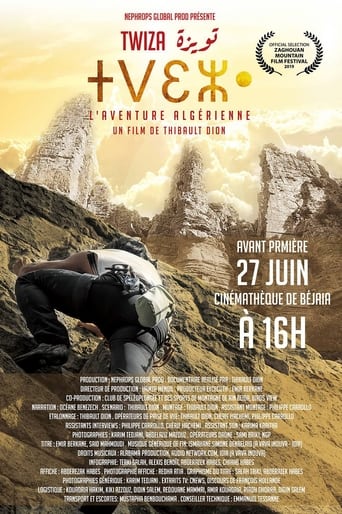
Twïza, L'Aventure Algérienne
2019 · ★ 10
In Tamazight culture, "Twïza" symbolizes a gathering for sharing and mutual support. This is precisely what Thibault Dion's film explores – January 2019 – as five French climbers land at Constantine airport. While they initially thought they would simply be opening climbing routes in eastern Algeria, this group of climbers from Grenoble discovers much more. Their initial apprehension about exploring this isolated region, coupled with the warm welcome, good humor, and rich culture, transforms their journey into an unexpected human adventure. Fabulous landscapes, thrilling experiences, unforgettable moments, smiles – beyond borders, in the land of friendship and hospitality... Algeria.
More info →
SUMMER II
★ 7
In a follow-up to his 2021 short, SUMMER, Liam once again spends the duration of a summer filming, editing, and releasing a single shot every day. Things have changed or have they?
More info →
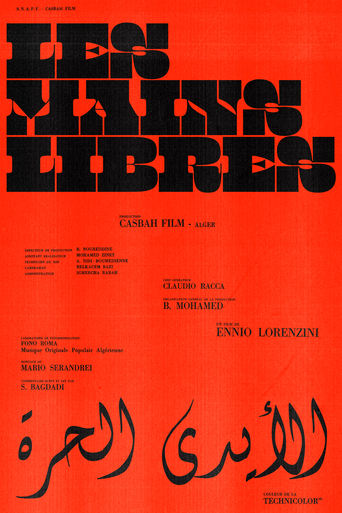
Les Mains Libres
1965 · ★ 10
In 1964, Algeria, just two years after the end of the war of independence, found itself catapulted into new contradictions, a still rural territory which responded to the modernity brought by the revolution. Filmed during the winter of 1964-1965 by the young director Ennio Lorenzini, it is the first international Algerian production which paints a rare portrait in color of a multifaceted nation, far from the simplistic vision created by the press and the French army. Produced by Casbah Film, Les Mains Libres (initially titled Tronc De Figuier) bears witness to the stigmata of colonization and the future of free Algeria throughout the Algerian territory and reveals the richness of its landscapes and the diversity of its traditions . The documentary, using the aesthetics of militant cinema of the time, is made up of four scenes: Sea and Desert, The Struggle, The Earth, Freedom.
More info →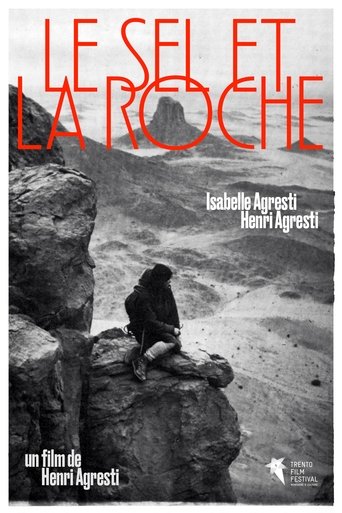
Salt and Rock
1996 · ★ 10
After reading the book "Guide to Hoggar Climbing," guide Pierre Agresti and his wife Isabelle Agresti set off into the Hoggar massif in the Algerian Sahara and tackled the west face of Garet El Djenoun. After a first attempt in 1967, they successfully reached the summit in 1970 and, with an old camera, made a film that remained unused for 25 years. In 1996, they decided to bring the past back to life through the ascent and encounters with the Tuaregs in the rock salt mines of Amadror. The film was shown in competition at the Trento Film Festival in 1997.
More info →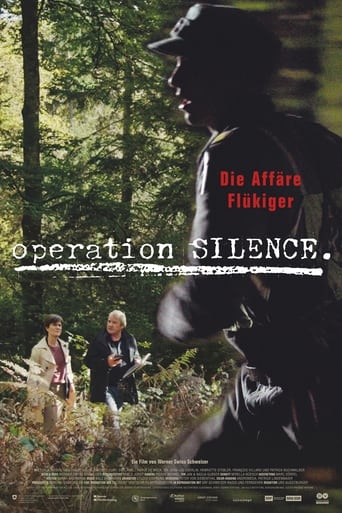
Operation Silence – The Flükiger Affaire
2024
Autumn 1977: the Bernese officer trainee Flükiger is found dead. Who is to blame for his death? The RAF or the Béliers, was it an accident or intentional? The director goes in search of clues and tries to shed light on the mysterious events surrounding the vote to form the Canton Jura.
More info →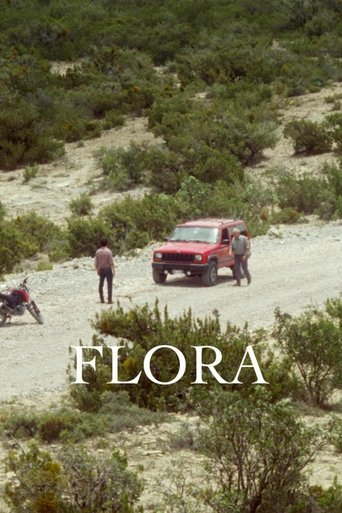
Flora
2022 · ★ 6
A metacinematic reflection on the nature of representation and the ongoing drug war in Mexico, Nicolás Pereda’s Flora revisits locations and scenes from the mainstream 2010 narco-comedy El Infierno, exploring the paradoxes of depicting narco-trafficking on film—its tendency both to romanticize and to obscure. To screen is both to project and to conceal.
More info →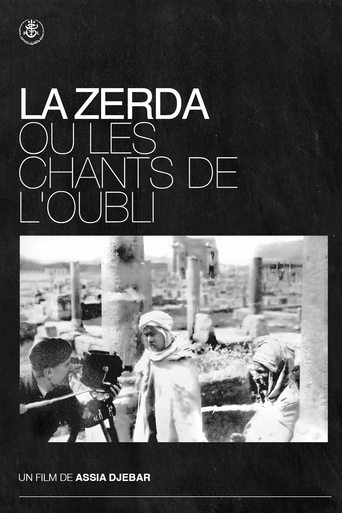
The Zerda or the Songs of Forgetting
1983 · ★ 8.1
“La Zerda and the songs of oblivion” (1982) is one of only two films made by the Algerian novelist Assia Djebar, with “La Nouba des femmes du mont Chenoua” (1977). Powerful poetic essay based on archives, in which Assia Djebar – in collaboration with the poet Malek Alloula and the composer Ahmed Essyad – deconstructs the French colonial propaganda of the Pathé-Gaumont newsreels from 1912 to 1942, to reveal the signs of revolt among the subjugated North African population. Through the reassembly of these propaganda images, Djebar recovers the history of the Zerda ceremonies, suggesting that the power and mysticism of this tradition were obliterated and erased by the predatory voyeurism of the colonial gaze. This very gaze is thus subverted and a hidden tradition of resistance and struggle is revealed, against any exoticizing and orientalist temptation.
More info →