Dajori
2024 · 87m · Documentary
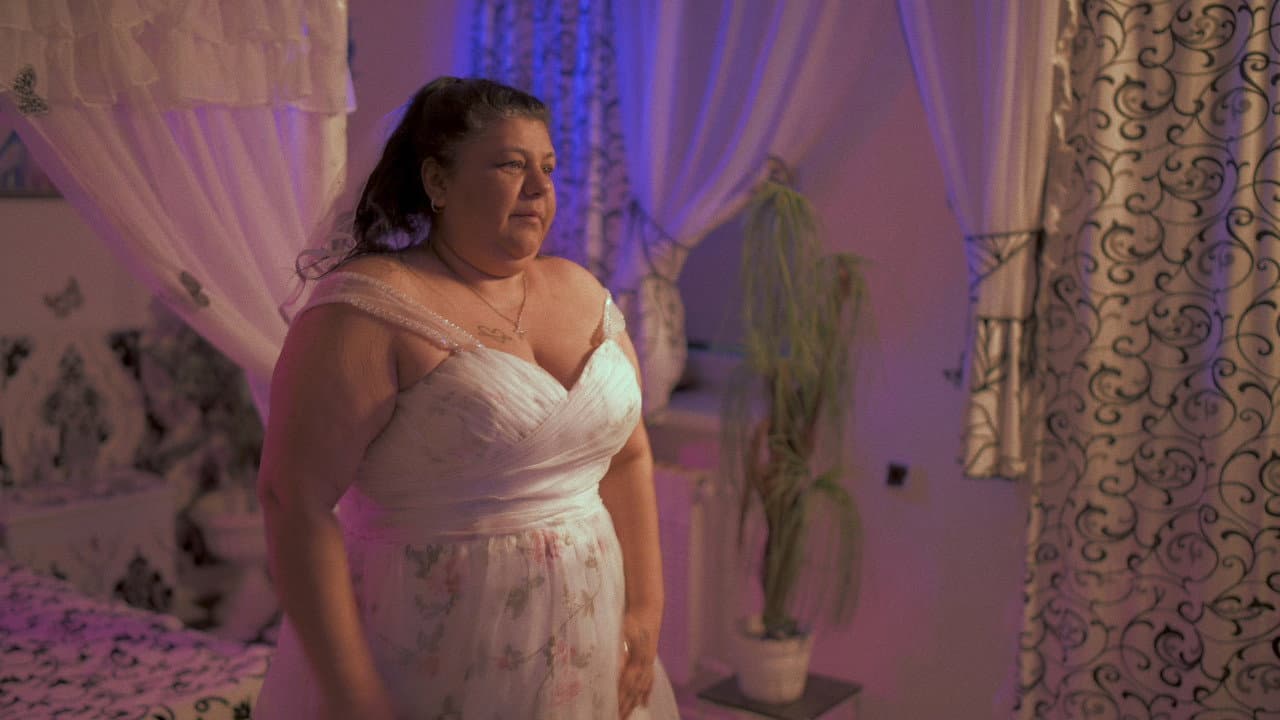
The protagonist of Dajori (mother in Romani) is forty-five-year-old Marie Hučková, who lives with her husband in Varnsdorf. After her younger sister Iveta ends up on the streets with her nine children, she decides to take her own fate and theirs firmly into her own hands and attempts to break out of the vicious circle of poverty that characterises their hometown. This sensitive film, which captures three years of a newly formed family's life together, follows the small joys and daily challenges of caring for others and asks whether a mother's love can overcome the dysfunctional system in which socially excluded localities find themselves.
More Like This
Roma Boys – The Love Story
2009
The film explores the taboo subject of homosexuality within the Roma community through the personal story of a Roma activist who happens to be gay. Though his job has earned him respect among his peers, by coming out his status is in jeopardy. However, the desire to share his complex story prompted him to write a screenplay based on his life. Partly a documentary about his autobiographical script, the film switches between documentary and narrative storytelling. Owing to its distinctive style, the film offers a glimpse into the protagonist's world as he faces triple discrimination: as a Roma, as a gay man, and as a gay man in the Roma community.
More info →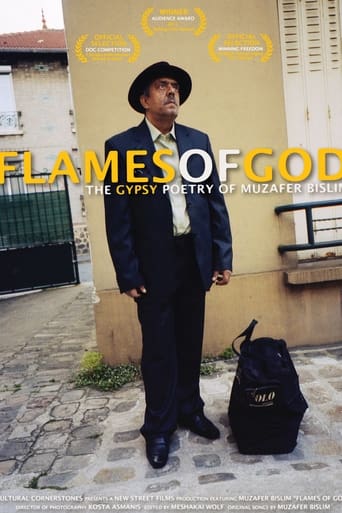
Flames of God
Muzafer Bislim comes up with some of his most insightful songs while sitting on the floor, recording lyrics into a cassette recorder bought at a flea market. A poet and songwriter who collaborates with the biggest names in Romani music, the 54-year old lives a life of modest means with his family in Shutka, Macedonia. Stored in the corner of his one-room house is a tottering, ceiling-high stack of handwritten, 25,000-word, multi-dialect dictionary of the oldest and most obscure words in the Romani language, which he has painstakingly collected over 35 years. When he's invited to the International Biennial of Poets held in Paris, he sees the trip as an opportunity to have his dictionary published. A testament to the endurance of a people who have been scattered across Europe, the dictionary is not only a work of art but also a rare link to a divided past.
More info →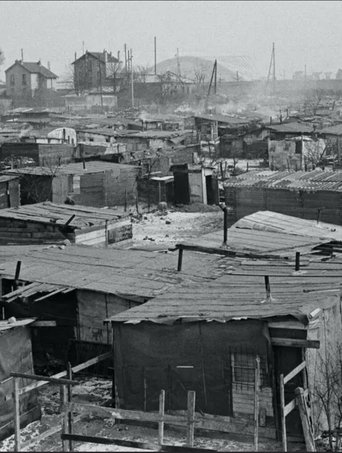

Gypsy Blood
2014 · ★ 5
Roma are an important part of Ukraine's population. There are quite a large number of them living in the country—between fifty and one hundred thousand. This documentary shows the peculiarities of the Gypsy people's life in modern society. You will see the stories of five Gypsy barons who will talk about the traditions of their people and reveal some secrets that were previously known only to the Roma.
More info →
Helping Mihaela
2011 · ★ 6
A Roma beggar on his knees raises many extreme emotions: guilt, rage, sympathy and frustration. Most people just walk on by, but there is always someone willing to help. In this film, the director follows the confrontations between the Roma beggars from Romania and Finnish people, and is forced to question, over and over again, her own ideas about helping.
More info →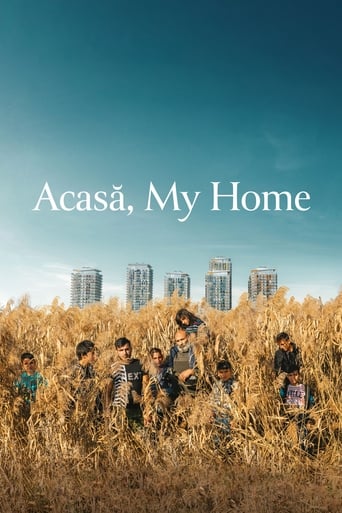
Acasă, My Home
2020 · ★ 6.7
In the wilderness of the Bucharest Delta, nine children and their parents lived in perfect harmony with nature for 20 years – until they are chased out and forced to adapt to life in the big city.
More info →Carmen
A documentary about a young Finnish Romany Carmen, 11, who lives with her grandmother and aunt in the suburb of a small town in Northern Finland.
More info →
Grigny, la fabrique de la banlieue
2026 · ★ 8
As France's first ZAC (Zone d'Aménagement Concerté, or concerted development zone), Grigny is the ideal place to describe how France transformed its dream of a happy suburb into an impoverished urban nightmare. The film aims to leave the camera rolling throughout the story, to discover the inhabitants and the labyrinths of yesterday and today, and to answer the essential questions. From the residents to the architects, including the city of Grigny, the mayor, the prefect, the landlords, and the ANRU (National Agency for Urban Renewal), the film examines and deciphers the consequences of what happened in Grigny and the state's housing policy. Through the analysis of Grigny's history, we see how the state has participated and continues to participate in the creation of social exclusion.
More info →
Citizen Miko
2023 · ★ 2
Miko is a truck driver, his father is Romani, and above all he is a man who wanted to help those in need. When the Czech government was looking for reasons not to take in a few dozen children from Greek refugee camps after the chemical attacks on Syrian civilians in 2018, Miko took justice into his own hands and, together with the Czechs Helping initiative, prepared facilities for child refugees. However, government officials gave priority to political interests. Will parliamentary elections and a change of ministries save the situation? An unflattering but accurately portrayal of the Czech Republic as a country that will only offer a helping hand when it is worthwhile.
More info →
Leaving to Remain
2023
With the UK’s hardening immigration policy in the background, director Mira Erdevički follows the lives of three Roma: Petr Torák, Denisa Gannon and Ondrej Oláh. Settled in the UK over 20 years ago, the trio still feel attached to their native Slovakia and the Czech Republic. As the country goes into lockdown, they film their lives throughout the Covid pandemic and the aftermath of Brexit.
More info →
O Baripen
2023
The TV biopic maps the fate of Roma writer Elena Lackova in an intimately personal way. As viewers, thanks to the author's authentic voiceover and preserved archive footage, we delve into her memories of the Holocaust and the communist dictatorship in the context of the play Burning Gypsy Camp. We uncover the circumstances of growing up in a gypsy settlement, her first literary achievements, and her struggle to combine her personal and professional life. We also get to know her life story through her great-granddaughter and actress Alžbeta Ferencova, known as Zea or the serial Iveta (dir. Jan Hřebejk, 2022). The parallel between the life of the writer and that of her great-granddaughter, who also embarked on an artistic career and broke down stereotypes about the role of Roma women in society, creates a timely and transferable story. A crucial motif of the poetic film is also the unprecedented emancipation of the writer for the time.
More info →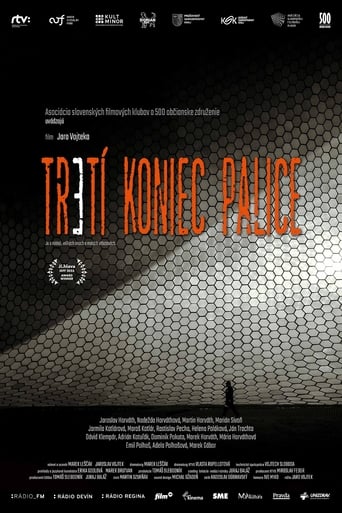
The Third End of the Stick
2023
Otherness in otherness. What does it mean to be different in a community that is itself excluded from society? The documentary follows the fate of Roma who have become a minority in a minority society. Roma gays and transvestite search for their living space and dream of working abroad. A legless father of five longs for a wheelchair. A Roma grandmother sacrifices her life for the health of her beloved grandson. Will Emil, a Roma man who has found faith in God, be able to save his son from alcohol? Four stories from the poorest Roma settlements in Slovakia aim to break down prejudices between the Roma community and the white majority.
More info →