
Sahara Vertical
★ 10 · 1986 · 32m · Documentary · Adventure
The climbing couple Heinz Mariacher and Luisa Iovane abandon their usual winter training spot to go in search of places more conducive to free climbing in Algeria in the Sahara desert, more precisely in the Hoggar massif, which saw pass the cream of world climbing Lionel Terray, Roger Frison-Roche, Lucien Bérardini, Michel Vaucher, Pierre Mazeaud, Guido Monzino, Patrick Edlinger, Patrick Berhault and many others. Their objective, to climb the east face of Garet El Djenoun, 500 m high, failed because the wall was too smooth and the cracks unstable. The journey continues in the Hoggar massif towards other peaks, where they find the climbing conditions they were hoping for. An overhang in the face of Tizouyag Nord will prove to be a major challenge for Heinz Mariacher.
More Like This
Raide d'Écrins
2021 · ★ 10
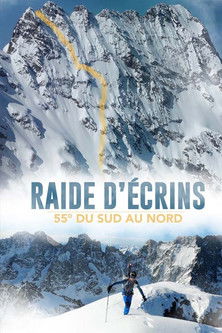
Benjamin Védrines and Nicolas Jean are continuing their ski touring projects. After exploring Nicolas Jean's stomping grounds – the Ubaye Valley – the two guides found themselves this time in Benjamin's backyard: the Écrins massif. From May 27th to 29th, they completed a rapid traverse of the massif from south to north, skiing down 10 steep slopes along the way. "An intense immersion, full of challenges, doubts, joys, and mysteries!" recounts Benjamin. This – yet another – traverse of the massif took them from the Gioberney chalet-hotel (Valgaudemar) to the Pied du Col (Haute-Romanche), traversing steep slopes over three days, "crossing some of the wildest landscapes in the Southern Alps." Three days during which they will have covered 11,000 meters of elevation gain and descended no less than 10 slopes rated in the 5, from the north face of the Sirac (5.4) to the north couloir of the Col Claire (5.1+).
More info →
They Joined the Front
2012 · ★ 10
In this film, four key witnesses, who live in Algeria today, as full-fledged Agerians, show us what this colonization was really like, so "beneficial" that they themselves perceived it as the oppression of one people by another. Three of them, who today would be called "pieds noirs," in other words, those Europeans to whom France, the occupying power, gave the best land, taken from the indigenous populations, work, and exclusive rights, not shared by the entire population, lived rather well compared to the majority of the "natives." The fourth was far from all that and lived in Argentina. Annie Steiner, Felix Colozzi, Pierre Chaulet, and Roberto Muniz explain to us what led them to show solidarity with the struggle of the weak, the humiliated, and to risk their freedom and their lives by committing to liberate Algeria.
More info →
Annapurna South Face
1971 · ★ 7.5
This entertaining film documents the first ascent of the very difficult South Face of Annapurna, a huge Himalayan wall that the right team could achieve the seemingly impossible. The ascent of the South Face of Annapurna in 1970 was one of those breakthrough ascents - both technically and psychologically. Chris Bonington assembled the cream of British mountaineering and American Tom Frost for the attempt. The documentary is punctuated by wry observation, understatement and cutting humor from a by-gone age when the game of taking huge risks was matched by a determination not to take it too seriously.
More info →
A European Rope
1964 · ★ 10
Three famous climbers, the Frenchman Pierre Mazeaud, the German Winfried Ender and the Italian Roberto Sorgato, meet up at the bottom of the Tre Cime di Lavaredo and decide to join together in a single roped party, climbing the 'Direttissima' on the north face of the Cima Grande di Lavaredo. The beautiful film illustrates with precise sequences the climb of the route, that was opened in 1958 by the filmmaker himself, Lother Brandler. The film wants to highlight the idea of frienship, cooperation, fraternity and peace showing three men from historically-confronted nationalities roped and working together as a single team. The film won the Grand Prix at the Trento Film Festival in 1964.
More info →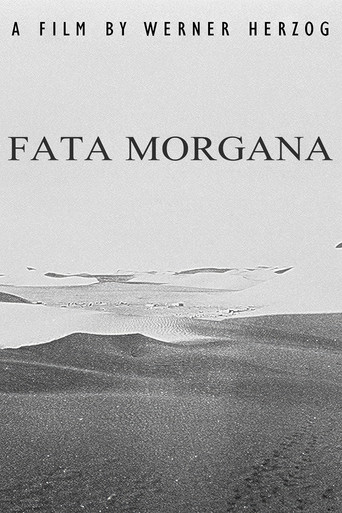
Fata Morgana
1972 · ★ 6.5
Shot under extreme conditions and inspired by Mayan creation theory, the film contemplates the illusion of reality and the possibility of capturing for the camera something which is not there. It is about the mirages of nature—and the nature of mirage.
More info →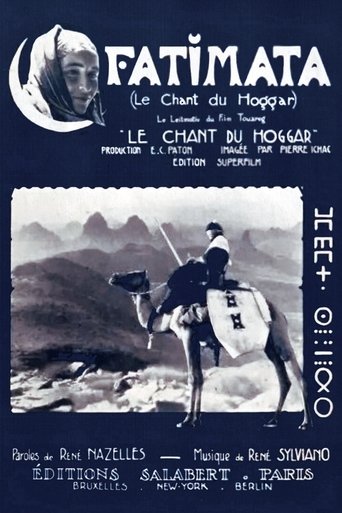
The Song of the Hoggar
1931 · ★ 10
Le Chant du Hoggar, a fictionalized documentary directed by Pierre Ichac, which takes as its theme the adventurous life of the Tuaregs of yesteryear, the setting being the lesser-known mountains and valleys of the Hoggar, and the actors being the Tuaregs themselves. This production, of considerable interest, was filmed last year by Pierre Ichac, a project manager for the General Government of Algeria. For six months, the young director, who traveled more than 7,000 kilometers by car and about 1,000 kilometers by Méhari through the Hoggar mountains, recorded 8,000 meters of film. The beautiful Fatimata reigns over all hearts in the wandering Tuareg tribe, with her herds, in the high valleys of the Hoggar. But she loves The Lion, the bravest of the young warriors of an enemy tribe. And it is Fatimata's name that The Lion lovingly carves on the rocks of the mountain.
More info →
The Women
1966 · ★ 8
Documentary dialogue with young women in Algiers on their experience of independence shortly after their country's independence.
More info →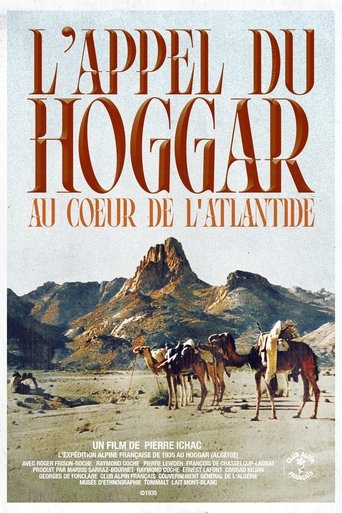
The Call of the Hoggar, In the Heart of Atlantis
1935 · ★ 10
Documentary on the French Alpine expedition to Hoggar in Algeria, starring Roger Frison-Roche, Raymond Coche, Pierre Lewden, and François de Chasseloup-Laubat. The 1935 French Alpine Expedition to Hoggar was conceived and prepared by Lieutenant Raymond Coche, the ideal leader for an expedition that would combine alpine and Saharan terrain in Algeria. Among his goals, he set himself the task of leading a French rope team to the still-untouched summits of Atakor and Tefedest and planting the French flag there. His old friend, Pierre Lewden, an athlete and journalist, was soon on the team, and to complete their project and complete the trio, they called on Roger Frison-Roche, a guide from Chamonix and one of the best climbers of this generation. A few days before their departure from Paris, filmmaker Pierre Ichac joined them.
More info →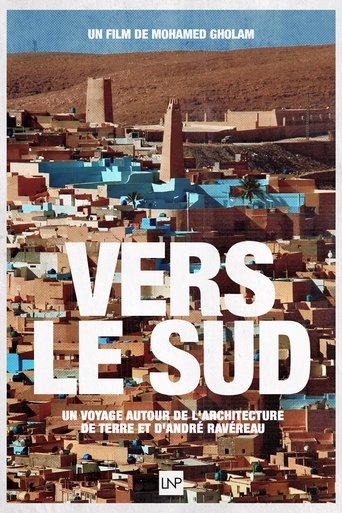
Towards the South, A journey around earthen architecture and André Ravéreau
2020 · ★ 10
Across two countries, France and Algeria, and five cities, Mohamed Gholam takes us south to tell us about the earthen and vernacular-inspired architecture of André Ravéreau. Passing through Lyon, Marseille, Algiers, and Djelfa, this adventure will take us to Ghardaïa, in the Algerian desert. The documentary presents the following buildings: L'Orangerie in Lyon, the Village Terre de l'Isle-d'Abeau in Villefontaine, the Unité d'Habitat or Cité Radieuse in Marseille, L'Aérohabitat in Algiers, the Palais des Raïs or Bastion 23 in Algiers, the Hôtel des Postes in Ghardaïa, and the low-cost housing of Sidi Abbaz de Bounoura.
More info →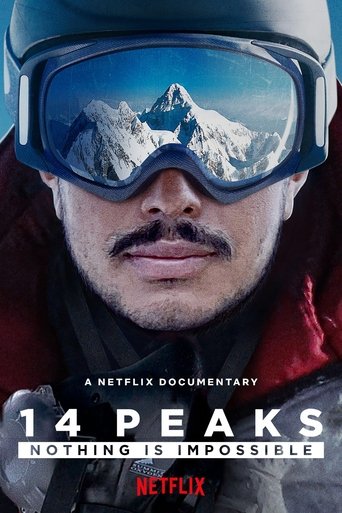
14 Peaks: Nothing Is Impossible
2021 · ★ 7.3
In 2019, Nepalese mountain climber Nirmal “Nims” Purja set out to do the unthinkable by climbing the world’s fourteen highest summits in less than seven months. (The previous record was eight years). He called the effort “Project Possible 14/7” and saw it as a way to inspire others to strive for greater heights in any pursuit. The film follows his team as they seek to defy naysayers and push the limits of human endurance.
More info →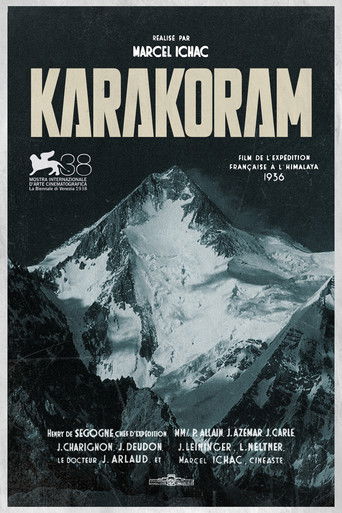
Karakoram
1937 · ★ 9.5
Account of the first French expedition to the Himalayas, which attempted to climb the hidden peak (Gasherbrum I) in 1936, from the preparations for the trip to the end of the ascent. After a long approach walk through quasi-desert regions, then on a huge glacier, the caravan of 700 porters arrives at the foot of Hidden Peak. The expedition was led by Henry de Ségogne, with Jean Charignon, Pierre Allain, Raymond Leininger, Jean Carle, Jean Deudon, Louis Neltner, Jacques Azémar, doctor Jeand Arlaud and director Marcel Ichac. Weather conditions, logistical problems and a strike among Sherpas forced the team to retire at 6900m on the south face. The film received the Silver Lion at the Venice Film Festival in 1938.
More info →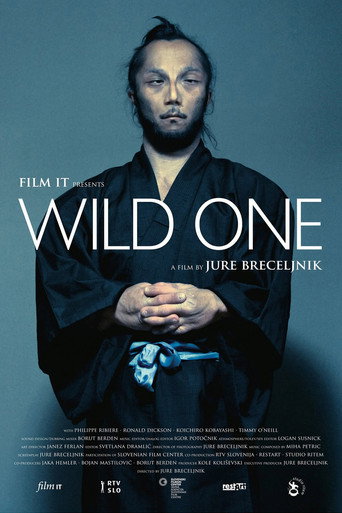
Wild One
2012 · ★ 10
In 1977, Philippe Ribiere is born in Martinique with the Rubinstein-Taybi Syndrome. Abandoned by his parents, he is left to the hospital, where he is bound to spend the first four years of his life and undergo a series of arm and leg operations. He is alone and different. At the age of 4, he is taken to France to be adopted by a French family. In 1994, Philippe discovers climbing, which is much more of a challenge to him than it is to others. However, he also discovers how to turn his handicap into an advantage trough climbing and so make his way into the society. The story of Philippe Ribiere is a story of loneliness, searching for the answers, discovering of being different, it is a story of courage, will, fearlessness, freedom, seeking for love and overcoming the impossible.
More info →