The last people of Chernobyl 2
2019 · 86m · Documentary
Film tells a story about people that to this day live in the Chernobyl exclusion zone. The zone was created after the disaster in 1986. Most of them live in wooden cottages with no running water and sometimes with no electricity in almost completely abandoned villages. Despite harsh conditions they don't want to leave. "I was born here, and here I shall die" is what they often say.
More Like This

Chernobyl
2024 · ★ 9
With the good of the people in mind, Valery Legasov, a Soviet scientist called to the scene of the Chernobyl nuclear disaster, stands up to censorship behind the Iron Curtain.
More info →
Chernobyl: The Last Battle of the USSR
2021 · ★ 8.2
Three decades after the nuclear explosion, almost everything has been said about this ecological and sanitary disaster that made Pripiat a part of History. How did the greatest industrial disaster change the course of History, disrupt global geopolitics and, directly or indirectly, redistribute the balances and power relations of the twentieth century? The world will never be the same again. By retracing the incredible battle waged by the Soviet Union against radiation, this film proposes to retrace and enlighten an extraordinary story, while exploring the historical stakes in the medium and long-term…
More info →
Life After People
2008 · ★ 7
In this special documentary that inspired a two-season television series, scientists and other experts speculate about what the Earth, animal life, and plant life might be like if, suddenly, humanity no longer existed, as well as the effect humanity's disappearance might have on the artificial aspects of civilization.
More info →
The Last People of Chernobyl 3
2020
This documentary tells a story about people that to this day live in the Chernobyl Exclusion Zone. Shows their daily struggles and lets them share their stories.
More info →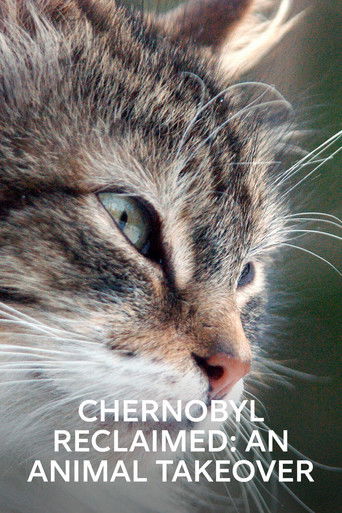
Chernobyl Reclaimed: An Animal Takeover
2007 · ★ 6.2
What would happen if the world were suddenly without people - if humans vanished off the face of the earth? How would nature react - and how swiftly? On the edge of Europe, the deserted village of Chernobyl reveals the surprising answer after an unplanned experiment. Chernobyl was abandoned by people after the worst nuclear disaster in history (April 26, 1986). A level 7 meltdown resulted in a severe release of radioactivity following a massive explosion that destroyed the reactor. More than 20 years later, Chernobyl has been taken over by a remarkable collection of wildlife and descendents of pets that were left in the city when its residents fled the nuclear fallout. Unexpectedly in the aftermath of this disaster, Chernobyl has become a sanctuary for plants, birds, and animals, including some species thought to be on the brink of extinction.
More info →
Chernobyl Heart
2003 · ★ 7.5
This Academy Award-winning documentary takes a look at children born after the 1986 Chernobyl nuclear plant disaster who have been born with a deteriorated heart condition.
More info →
Azure Dust - Inside Chernobyl's Exclusion Zone
2016 · ★ 7.8
The story about Chornobyl area, all around the world we know of the disaster in 1986. The film may be called a guide to the Exclusion Zone. Thanks to the unique footage from the place of the tragedy, that the crew succeeded to capture, the viewers will have a chance for a full immersion into the atmosphere of the events and, along with the heroes of the film, feel the dreadful and amazing air that reigns where one of the major anthropogenic disasters took place.
More info →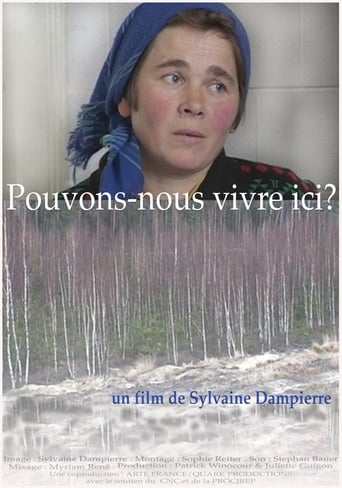
Can We Live Here?
2002
Olmany, Terebejov, Gorodnaïa: Three villages in the Stolyn district, Belarus, 200 kilometers from Chernobyl. In this area, the radiation rate was considered too low to justify the systematic evacuation of the population. Sixteen years after the disaster, life continues in a seemingly unchanged landscape. These farming communities face an invisible threat on a daily basis.
More info →
Heavy Water: A Film for Chernobyl
2007 · ★ 6
On April 26th, 1986, reactor four at Chernobyl nuclear power station explodes, sending an enormous radioactive cloud over Northern Ukraine and neighbouring Belarus. The danger is kept a secret from the rest of the world and the nearby population who go about their business as usual. May Day celebrations begin, children play and the residents of Pripyat marvel at the spectacular fire raging at the reactor. After three days, an area the size of England becomes contaminated with radioactive dust, creating a 'zone' of poisoned land. Based on Mario Petrucci's award-winning book-length poem (split over two books), 'Heavy Water: a film for Chernobyl', and the shorter version 'Half Life: a Journey to Chernobyl", tells the story of the people who dealt with the disaster at ground-level: the fire-fighters, soldiers, 'liquidators', and their families.
More info →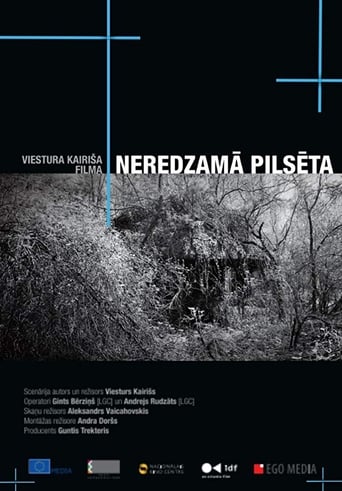
The Invisible City
2014
A story about a city built as a paradise but turned into hell – a city slowly turning into paradise again, just in a different way. Igor has been living in the Chernobyl Zone for almost ten years, for peace and a chance to escape modern civilization. Psychological issues, both personal and global, are still troubling him, and he embodies both harmonizing peace and supernatural stress. And an existential secret – the secret of the essence of life. He is surrounded by the elderly inhabitants of Chernobyl, living in villages entirely overcome by nature. They lead their unrealistic Atlantean lives, from which even war in Ukraine seems to be happening on another planet.
More info →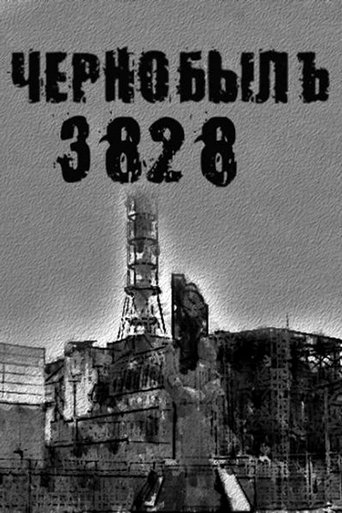
Chernobyl.3828
2011
Military people call such places "FRONTLINE", liquidators who worked at the Chernobyl nuclear station called it "ROOF COATING". It was the most contaminated, and therefore the most dangerous, place in the zone. The remains of the roof coating of the 4th reactor. The operation on decontaminating the roof lasted more than five months. We will tell about only two days. About the most important two days in the life of an explorer - dosimetrist Valeriy Starodumov. He participated in this operation until it was over. He himself came out to the roof and led people there. He himself planted the "victory banner" at the level of 75 meters, as the signal for the zone: the roof coating has been decontaminated! Now, 25 years later, Valeriy Starodumov comes back to the zone. Now Chernobyl is a tourist object. But not for him...
More info →