Smara's smile
2012 · 27m · Documentary
This is the story of Buyema Abdelfatan, also known as Castro, an ex Saharan soldier that now a days runs a centre for disabled children in the refugee camp of Smara (Tindouf, Algeria). A personal project that has earned him both praise and criticism, but could not continue without his dedication, perseverance and humanitarian aid that he receives.
More Like This
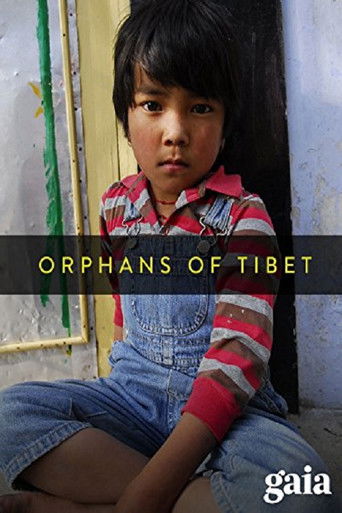
Orphans of Tibet
2010
Each year, groups of Tibetan children secretly flee their homeland over the Himalayas to reach schools in India founded by the government in exile. Entrusted to smugglers, they are risking their lives by illegally crossing the great Himalayan range, a towering rampart between Tibet and India. The director will take us in the Mussorie school, in North India, where two thousand four hundred children have been rescued. They have left behind their family childhood and are now considered as orphans. We will discover the itineraries of Sonam, aged nine, and Dholma, the little new girl of the school. Here in India, they are taught about Tibetan culture and will find out about the history of their country and their ancestors. Sonam and Dholma's story is that of thousands of Tibetan children. Are they orphans of a lost country or bearers of hope who will save an endangered culture?
More info →
They are Sacred
2025
Following young Anders and his father, Dr. Grant Bruno, of the Samson Cree Nation, this documentary gives viewers unique access to the world of an autistic child, and to follow his father’s journey to bring back traditional First Peoples perspectives in our contemporary world.
More info →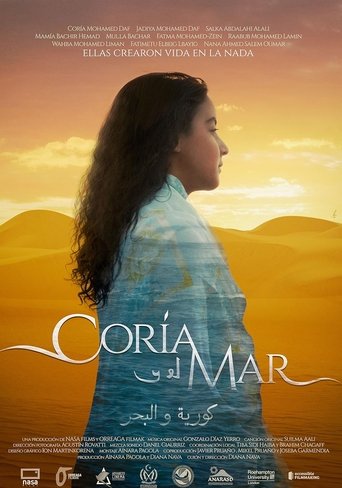
Coría and the sea
2014
This is a story about women who are fighters, tenacious, hopeful, active women…who were capable of lifting, from nothingness, in the harshest landscape of the world, life. They are the Sahrawi women. 40 years ago, they were forced into exile; the men of this region, marched to war and the women created “temporary cities”: The Refugee Camps. They invented a new day to day life which made possible a sustainable existence and a hope, of one day returning home. Coría every night dreams of the sea; the majestic image of its water, the sound of its waves, are the echoes that join the people with their homeland. The will beats in the hearts of the Sahrawi women who maintain their unbreakable spirit, ever moving forward.
More info →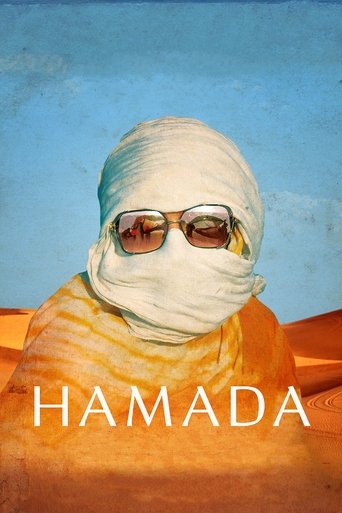
Hamada
2019 · ★ 6
Filled with vitality, humor and unexpected situations, Hamada paints an unusual portrait of a group of young friends living in a refugee camp in the middle of nowhere. Western Sahara is known as “the last colony in Africa” and this conflict is the longest and one of the least known ongoing disputes in the continent, but the Sahrawi people refuse to become invisible.
More info →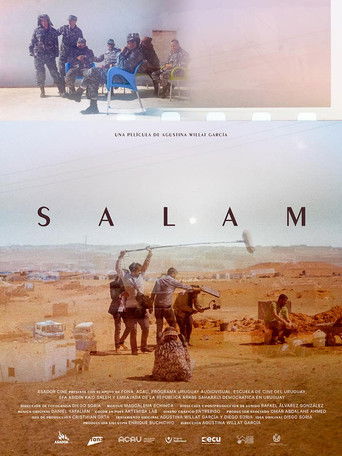
Salam
2024
The Sahrawi people have lived in exile for almost half a century in the driest desert of the African continent. There, where basic resources such as water are scarce, there is a film school. As the world looks the other way, a group of young filmmakers carries out a battle against oblivion.
More info →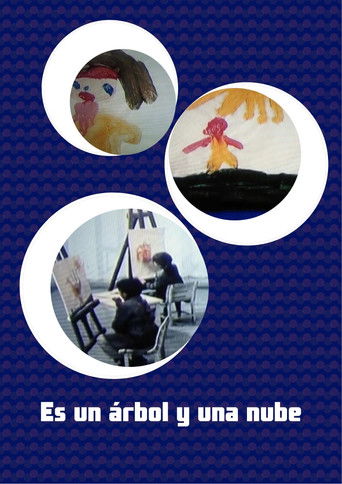
It's a Tree and a Cloud
1968
In this documentary about art psychotherapy, children express themselves and their conflicts through drawing.
More info →
Musawat, inclusion in the Sahrawi camps
2014
Education Center for disabled children located in the Sahrawi refugee camps in Algeria. Despite the precarious conditions in which this population lives since 40 years ago, the Polisario Front as the representative of the Sahrawi people has promoted inclusion as a way to avoid marginalization and discrimination of one of the most vulnerable populations within these territories: children with special needs. "Castro" is the man who devotes his life to this beautiful project fighting all odds: physical, psychic, social, economic, and even the incomprehensions of his own society. The Sahrawis are living (resisting) in one of the harshest deserts on Earth but Castro has the magic formula to achieve the inclusion of these wonderful beings in his society and in the rest of the world: MUSAWAT, EQUALITY.
More info →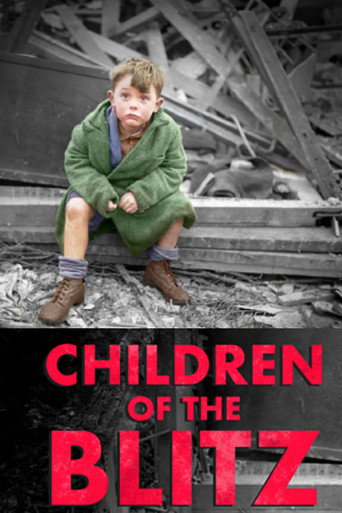
Children of the Blitz
2026
During The Blitz, the British government had plans in place to evacuate approximately 3.5 million people, but only around 1.5 million left towns and cities for the countryside, with the majority of those being children. Children of the Blitz tells the stories of those who remained at home, often to help their families, or because their parents couldn’t bear to send them away. Through the eyes of survivors who were children at the time, the film will explore how The Blitz contributed towards our sense of national identity and how the ‘Blitz Spirit’ is still held up as a defining characteristic of Britishness today. The film will also examine the starker reality for children whose homes were destroyed, including those who lost parents, and some who were left to fend for themselves - many grew up with their stories unheard.
More info →
Sand bellies
2024
The Algerian region of Tindouf is home to more than 170,000 Sahrawis, who have been living in refugee camps since 1976, when Morocco occupied the Western Sahara region. In a place of inhospitable conditions and scarcity, the Sahrawi population lives on dwindling humanitarian aid. Six percent of them face the added difficulty of coeliac disease.
More info →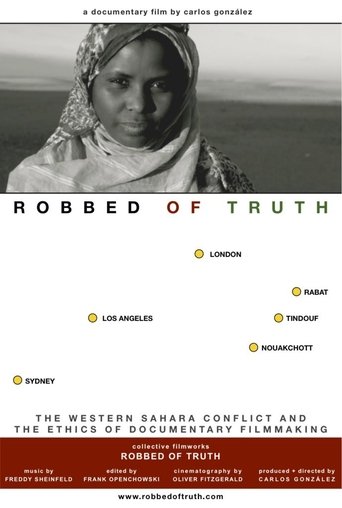
Robbed of Truth
2011
This is the true story of Fetim Salam, a Saharawi refugee falsely portrayed as a slave in the Australian documentary 'Stolen'. Australian filmmakers, Violeta Ayala and Daniel Fallshaw, travel to the Saharawi refugee camps in Tindouf, Algeria in 2007 and claim to discover 20,000 slaves in the camps run by the independence movement Polisario Front. Refugees are outraged for being portrayed as slaves, and humanitarian aid workers are incredulous about these allegations as they know the camps intimately. Filmmaker Carlos Gonzalez retraces their steps in search of the truth and finds a web of lies, misinformation and Moroccan operatives reshaping the truth.
More info →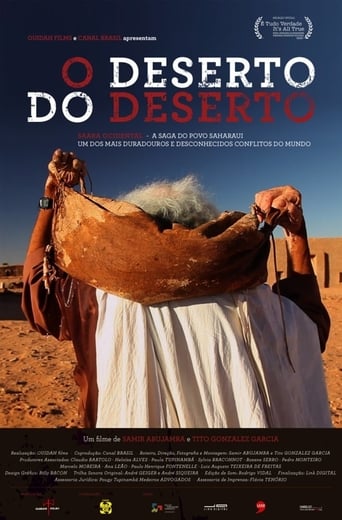
The Desert of the desert
2016
'The Desert of the Desert' is a feature documentary about one of the longest-running and least- known colonial conflicts and the plight of the Sahrawi desert nomads of Western Sahara since Morocco's 1975 invasion. Shot in Jan./Feb. 2014 in the Saharawi Liberated Territories of Western Sahara, and in the Saharawi Refugee Camps in Tindouf, Algeria, the film shows the saga of the Sahrawis, their struggle to regain their homeland and the sad paradox of a nomadic people forced to live in confinement. During production, the crew made a rare treck through 3,000 kilometers of bleak and dangerous desert, becoming unwitting participants in the conflict when their jeep was blown up by an anti-tank mine less than a kilometer from their destination on Western Sahara's Atlantic coast.
More info →