Deutschland grüßt Kennedy - Vier geschichtliche Tage
1963 · 58m · Documentary
Report on the four historic days from June 24 to June 27, 1963, during which the President of the United States visited the Federal Republic of Germany.
More Like This
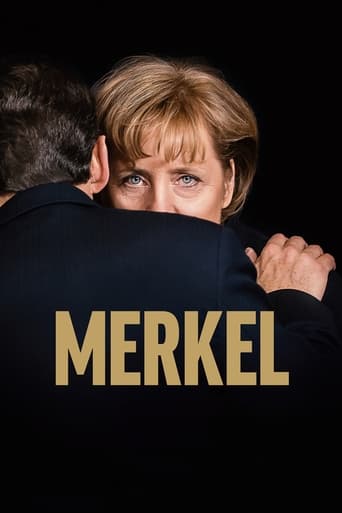
Merkel
2022 · ★ 7
Driven by extensive archive material and interviews with those who know her, this is the astonishing story of how a triple outsider – a woman, a scientist, and an East German – became the de facto leader of the “Free World”, told for the first time for an international audience.
More info →
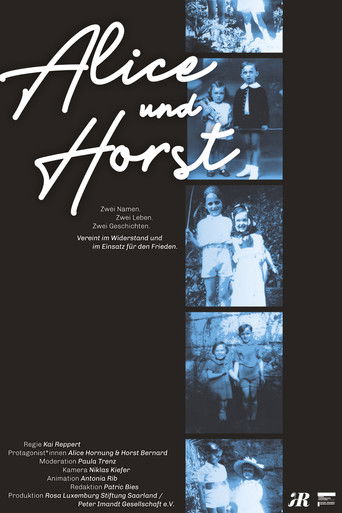
Alice and Horst
2026
Alice and Horst paints a moving portrait of two siblings from Saarbrücken whose lives were shaped by their family’s antifascist resistance. As children, Alice Hornung and Horst Bernard were forced to flee from the Nazis into exile in France, where, despite constant danger, they also experienced great solidarity. After their return they continued their parents’ political commitment: against fascism, for peace and disarmament. The film combines personal memories with rare archival footage and portrays two individuals who, well into old age, remain unwavering in their commitment to justice and remembrance.
More info →
Karajan: Portrait of a Maestro
2019 · ★ 7
An account of the life and work of controversial German orchestra conductor Herbert von Karajan (1908-89), celebrated as one of the greatest musicians of the twentieth century.
More info →Die Dichter und die Räterepublik
1990 · ★ 6
Documentary film with play scenes about the rise and fall of the short-lived Bavarian Soviet Republic in 1919 from the perspective of various well-known poets and writers who experienced the events as contemporary witnesses.
More info →
Nazi-Karrieren in der DDR?
2016
It was a foundational myth of the GDR that it was anti-fascist and free of Nazis. But was that really the case? The film takes a critical look on the actual way the brown heritage was dealt with in the GDR.
More info →
Woher kommst du eigentlich? Schwarze in Deutschland
2021
Prejudices, ignorance, and racism still leave their mark on the everyday life of black Germans, respectively Europeans, until today. How do Afro-Germans deal with their history? Which colonial-racist patterns still shape our society today? With insights into various historic epochs, it is made clear that THE history of the Black people does not exist. And neither exists THE history of white people.
More info →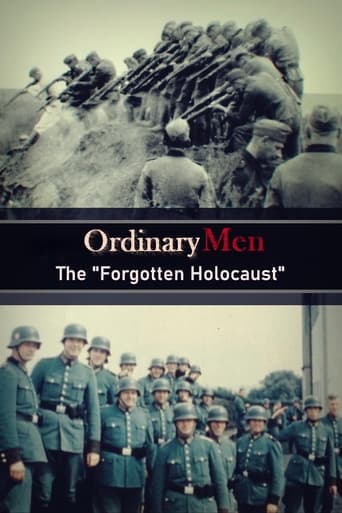
Ordinary Men: The "Forgotten Holocaust"
2022 · ★ 7.4
Six million Jews died during World War II, both in the extermination camps and murdered by the mobile commandos of the Einsatzgruppen and police battalions, whose members shot men, women and children, day after day, obediently, as if it were a normal job, a fact that is hardly known today. Who were these men and how could they commit such crimes?
More info →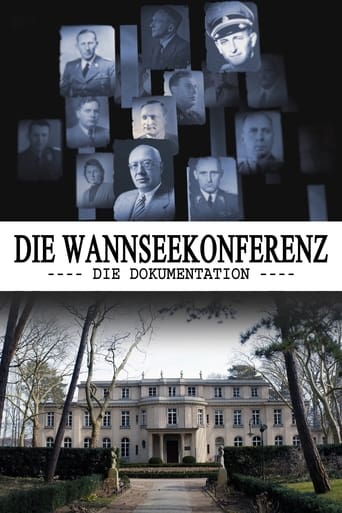
The Wannsee Conference: The Documentary
2022 · ★ 6.8
It was arguably the deadliest conference in human history. The topic: plans to murder 11 million Jews in Europe. The participants were not psychopaths, but educated men from the SS, police, administration and ministries. The invitation to the meeting at Wannsee came from Reinhard Heydrich, head of the Reich Security Main Office. The Wehrmacht's campaigns of conquest in Eastern Europe marked the beginning of the systematic murder of Jews in Poland and the Soviet Union. In mid-September 1941, Hitler made the decision to deport all Jews from Germany to the East. Although there had been transports before, Hitler's order represented a further escalation in the murderous decision-making process. Persecution and discrimination had been part of everyday life since 1933. But as a result, the living conditions for the Jews in the Third Reich became even more difficult, among them the Berlin Jew Margot Friedländer, born in 1921, and the Chotzen family.
More info →Das letzte Pokalfinale der DDR – Zwischen Mauerfall und Wiedervereinigung
2020
In the midst of the transition towards reunification and a market economy, two teams meet for the last time in the final of the FDGB Cup shortly after the 1990 Volkskammer elections: favorites Dynamo Dresden and Polizeisportverein Schwerin. Matthias Hufmann and Benjamin Unger take a look back 30 years later.
More info →