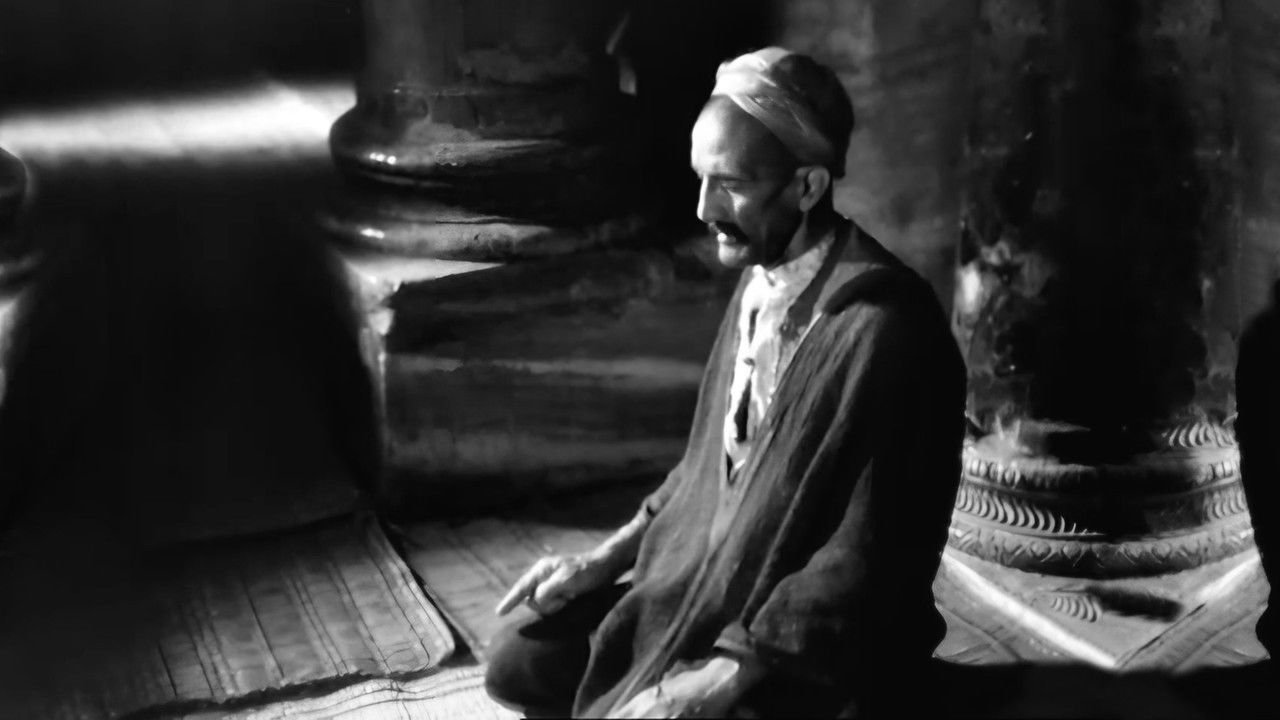
Islam
★ 10 · 1949 · 23m
"Islam" by Georges Régnier (1949) is a documentary about Islamic art in Algeria, Tunisia, Morocco, and Spain. The documentary received a special mention at the Venice Film Festival in 1949. Georges Régnier, a French documentary filmmaker active in the post-war period, was interested in North African cultures and colonial issues. In this film, he traces the history of Islam and its architectural art across these regions, and describes the expansion of Islam from Arabia to the Maghreb and Andalusia, highlighting mosques, minarets, and palaces such as those in Kairouan, Algiers, and Marrakech, all accompanied by the sounds of the Arabic call to prayer.
More Like This
Misunderstood
1983 · ★ 6.5
A workaholic father becomes sole parent to his two young sons, and finds it hard to relate to them, consumed as he is with his own grief.
More info →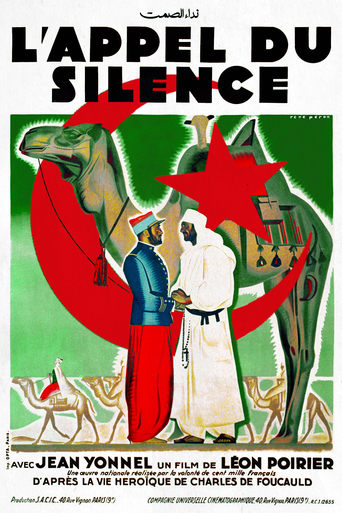
The Call
1936 · ★ 8
The story of Charles de Foucauld, born September 15, 1858 in Strasbourg (France) and died December 1, 1916 in Tamanrasset in Algeria during the French colonial period, was a cavalry officer of the French army who became an explorer and geographer, then Catholic religious, priest, linguist and hermit in the Hoggar desert in Algeria.
More info →
Tunisian Literature at the French National Library
1986
Commemorating the 1986 Tunis-Paris exhibition Privileged Spaces and Times: French-Speaking Intellectual Production in Tunisia, Sarah Maldoror’s film points the way toward a more polyvocal understanding of the role of France’s National Library worldwide.
More info →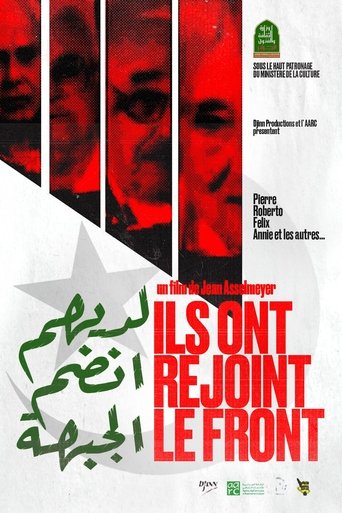
They Joined the Front
2012 · ★ 10
In this film, four key witnesses, who live in Algeria today, as full-fledged Agerians, show us what this colonization was really like, so "beneficial" that they themselves perceived it as the oppression of one people by another. Three of them, who today would be called "pieds noirs," in other words, those Europeans to whom France, the occupying power, gave the best land, taken from the indigenous populations, work, and exclusive rights, not shared by the entire population, lived rather well compared to the majority of the "natives." The fourth was far from all that and lived in Argentina. Annie Steiner, Felix Colozzi, Pierre Chaulet, and Roberto Muniz explain to us what led them to show solidarity with the struggle of the weak, the humiliated, and to risk their freedom and their lives by committing to liberate Algeria.
More info →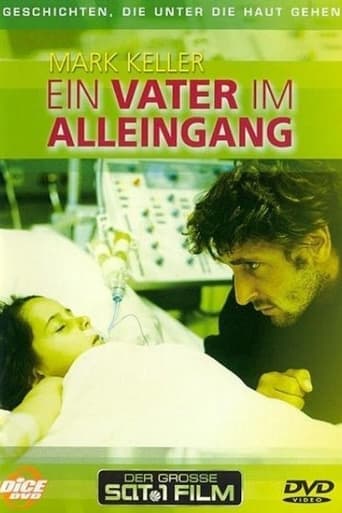
Ein Vater im Alleingang
1999 · ★ 8
After his daughter is contaminated with an unknown poison gas and put into an induced coma, her father, a sports reporter, starts his own research to obtain a sample of the gas so that an antidote can be developed. The trail leads to Morocco, but a powerful organization tries to stop the father's efforts.
More info →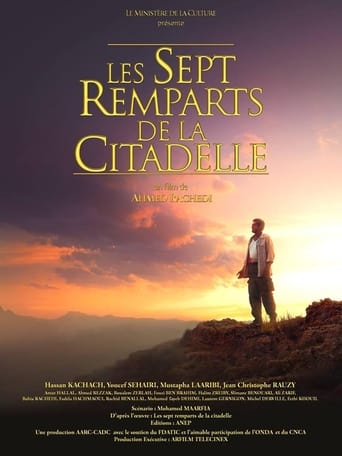
Les Sept Remparts De La Citadelle
2018 · ★ 10
The feature film “The seven ramparts of the citadel”, a fiction recounting the conflict between an Algerian family expropriated from its land and a bloodthirsty settler; by director Ahmed Rachedi. Adapted from the eponymous novel by Mohamed Maarafia, the film, whose plot begins in 1954, tells the story of two characters, Thebti and Lucien, “the fellaga and the colonist”, a story of crossed destinies. “After having engaged in a fight to the death, after having both traveled a long path of embers, (they) finally find themselves face to face and above all each face to themselves”.
More info →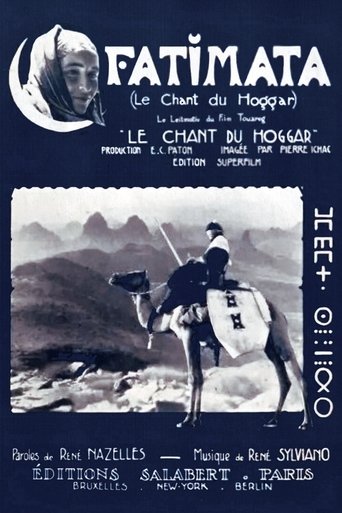
The Song of the Hoggar
1931 · ★ 10
Le Chant du Hoggar, a fictionalized documentary directed by Pierre Ichac, which takes as its theme the adventurous life of the Tuaregs of yesteryear, the setting being the lesser-known mountains and valleys of the Hoggar, and the actors being the Tuaregs themselves. This production, of considerable interest, was filmed last year by Pierre Ichac, a project manager for the General Government of Algeria. For six months, the young director, who traveled more than 7,000 kilometers by car and about 1,000 kilometers by Méhari through the Hoggar mountains, recorded 8,000 meters of film. The beautiful Fatimata reigns over all hearts in the wandering Tuareg tribe, with her herds, in the high valleys of the Hoggar. But she loves The Lion, the bravest of the young warriors of an enemy tribe. And it is Fatimata's name that The Lion lovingly carves on the rocks of the mountain.
More info →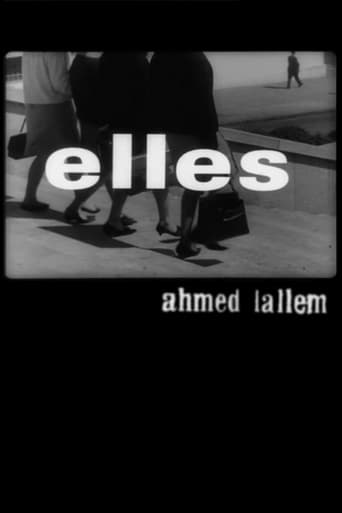
The Women
1966 · ★ 8
Documentary dialogue with young women in Algiers on their experience of independence shortly after their country's independence.
More info →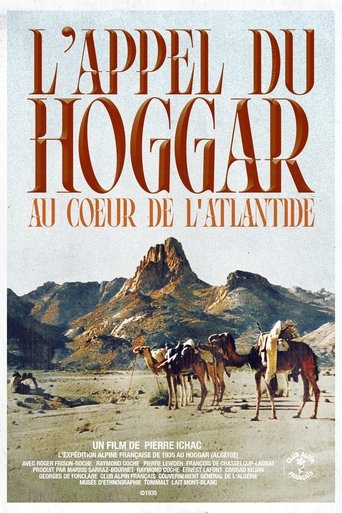
The Call of the Hoggar, In the Heart of Atlantis
1935 · ★ 10
Documentary on the French Alpine expedition to Hoggar in Algeria, starring Roger Frison-Roche, Raymond Coche, Pierre Lewden, and François de Chasseloup-Laubat. The 1935 French Alpine Expedition to Hoggar was conceived and prepared by Lieutenant Raymond Coche, the ideal leader for an expedition that would combine alpine and Saharan terrain in Algeria. Among his goals, he set himself the task of leading a French rope team to the still-untouched summits of Atakor and Tefedest and planting the French flag there. His old friend, Pierre Lewden, an athlete and journalist, was soon on the team, and to complete their project and complete the trio, they called on Roger Frison-Roche, a guide from Chamonix and one of the best climbers of this generation. A few days before their departure from Paris, filmmaker Pierre Ichac joined them.
More info →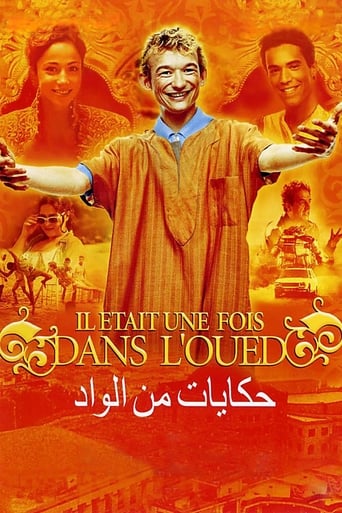
Once Upon a Time in the Oued
2005 · ★ 5.5
In 1988, Johnny Leclerc, the son of a Norman mother and an Alsatian father, lives in a suburban housing estate with his friends. He behaves like a Muslim, observes Ramadan and wears a djelaba. He's even convinced that his name is Abdelbachir and that he was born in a small village in the bled. When his friend Yacine gets into trouble with a local kaid and decides to return to Algeria for the vacations, he smuggles himself into the Sabri family's luggage to fulfill his dream and finally get to know his "roots". As soon as he arrived on the Algerian coast, Johnny felt right at home. But Yacine is opposed to his father, who wants to arrange his marriage.
More info →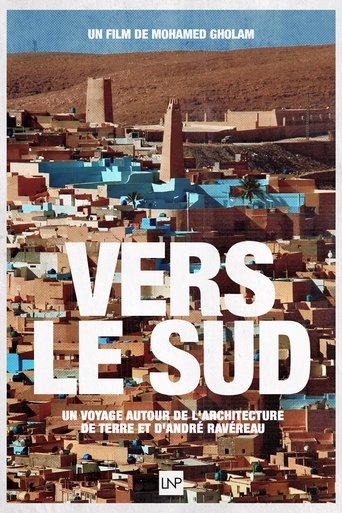
Towards the South, A journey around earthen architecture and André Ravéreau
2020 · ★ 10
Across two countries, France and Algeria, and five cities, Mohamed Gholam takes us south to tell us about the earthen and vernacular-inspired architecture of André Ravéreau. Passing through Lyon, Marseille, Algiers, and Djelfa, this adventure will take us to Ghardaïa, in the Algerian desert. The documentary presents the following buildings: L'Orangerie in Lyon, the Village Terre de l'Isle-d'Abeau in Villefontaine, the Unité d'Habitat or Cité Radieuse in Marseille, L'Aérohabitat in Algiers, the Palais des Raïs or Bastion 23 in Algiers, the Hôtel des Postes in Ghardaïa, and the low-cost housing of Sidi Abbaz de Bounoura.
More info →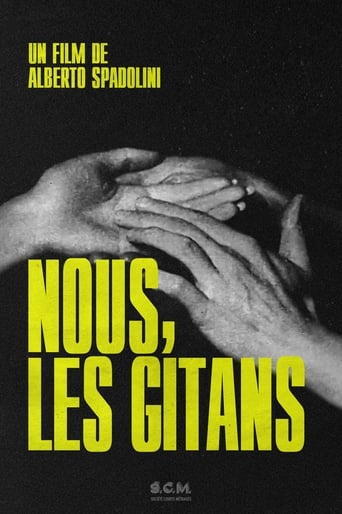
Nous, les Gitans
1951 · ★ 7
Alberto Spadolini, filmmaker and choreographer, dances to traditional Andalusian music. He pays tribute to the gypsy culture.
More info →