New York Portrait, Chapter III
★ 8.3 · 1990 · 15m · Documentary
"[Hutton’s] latest urban film, New York Portrait, Chapter III, takes on a unique tone in relation to Hutton’s ongoing exploration of rural landscape. The very fact that Hutton is dealing with older footage, with archives of memory more than immediacy, gives it a different texture than his earlier New York films. Hutton always found the presence of nature in the city, not only in his many shots of sky and vegetation, but also in the geometry and texture of the city itself, which seemed to project an independence from the human." (Tom Gunning)
More Like This
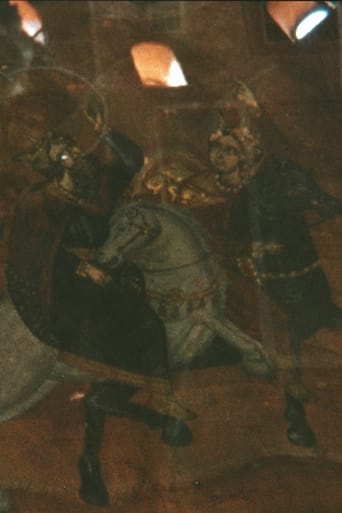
Bliss
1967 · ★ 8
The first film made by Markopoulos after moving to Europe, Bliss was shot over the course of two days using only available light to create a lyrical study of the interior of the Church of St. John on the island of Hydra.
More info →1/57: Experiment with Synthetic Sound (Test)
1957 · ★ 4.7
Mostly dark, rejecting images which are repeated. A stone wall, the chamber of a revolver which is, at first not recognizable, a close-up of a cactus. The duration of the takes emphasises the photographic character of the pictures, simultaneously with a crackling, brutal sound. (Hans Scheugl)
More info →Kokain-Krämpfe bei der Katze
1939
Resorptive symptoms of intoxication after injection of cocaine in cats. Motor and vegetative arousal stages, tonic-clonic spasms and their spread in the motor system are shown in the individual phases of the poisoning.
More info →
Running Fields III
2024
Twenty images of a camera running next to a chemical platform and capturing abstract light throught improvised gestures and asymmetrical motion
More info →
Women of the Ghetto Bathing
1901 · ★ 6
The subject is a group of women bathing in a public swimming pool. The camera was placed on the edge of the pool and the full extent of the film shows the women in the pool. Only the heads and shoulders of most of the women are visible but it is possible to see they are wearing rented bathing attire.
More info →Wolf Hunt
1908 · ★ 7
An early silent film, made before intertites became common (which is why very early silent films are narrated, at best). This was filmed in 1907 but released in 1908. It was made at the request of Teddy Roosevelt, who saw coyotes being caught in Oklahoma *by hand*, and folks back east didn't believe him. While this movie is called "The Wolf Hunt", it was actually coyotes being caught, not wolves.
More info →
Everyday Life
1976 · ★ 5.2
Dialogue-free short detailing the daily tasks of a man and his wife.
More info →
Popsong
2016
The world appears black on black until it separates from itself, looks at itself, includes itself, and sees colour.
More info →Boxing Match; or, Glove Contest
1896 · ★ 3.8
Staged boxing match between Sergeant-Instructor Barrett and Sergeant Pope, with a round, interval, and knockout.
More info →