Joe Louis: America's Hero Betrayed
★ 7 · 2008 · 75m · Documentary
An American story. Traces the career of Joe Louis (1914-1981) within the context of American racial consciousness: his difficulty getting big fights early in his career, the pride of African-Americans in his prowess, the shift of White sentiment toward Louis as Hitler came to power, Louis's patriotism during World War II, and the hounding of Louis by the IRS for the following 15 years. In his last years, he's a casino greeter, a drug user, and the occasional object of scorn for young Turks like Muhammad Ali. Appreciative comment comes from boxing scholars, Louis's son Joe Jr., friends, and icons like Maya Angelou, Dick Gregory, and Bill Cosby.
More Like This
Dresden Story
1954 · ★ 7
People are interviewed in Dresden, Ontario, to sample local attitudes towards racial discrimination against black people that brought this town into the news. After a round-up of the opinions of individual citizens, white and black, commentator Gordon Burwash joins two discussion panels, presenting opposite points of view. The rights and wrongs of the quarrel are left for the audience to decide.
More info →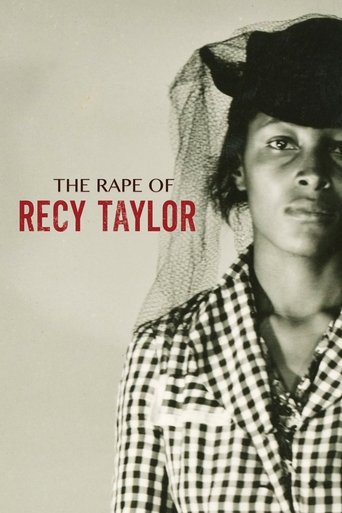
The Rape of Recy Taylor
2019 · ★ 7.7
Recy Taylor, a 24-year-old black mother and sharecropper, was gang raped by six white boys in 1944 Alabama. Common in Jim Crow South, few women spoke up in fear for their lives. Not Recy Taylor, who bravely identified her rapists. The NAACP sent its chief rape investigator Rosa Parks, who rallied support and triggered an unprecedented outcry for justice. The film exposes a legacy of physical abuse of black women and reveals Rosa Parks’ intimate role in Recy Taylor’s story.
More info →
The Black List: Volume One
2008 · ★ 6.5
As a new chapter begins in this country, THE BLACK LIST offers a dynamic and never-before-heard perspective from achievers of color. This series of inspired - and inspiring - observations on African-American life in the 21st century forms a roll call of some of the most compelling politicians, writers, thinkers and performers ever to tackle their fields of endeavor. Watch the interview-portraits and get a sharper snapshot of where this country has been and where it's headed.
More info →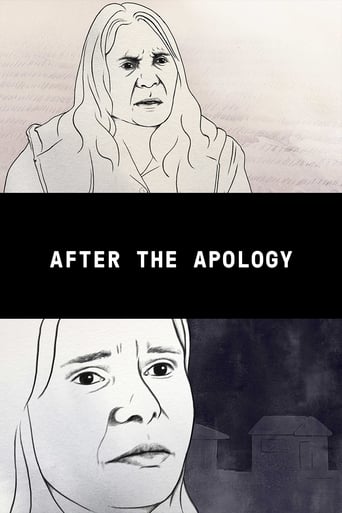
After the Apology
2017
Suellyn thought the Department of Community Services (DOCS) would only remove children in extreme cases, until her own grandchildren were taken in the middle of the night. Hazel decided to take on the DOCS system after her fourth grandchild was taken into state care. Jen Swan expected to continue to care for her grandchildren but DOCS deemed her unsuitable, a shock not just to her but to her sister, Deb, who was, at the time, a DOCS worker. The rate of Indigenous child removal has actually increased since Prime Minister Kevin Rudd delivered the apology to the ‘stolen generations’ in 2008. These four grandmothers find each other and start a national movement to place extended families as a key solution to the rising number of Aboriginal children in out-of-home care. They are not only taking on the system; they are changing it…
More info →
Two Towns of Jasper
2002 · ★ 7.5
Using two separate filmmaking teams (an all-white crew filming white residents and an all-black camera crew filming black residents), TWO TOWNS OF JASPER captures very different racial views by townsfolk in Jasper, Texas, the location for a racially motivated murder of an African American man in 1998.
More info →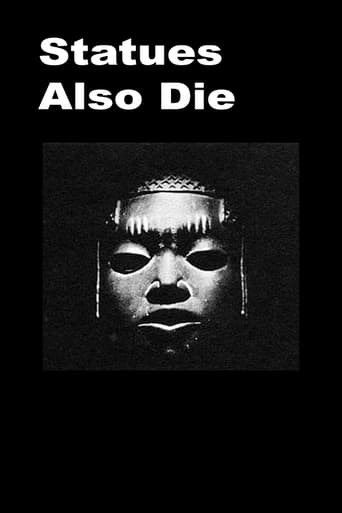
Statues Also Die
1953 · ★ 6.9
Commissioned by the journal Présence Africaine, this short documentary examines how African art is devalued and alienated through colonial and museum contexts. Beginning with the question of why African works are confined to ethnographic displays while Greek or Egyptian art is celebrated, the film became a landmark of anti-colonial cinema and was banned in France for eight years.
More info →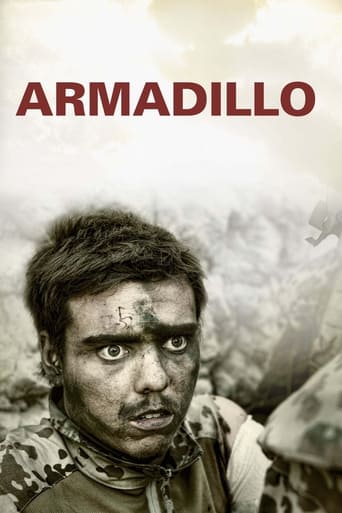
Armadillo
2010 · ★ 7
Danish soldiers are sent to Afghanistan in 2009 for 6 months, to help stabilize the country against the Taliban. They're stationed on Armadillo military base in Helman province. Unlike other war movies, this is the real deal – no actors.
More info →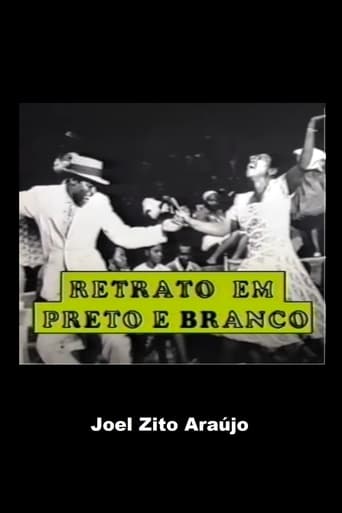
Retrato em Preto e Branco
1992 · ★ 8
The documentary is structured as a video letter from a black man denouncing the persistence of racism in Brazilian society and media, a century after the official end of slavery. Thus, it presents the contradictions between two images of racial relations in Brazil: the image disseminated abroad, which spreads the myth of racial democracy, and the internal image, presented in textbooks and on television, in which negative stereotypes are perpetuated against the black population.
More info →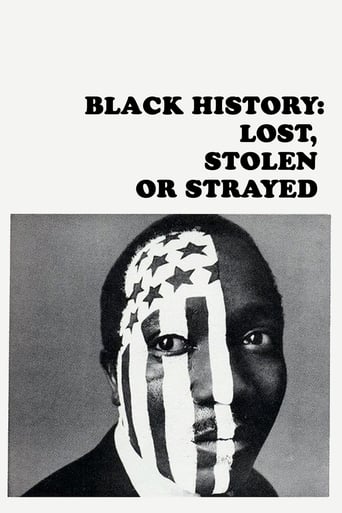
Black History: Lost, Stolen or Strayed
1968 · ★ 9
A documentary that reviews the numerous contributions of African-Americans to the development of the United States. From the perspective of the turbulent late 1960s, the fact that their positive roles had not generally been taught as part of American history, coupled with the pervasiveness of derogatory stereotypes, was evidence of how Black people had long been victims of negative attitudes and ignorance.
More info →OJ: Trial of the Century
2014 · ★ 7.7
OJ: TRIAL OF THE CENTURY, premiered on June 12, 2014 and it chronicles the twists and turns of the OJ Simpson murder trial and allows viewers to relive every moment of the investigation first-hand.
More info →
No Regret
1993 · ★ 4.6
Five gay Black men who are HIV-positive discuss how they are battling the double stigmas surrounding their infection and homosexuality.
More info →
Behind the Burning Cross: Racism USA
1991
A key overview of twentieth-century American fascism and antifascism produced in 1991 by the John Brown Anti-Klan Committee.
More info →