Slums: Cities of Tomorrow
★ 7.5 · 2014 · 81m · Documentary
One billion people on our planet—one in six—live in shantytowns, slums or squats. Slums: Cities of Tomorrow challenges conventional thinking to propose that slums are in fact the solution, not the problem, to urban overcrowding caused by the massive migration of people to cities. (Lynne Fernie, HotDocs)
More Like This
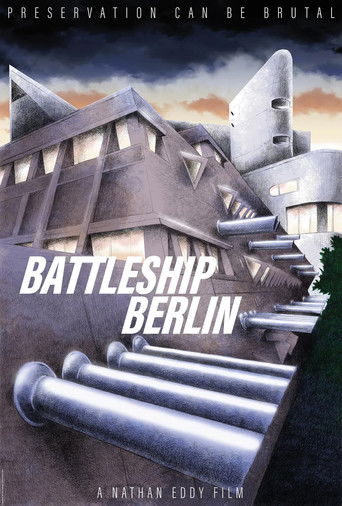
Battleship Berlin
2021
Berlin’s brutalist heritage is under fire. The city’s powerful Charité hospital wants to destroy a brutalist icon of the Cold War era: The infamous former animal research laboratory called the Mäusebunker. Meanwhile, a dedicated group of politicians, preservationists, architects, gallerists, and students fight for an adaptive reuse of these magnificent, uncompromisingly unique structures. Who will win? No matter the outcome, you’re left with the impression that preservation can be brutal.
More info →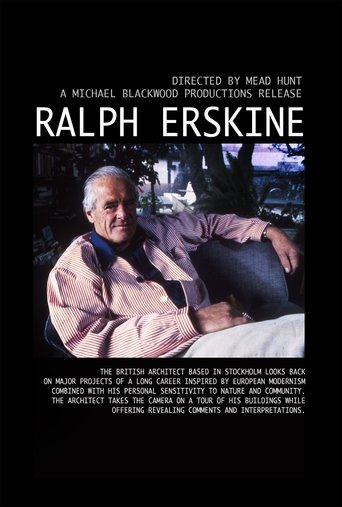
Ralph Erskine
1986
The British architect based in Stockholm looks back on major projects of a long career inspired by European Modernism combined with his personal sensitivity to nature and community. Erskine is especially valued for his vital understanding of social interaction, exemplified in commissions for universities and housing complexes built from Scandinavia to Italy. The architect takes the camera on a tour of his buildings while offering revealing comments and interpretations.
More info →
El-Sisi: Egypt's New Pharaoh
2025
Egypt, nicknamed "the mother of the world" by its people, is unrecognizable. Gigantic construction sites have sprung up in the desert at an exponential rate, including roads, bridges, and megaprojects on the Mediterranean coast. This new Egypt is an illusion: in 10 years, the population has sunk into unprecedented poverty. The regime shows no mercy to the poor. Abdel Fattah el-Sisi, the new pharaoh, and his army have set up a pyramid-shaped financial system, built on subsidies from major international institutions—including the European Union—and foreign investment. The most populous nation in the Arab world finds itself on the brink of collapse.
More info →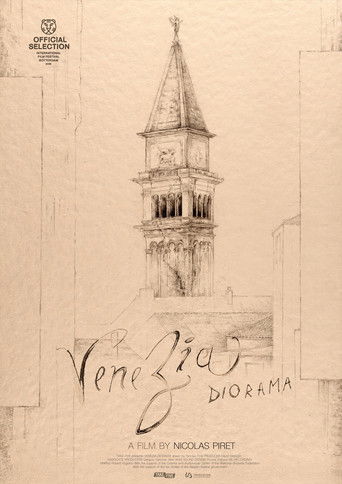
Venezia Diorama
2026
Through a series of animated art boards depicting a decaying Venice, the film unfolds like a set of postcards, capturing the mythical city's final moments of fragility. Blending archival footage with contemporary observations, and anchored by the story of the 1902 collapse of St Mark's Campanile, Venezia Diorama invites us to reflect on a city slowly eroding, yet suspended in time.
More info →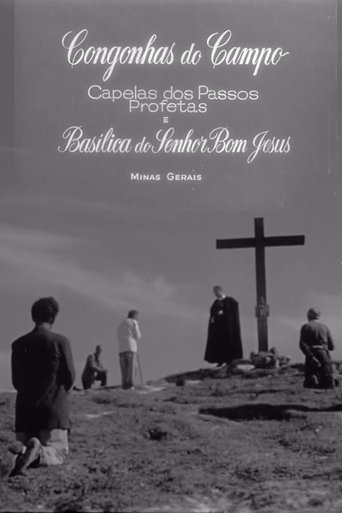
Congonhas do Campo
1957
Aspects of the city of Congonhas do Campo. The preponderance of baroque architecture, the Basilica of Senhor Bom Jesus de Matozinho, the six chapels on the terrace leading to Morro do Maranhão. Each chapel contains statues representing moments of the Passion of Christ. While in the first chapel there is Santa Ceia figuration, in the second there is the Passo Horto scene. The kiss of betrayal and the imprisonment of Christ before the scene of the third chapel. In the fourth, two scenes are gathered: the coronation and the flagellation. On the fifth, the Christ bears the cross and the crucifixion is featured in the sixth chapel. The twelve apostles of Aleijadinho and the Latin inscriptions of each one. The interior of the Basilica and its main altar, with the figure of the Lord Dead.
More info →
The Great North
2024
Beginning at the industrial revolution of the ‘great north’, Jenn Nkiru draws lines between peoples, cities, countries, buildings, movements, bodies and spaces(s) using a mixture of archive materials and new footage. There is little stillness as we are pushed and pulled through Black histories and communities across the city of Manchester and beyond. Nkiru has termed this filmmaking process “cosmic archeology”, and it is grounded in Afro-surrealism, experimental film and the Black arts movement.
More info →Die Hugenottenstadt Erlangen. Eine der interessantesten Städteanlagen Deutschlands
1931
A silent documentary film about the history and the architecture of the town of Erlangen in the Middle Franconia region in Bavaria, Germany.
More info →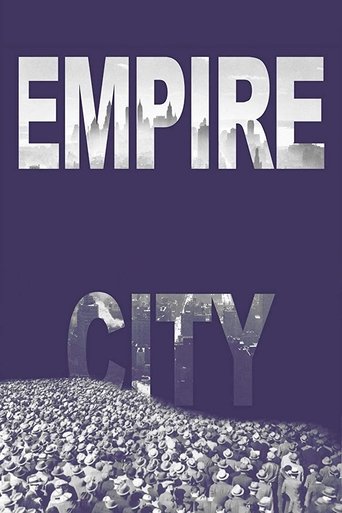
Empire City
1985 · ★ 9
A film essay contrasting the modern metropolis with its "golden age" from 1830-1930, with the participation of some of New York's leading political and cultural figures. Made at a time when the city was experiencing unprecedented real estate development on the one hand and unforeseen displacement of population and deterioration on the other. Empire City is the story of two New Yorks. The film explores the precarious coexistence of the service-based midtown Manhattan corporate headquarters with the peripheral New York of undereducated minorities living in increasing alienation.
More info →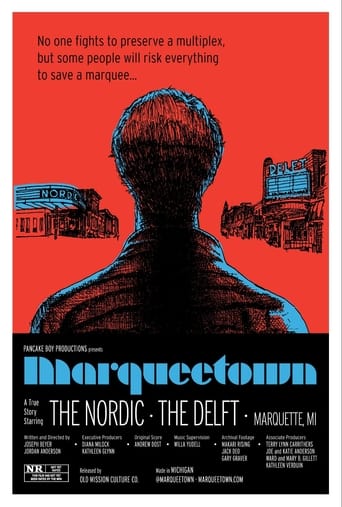
Marqueetown
2024
Through booms and busts, Delft Theatres and its innovative gem The Nordic endured in Marquette, Michigan for almost 100 years. Bernie Rosendahl’s crusade to restore the historic arthouse to its former glory reveals a hidden cinema empire in the Upper Peninsula.
More info →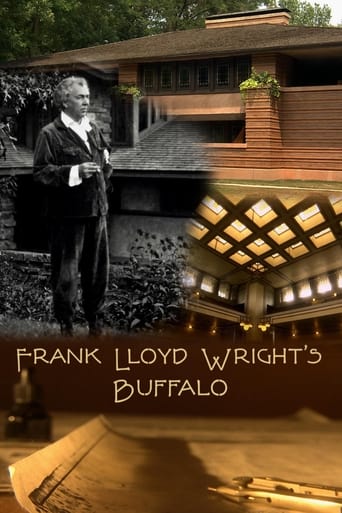
Frank Lloyd Wright's Buffalo
2006
In Buffalo, N.Y., some of the greatest works of American architecture relay a remarkable story that resonates with the universal themes of home, family and friendship. The charismatic Frank Lloyd Wright, destined to become America’s greatest architect, called Darwin Martin, an unassuming, wealthy businessman from Buffalo, his “best friend.” Frank Lloyd Wright’s Buffalo reveals how Martin’s three decades of support fostered Wright’s career and led to some of the architect’s renowned masterpieces—the Larkin Administration Building, the Darwin Martin Estates and the Martin summer home, Graycliff—all in Buffalo, New York.
More info →
Pueblo de lata
1972
Migrants from the countryside and unemployed people from neighbouring cities take over some unused land and establish a neighbourhood in the industrial zone of Maracay. The event coincides with a presidential election campaign, which motivates political demonstrations in that town.
More info →Fallingwater: Frank Lloyd Wright's Masterwork, with Reflections by Edward Kaufmann jr.
2011 · ★ 5
Documentary with new new high-definition footage of the Fallingwater house, but centered on an older 1982 interview with Edgar Kaufmann Jr.
More info →