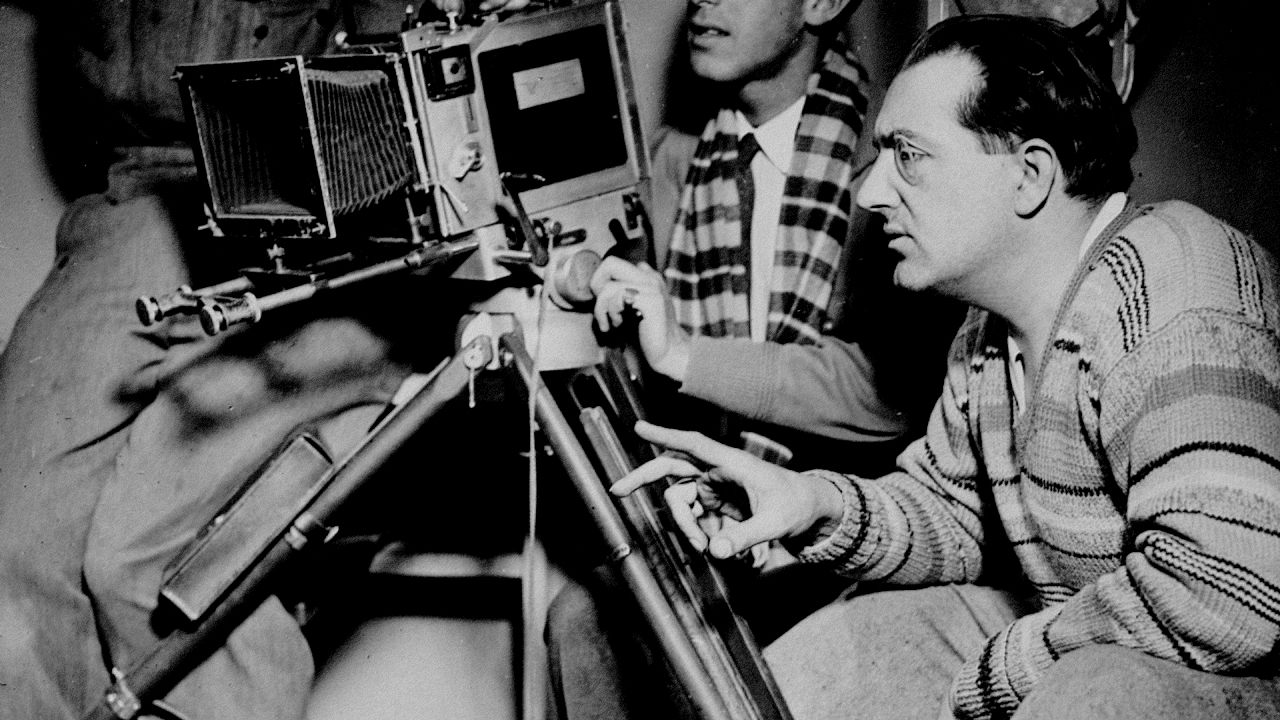
From Caligari to Hitler
★ 7.5 · 2015 · 114m · Documentary · History
Film journalist and critic Rüdiger Suchsland examines German cinema from 1919, when the Republic of Weimar is born, to 1933, when the Nazis come into power. (Followed by Hitler's Hollywood, 2017.)
More Like This
Stanley Donen: You Just Do It
2010
Story of a director Stanley Donen, king of Hollywood musicals and man behind such classics as "Singin' in the Rain".
More info →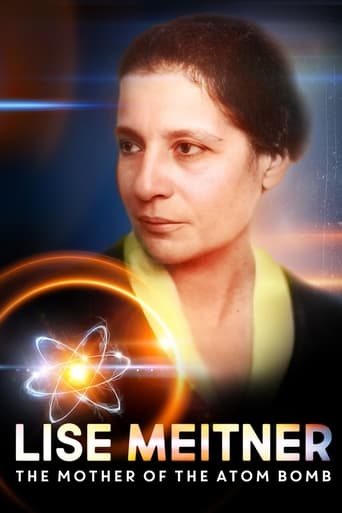
Lise Meitner: The Mother of the Atom Bomb
2013 · ★ 9
To historians, physicist Lise Meitner deserves to be placed on a par with Einstein, Heisenberg and Otto Hahn. In the 1930s on the verge of World War II, she led a small group of scientists who discovered that splitting the atomic nucleus of uranium releases enormous energy. This extraordinary film tells the story of a woman who was far ahead of her time as a scientist and a pioneer of feminism.
More info →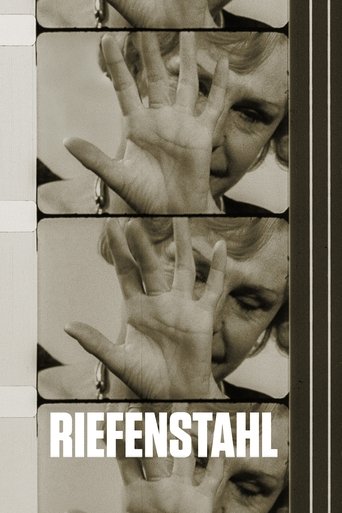
Riefenstahl
2024 · ★ 7.2
Explores Leni Riefenstahl's artistic legacy and her complex ties to the Nazi regime, juxtaposing her self-portrayal with evidence suggesting awareness of the regime's atrocities.
More info →
Salamanca
1929 · ★ 6
A walk through the landscapes of the province of Salamanca, Spain, as well as a testimony of the daily life and customs of its inhabitants.
More info →
Barcelona
1929 · ★ 6
A walk through the landscapes of the province of Barcelona, Spain, as well as a testimony of the daily life and customs of its inhabitants.
More info →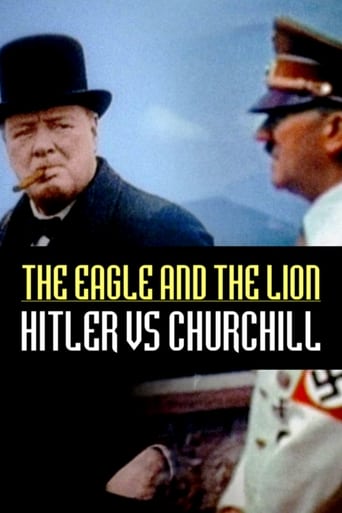
The Eagle and the Lion: Hitler vs Churchill
2017 · ★ 8.5
Winston Churchill, one of the most revered men of the twentieth century. Adolf Hitler, one of the most hated leaders in contemporary history. Between 1940 and 1945, these two enormously contradictory personalities faced each other in both politics and war. A clash of giants whose story begins in the trenches of the World War I and ends with the debacle of the World War II.
More info →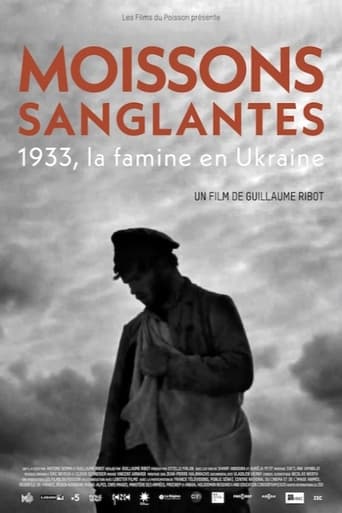
Seeds of Hunger - Ukraine 1933
2023 · ★ 6.8
Between 1931 and 1933, 4 million Ukrainians were to die of hunger. This famine was not preceded by any cataclysmic weather event, nor by a war. This was an ideological crime: decided by Stalin and approved by the Politburo, with the aim of punishing Ukrainian peasants who refused the collectivization of the countryside, cultivated a strong form of nationalism and showed resistance to communist ideology. Drawing on previously unpublished material, on many Soviet films and on a number of particular points of view, including that of Welsh journalist and whistleblower Gareth Jones, this film retraces the story of that famine.
More info →
Statues of Portugal
1931
Launch of a competition, organized by the newspaper O Século, entitled Statues of Portugal.
More info →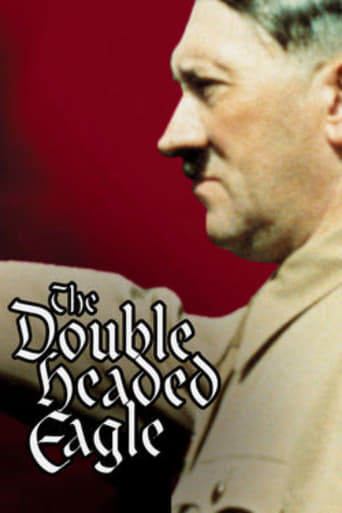
Double Headed Eagle: Hitler's Rise to Power 1918-1933
1973 · ★ 8.3
Presents a unique and disturbing look at the rise of the Nazi party. The documentary, directed by Lutz Becker, attempts to remain as objective as possible, serving as a neutral observer of the years 1918 through 1933 in Germany. Via newsreel footage and clips of features from the era, the film offers a kaleidoscopic view of the many elements that fueled the rise of the Socialist Nationalist Party, including post-WWI poverty. Hitler occupies a central place in the documentary.
More info →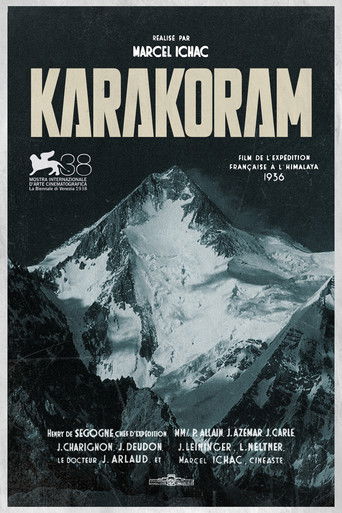
Karakoram
1937 · ★ 9.5
Account of the first French expedition to the Himalayas, which attempted to climb the hidden peak (Gasherbrum I) in 1936, from the preparations for the trip to the end of the ascent. After a long approach walk through quasi-desert regions, then on a huge glacier, the caravan of 700 porters arrives at the foot of Hidden Peak. The expedition was led by Henry de Ségogne, with Jean Charignon, Pierre Allain, Raymond Leininger, Jean Carle, Jean Deudon, Louis Neltner, Jacques Azémar, doctor Jeand Arlaud and director Marcel Ichac. Weather conditions, logistical problems and a strike among Sherpas forced the team to retire at 6900m on the south face. The film received the Silver Lion at the Venice Film Festival in 1938.
More info →Musste Weimar scheitern?
2019
"Weimar" was the first democracy on German soil. It was a new beginning full of emotion and hope - in difficult times. Weimar is often viewed from the end, from its downfall under National Socialism. Yet it was a great new beginning. The Germans dared to embrace democracy. A documentary as a lively discussion about Weimar. What can Weimar teach us today?
More info →Only Image Remains
2014
Starting with her own memories of working as an actress on Abbas Kiarostami's Ten, filmmaker Roya Akbari proceeds to elicit other testimonies on the masters of Iranian cinema from three people who are themselves among the foremost Iranian directors: Rafi Pitts on Parviz Kimiavi; Amir Naderi on Sohrab Shahid Saless; and Bahram Bayzai on Arby Ovanessian. Bayzai also analyses Haji Agha, the Cinema Actor (1933) by Ovanes Ohanian, considered the first feature film made in Iran.
More info →