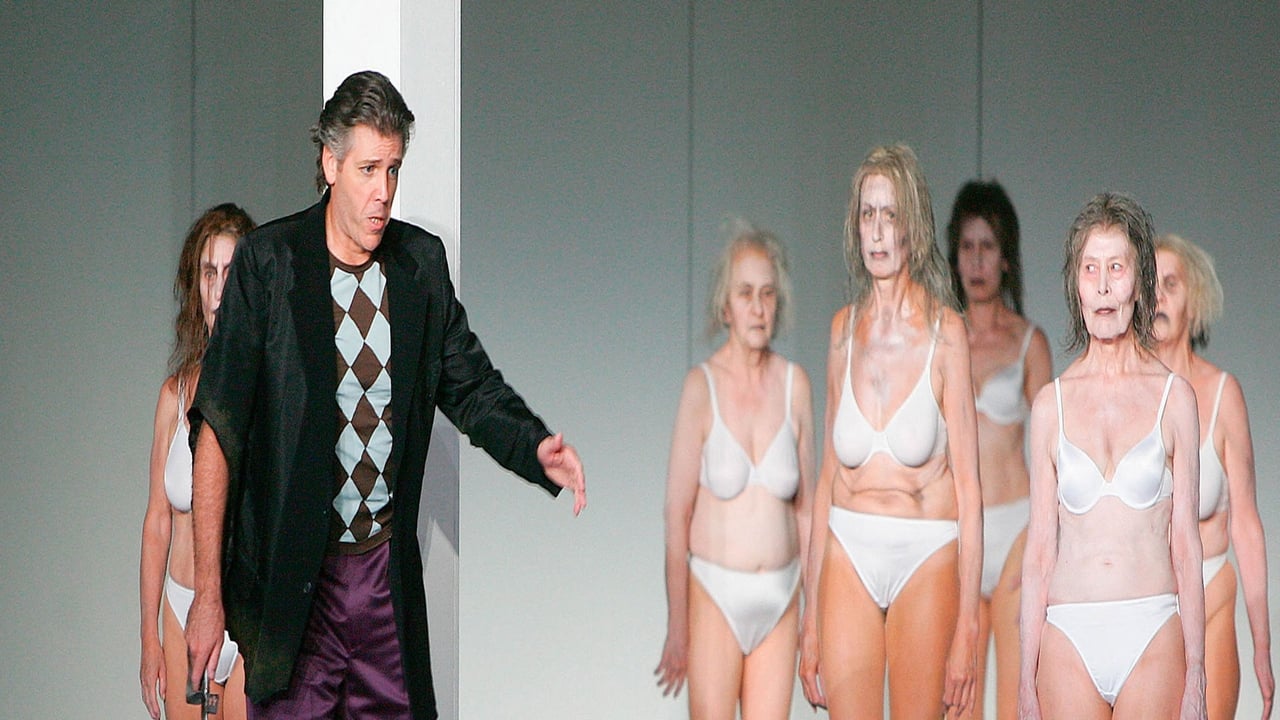
Don Giovanni
2006 · 191m · Music
Don Giovanni's list of romantic conquests reaches into the hundreds. But his reputation as a lothario puts him in danger as the women he's betrayed -- and their suitors -- begin to seek revenge. A modern-day setting proves the timeless nature of Mozart's popular opera, performed with the Vienna Philharmonic as part of an epic presentation of all 22 of the composer's stage works at the 2006 Salzburg Festival, in honor of his 250th birthday.
More Like This
Fedora
1997 · ★ 9
Princess Fedora, who is to marry the Count the following day, arrives and sings of her love for him, unaware that the dissolute Count has betrayed her with another woman. The sound of sleigh-bells is heard, and the Count is brought in mortally wounded. Doctors and a priest are summoned, and the servants are questioned. It is proposed that Count Loris Ipanov, a suspected Nihilist sympathiser, was probably the assassin. De Siriex (a diplomat), and Grech (a police inspector) plan an investigation. Fedora swears on the jewelled Byzantine cross she is wearing that Count Andrejevich's death will be avenged.
More info →
Theodora
1996 · ★ 9.5
The Peter Sellars production of Handel's "Theodora", recorded live at the Glyndebourne Festival in May 1996. Dawn Upshaw stars as Theodora, with David Daniels as Didymus, Lorraine Hunt Lieberson as Irene, Richard Croft as Septimius, and Frode Olsen as Valens. William Christie conducts the Orchestra of the Age of Enlightenment.
More info →
Der Rosenkavalier - Staatsoper Berlin
2020 · ★ 4
Aufführung vom 09.02.2020 in derf Staatsoper Berlin. André Heller is staging "Der Rosenkavalier" (his first opera production) at the Berlin State Opera. The story of a young nobleman caught between two women in Maria Theresa's Vienna is full of bold twists and fantastic entanglements. And as if made for an imaginative realization with all the means of modern theater. André Heller can rely on a first-class ensemble... André Heller is a chansonnier, actor, circus founder, vaudeville maker and stager of spectacles in which a variety of genres are combined with exuberant fantasy. In Berlin, Heller follows in the footsteps of Max Reinhardt, who ruled the Berlin stages at the beginning of the 20th century and revolutionized the theater with a multitude of innovations. Reinhardt also staged the world premiere of "Der Rosenkavalier" in 1911. It will be interesting to see how today's multimedia genius deals with the legacy of the great theater genius of yesteryear.
More info →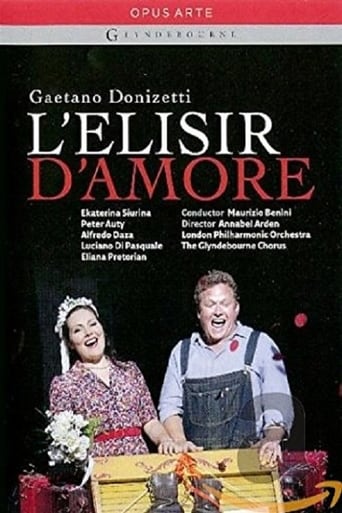
L'Elisir d'Amore
2009
Donizetti's L'Elisir d'amore in a colorful version signed Annabel Arden. A pastoral romance between Adina, the rich and gorgeous landowner, and Nemorino, a simple peasant, L'Elisir d'amore sets Tristan and Iseult's love potion at the center of the action. With Ekaterina Siurina, Peter Auty, Alfredo Daza, Luciano Di Pasquale and the London Philharmonic Orchestra under Maurizio Benini's baton. Revival of production first performed 12 October 2007. This recording is of performances 12/15 August 2009.
More info →
Così fan tutte - Royal Opera House
2010 · ★ 3
Containing some of the most beautiful arias and attractive ensembles in all opera, Così fan tutte is packed with both pathos and humour. Mozart and Da Ponte's witty, compassionate examination of young love has ensured its lasting popularity. Jonathan Miller’s original 1995 production for Covent Garden is dear to the hearts of London audiences and has been revived numerous times. Necessity, they say, is the mother of all invention. With no money left for costumes, Miller has the genius idea of asking Giorgio Armani to lend a hand... This production is from Sept 2010.
More info →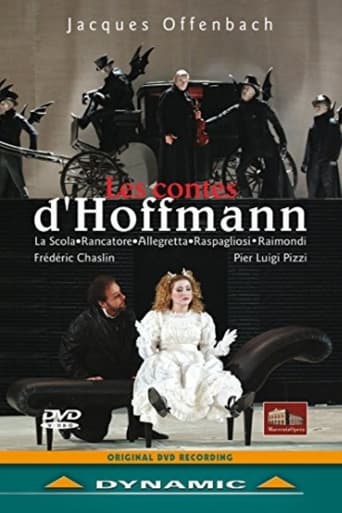
Les Contes d'Hoffmann
2004
Live peformance from the Sferisterio Opera Festival, August 2004. Our edition has an Italian cast of exceptional quality, in which stand out the amazing voice of Desirée Rancatore, the extraordinary artistry of Ruggiero Raimondi and the fascinating direction of Pier Luigi Pizzi, one of today's most creative directors. Interesting overview here: http://www.operatoday.com/content/2006/08/offenbach_les_c.php
More info →
Pique Dame
1992 · ★ 8
Filmed at the 1992 Glyndebourne Festival in Lewes, England, this production won unanimous critical acclaim for its innovative interpretation of Tchaikovsky's opera "Pique Dame" ("Queen of Spades"). Although sung in Russian, the production features English sopranos Felicity Palmer as the old countess and Nancy Gustafson as Lisa. Russian tenors Dimitri Kharitonov, Sergei Leiferkus and Yuri Marusin co-star.
More info →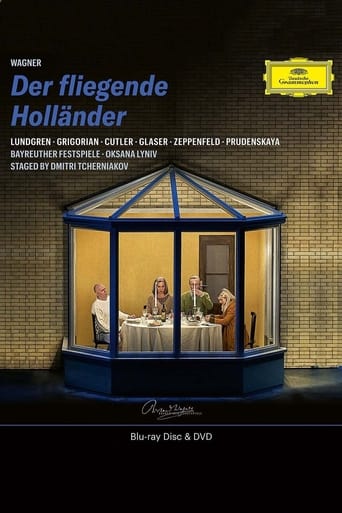
Der fliegende Holländer
2021 · ★ 7
This is a performance of Wagner's three-act opera Der fliegende Holländer ("The flying Dutchman"), performed by Bayreuther Festpiele, directed by Dmitri Tcherniakov. The staging was notable for two other milestones, as Oksana Lyniv became the first woman to conduct at Richard Wagner’s legendary Festspielhaus since its opening in 1876, and the sensational Lithuanian soprano Asmik Grigorian made her house debut with a standout performance as the opera’s heroine, Senta. The exceptional cast also included John Lundgren (The Dutchman), Georg Zeppenfeld (Daland), Eric Cutler (Erik) and Marina Prudenskaya (Mary).
More info →William Tell
1987 · ★ 8
“Let us assume that Switzerland is truly a paradise. The music hereto was written long ago. We have merely forgotten it.” (Daniel Schmid) This is the material from which the most Swiss of all operas is made: the legendary Wilhelm Tell – a Swiss hero: straightforward, a primus inter pares of the indomitable freedom fighters, a good shot, surefire. A myth that becomes a poetic playground: nature in turmoil, the struggle for freedom and forbidden love. A legendary overture at a gallop with an iconic post horn motif – all this and much more in the thirty-seventh and last opera by Rossini.
More info →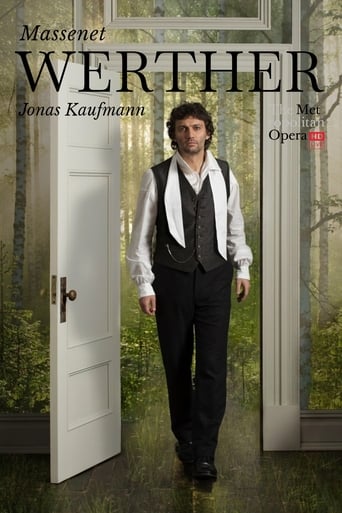
The Metropolitan Opera: Werther
2014 · ★ 9
Star tenor Jonas Kaufmann brings aching intensity and vocal charisma to the tortured title hero of Massenet’s Goethe adaptation. Sophie Koch, in her Met debut, is an appealing and elegant Charlotte, the object of Werther’s passionate affection that will lead to tragedy. Lisette Oropesa as Sophie, David Bižić as Albert, and Jonathan Summers as Le Bailli co-star. Richard Eyre’s atmospheric production is conducted by rising maestro Alain Altinoglu.
More info →Verdi, Un Ballo in Maschera - Salvatore Licitra, Maria Guleghina, Riccardo Muti, Teatro alla Scala
2001 · ★ 8
Conducted by Riccardo Muti, the master of the Scala in Milan for twenty years, the Verdian melodrama unfolds before our eyes. This Cavani's approach is ageless and excellence is pre-eminent: to start with, the role of Riccardo is played by the wonderful Salvatore Licitra. As for Maria Guleghina, she plays an exceptionally good Amelia. Riccardo Muti proves once again what a wonderful Verdian he is.
More info →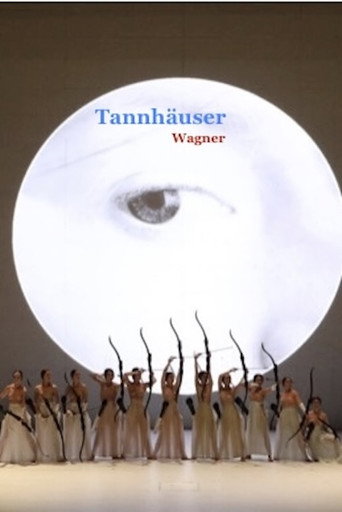
Tannhäuser und der Sängerkrieg auf der Wartburg - Bayerische Staatsoper
2017 · ★ 8
No synopsis available.
More info →