Lyhnida
1989 · 9m · Documentary
A woman's body communicates with its surroundings; it is a receptor of the macrocosm that bears traces of all other laws, including even the physiology with all its energetic zones. This is the energy that corresponds to spiritual experiences, which also depend on the body technique. The communicability can be understood, among other things, as one of the variations of the functioning of the body within the sequential regime of signs.
More Like This
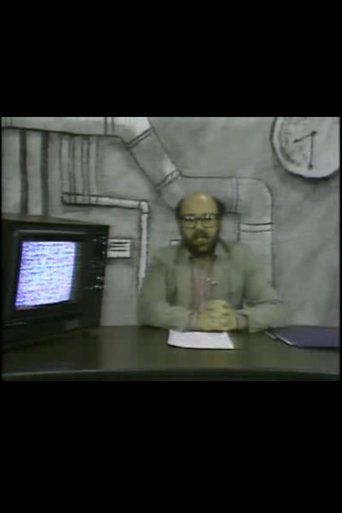
Brian Winston Reads the TV News
1983
This live show features the energetic analysis of television network news by Brian Winston. Winston looks at the news as a unique institution, governed by its own conventions and constraints.
More info →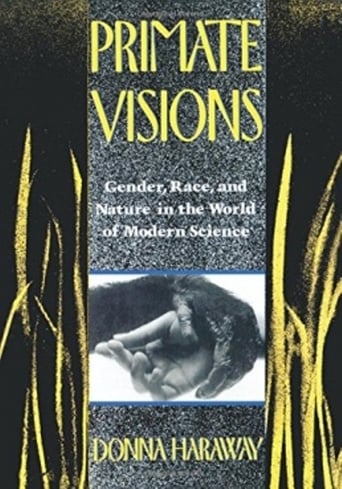
Donna Haraway Reads "The National Geographic" on Primates
1987
How does the "cultured" gorilla, i.e. Koko, come to represent universal man? Author and cultural critic Donna Haraway untangles the web of meanings, tracing what gets to count as nature, for whom and when, and how much it costs to produce nature at a particular moment in history for a particular group of people.
More info →
Sayonara Super 8
2006
Pia Yona Massie's Sayonara Super 8 uses personal archival footage to ask questions about the fragile nature of memory, human relationships and the foibles of the medium itself.
More info →
Prophetess
2026
An anonymous friend of filmmaker Océane Buxton notices her striking resemblance to Modeste Niquette, a missing woman he once knew. Modeste claimed recurring encounters with extraterrestrials, documenting them through photography before her unexplained disappearance gave her an almost mythical status. Together, Océane and her anonymous friend reconstruct a portrait of this ghostly figure through a docufiction collage of memories, images, and small-town gossip.
More info →

Concrete Vache
2010
Made for Milton Keynes Gallery's 10th anniversary using images from its archive and language from its press releases and catalogues.
More info →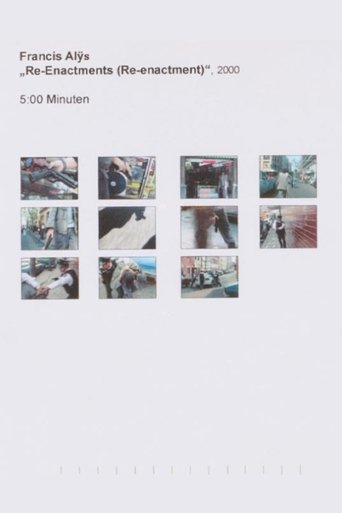
Re-enactment
2000
For this work Alÿs purchased a gun in Mexico City then walked through the city streets with the weapon in his hand. After eleven minutes he was arrested by the police. The following day he repeated the action, this time in cooperation with the police. By presenting a record of this dramatic action alongside footage of its reenactment, Alÿs blurs the boundaries between documentation and fiction. Questioning the concept of authenticity, this work demonstrates “how media can distort and dramatize the immediate reality of a moment,” the artist has said. Gallery label from Francis Alÿs: A Story of Deception, May 8–August 1, 2011.
More info →
John Baldessari: An Interview
1979
From his photo-text canvases in the 1960s to his video works in the 1970s to his installations in the 1980s, John Baldessari’s (b.1931) varied work has been seminal in the field of conceptual art. Integrating semiology and mass media imagery, he employed such strategies as appropriation, deconstruction, decontextualization, sequentiality, and text/image juxtaposition. With an ironic wit, Baldessari's work considers the gathering, sorting, and reorganizing of information. “Something that is part of my personality is seeing the world slightly askew. It’s a perceptual stance. The real world is absurd sometimes, so I don’t make a conscious attempt, but because I come at it in a certain way, it seems really strange,” Baldessari says in this interview with Nancy Bowen. A historical interview originally recorded in 1979 and re-edited in 2003 with support from the Lyn Blumenthal Memorial Fund.
More info →
Gary Hill: I Believe It Is an Image
2004
In this program video artist Gary Hill uses a number of his pieces to investigate otherness and ambiguity, dislocation of the senses, the boundary between words and comprehension, the physicality of text, and figurative interactivity.
More info →John Baldessari: Some Stories
1990
Presented without commentary, this film reveals the thinking behind the work of John Baldessari over the course of his career, and provides clues to the understanding of the artist's paintings, photographic work and books.
More info →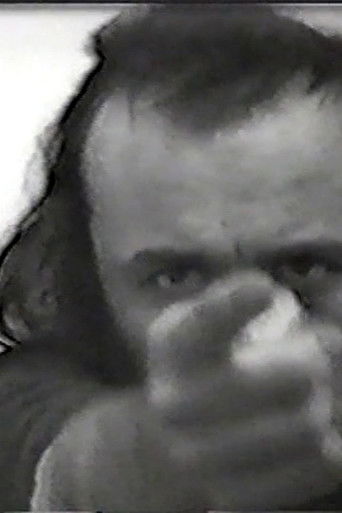
Centers
1971
Poet and artist Vito Acconci points his finger towards the camera and his own reflection in an offscreen video monitor.
More info →
The Machine That Killed Bad People
1990
The Machine That Killed Bad People is about the cultural and political history of the Philippines leading up to the overthrow of President Ferdinand Marcos in 1986. It also addresses the role of electronic media in the struggle for power, and more broadly, American intervention in the Third World. Using a structure that emulates the way television news programs construct meaning through fragmentation, the tape interweaves clips of Filipino activists and reporters, a fictional television anchorwoman and correspondent, commentary by independent filmmaker Trinh T. Minh-ha, Fagin's off-camera voice and script, and anonymous excerpts from commercial television.
More info →