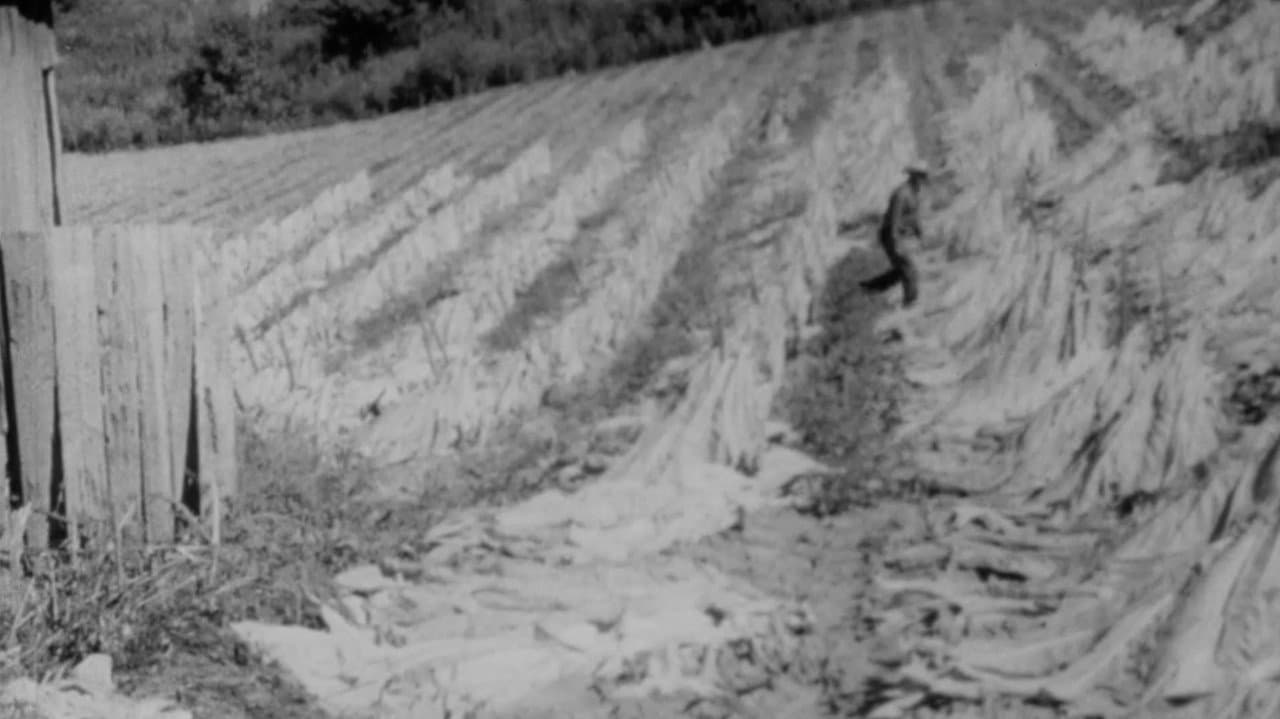
The End of an Old Song
★ 9 · 1969 · 30m · Documentary · Music
John Cohen, founding member of the ‘50s folk troupe the New Lost City Ramblers, started making films in order to bring together the two disciplines he was heavily active in: music and photography. The End of an Old Song brings us to North Carolina, and demonstrates the power of old English ballads sung with gusto while soused in a saloon.
More Like This

Sans Soleil
1983 · ★ 7.5
A woman narrates the thoughts of a world traveler, meditations on time and memory expressed in words and images from places as far-flung as Japan, Guinea-Bissau, Iceland, and San Francisco.
More info →
Caught
2021 · ★ 1
In this innovative blend of documentary and fiction, Rosa and Paloma, two trans Latina sex workers in Queens, New York, fight transphobic violence, persecution from the police, and defend their cases of trafficking in an increasingly anti-migration political environment in the U.S.
More info →
Traces: People of the Peacock
2016
Filmmaker Binevsa Bêrîvan travels to Armenia to capture the daily life, customs, and history of the country's Yazidi Kurdish community.
More info →
Harry Caudill: A Man of Courage
2015
One of the most important Kentuckians of the 20th century, Harry Caudill brought the story of Appalachia to national attention when his book “Night Comes to the Cumberlands” was released in 1963. The nonfiction account of Eastern Kentucky’s coal region, part history and part polemic, eloquently recounted the exploitation of Appalachia’s land and its people by business and government interests, and made Caudill a national spokesperson for his homeland. Harry Caudill spent his life advocating for Eastern Kentucky, with the aim of helping the powerless as well as securing the region’s unmatched natural resources for future generations. His work led to lasting government reforms for Appalachia, and his legacy remains a touchstone for activists today.
More info →
Pickin & Screamin
2015
When people think of Appalachian music they often think of the banjo and classify it as bluegrass, but the music in the region is more diverse than that. This film focuses on the different styles, from old-time to punk music, that is played and often overlooked here in the mountains.
More info →Gipuzkoa
1979
Documentary directed by Pío Caro Baroja, divided into eight distinct parts: Man, Stone, Meadows, Trees, Rural Environment, Iron, Sea, and Villages. This eminently ethnographic work is a compendium of the customs and traditions of a people with an ancient history, which today remains a witness to many images that will never again be part of everyday life.
More info →
A Life Reimagined: The George Masa Story
2026
In 1915 a young, charismatic Japanese man with a mysterious past entered into the Appalachian culture of Asheville, North Carolina, is suspicioned a spy, targeted by the Klan, but perseveres with a passion for photography and the mountains he adopts, bringing to life Great Smoky Mountains National Park & the Appalachian Trail.
More info →
Jiyana Rewsenbireki Kurd: Casimê Celîl
2021 · ★ 10
Casimê Celîl was born into a Yezidi Kurdish family in 1908, in a village called Kızılkule, located in Digor, Kars. The village and family life, which he longed to remember throughout his life, ends with the massacre they endured in 1918. During his long road to Erivan, Armenia, he lost all his family members. Left all alone, Casim was placed into an orphanage and was forced to change his name. To remember who he was and where he came from, every morning he repeated the mantra “Navê min Casim e, Ez kurê Celîlim, Ez ji gundê Qizilquleyê Dîgorê me, Ez Kurdim, Kurdê Êzîdî me”, which translates to: “My name is Casim, I am the son of Celîl, I come from the village of Kızılkule in Digor, I am a Kurd, and I am Yezidi”. He clings to every piece of his culture he can find, reads, and saves whatever Kurdish literature or art he comes across. As the year’s pass, Casim finds himself with an impressive collection of Kurdish culture and history.
More info →
Circumcision
1949 · ★ 4.8
Rites and operation of the circumcision of thirty Songhai children on the Niger. Material of this film has been used to make "Les Fils de l'Eau".
More info →Under the Black Masks
1939
This ethnographic short portrays a ritual using masks among the Dogon people of Mali.
More info →

Sweet Osmanthus Flowering Late
2024
"Sweet Osmanthus Flowering Late" is a feature-length ethnographic film that envisions social rejuvenation and collective convalescence in the aftermath of the pandemic. Filmed in Wuhan, the film follows the everyday lives of three middle-class households. It postulates the existence of a mass dreaming phenomenon that facilitated fatigued Chinese inhabitants to rejuvenate themselves following the secluded episode of lived experience and to coexist with the enduring imprints of "the event" on their social lives.
More info →