
Wolfram, Wolf's Saliva
★ 7 · 2010 · 55m · Documentary
The darkness of the mine, invaded by the miners' light, by the noisy machines and the permanent and intense smell of ore in the air, leads us to an environment in which time and space become confused. A documentary film at Panasqueiras' Mine, between 2008/09. A reality captured by an eye-observer which does not interfere, but follows the compost that grows from the earth and is decomposed by man-machine.
More Like This
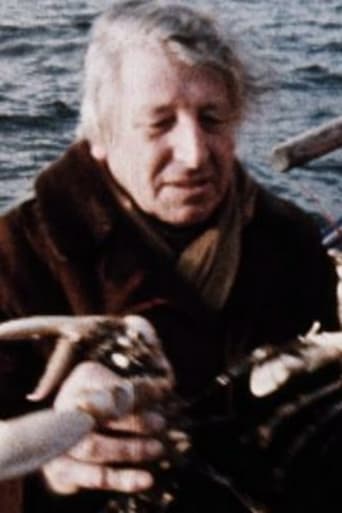
Costa del Coal
1971
Mad, bad' poet Lord Byron and a lobster thermidor feature in a melancholy tour of Seaham with Johnny Morris.
More info →
La máscara de la conquista
1986 · ★ 9
The film tells two parallel stories. One, set in the present, tells of a pagent about the conquest of America, while the other, set in the 15th century, tells of a group of conquistadors coming ashore searching for gold. The film takes place in an unnamed country.
More info →
La Nación Oculta
2011
Ñaalec (Fabián Valdez) is a Moqoit college student disenchanted with formal ways of learning and embarrassed by his drunken classmates. He seeks to recover his people's culture by learning from elders who still remember the old ways. Ñaalec travels to the Nanaicalo Nqote ("eye of the dragon"), a sacred lake whose water gave people the power of the gods. This docudrama is part of a series of community-created films supported by CEFREC (led by Iván Sanjinés, son of legendary Bolivian filmmaker Jorge Sanjinés).
More info →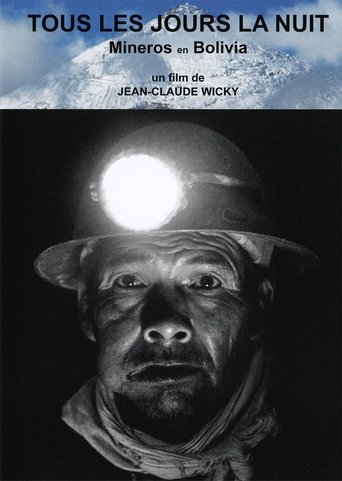
Every Day is Night
2010
For many years, the Swiss photographer Jean-Claude Wicky captured the world of Bolivian miners in photographs. When he discovered how strongly they reacted to his pictures, he decided to make a film. Black-and-white photographs alternate with film sequences, in which the miners talk about the harsh conditions of their everyday lives, while also rendering visible their pride, dignity, culture and dynamic traditions. Every day is night is first and foremost a testimonial of profoundly sincere human encounters based on respect, generosity and gratitude.
More info →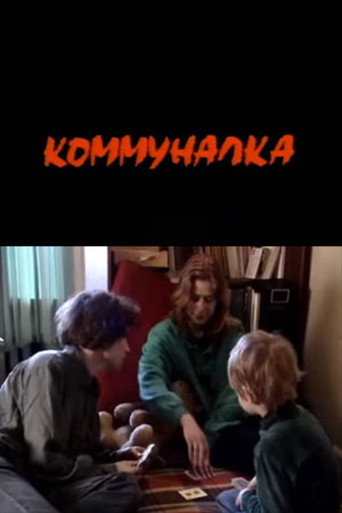
Communalka
1994
“Communalka” tells the story of people living in a communal flat in Saint Petersburg, whose characters and destinies have been shaped by shared living.
More info →
Arba'een
1970 · ★ 7
Short ethnographic documentray about Arba'een, a Shia Muslim religious observance
More info →
Mountain Town
2006
This documentary looks at the stories of a few people in Aspen Colorado and how they contribute to the community.
More info →
Folia no Morro
2008
An ethnographic documentary following the Folia de Reis party that is celebrated every year at Morro de Santa Marta on Rio de Janeiro.
More info →
Congo
1972 · ★ 5.8
An experimental ethnographic documentary that criticizes the colonizer view of anthropology.
More info →
Machete Gillette... Mama
1989 · ★ 6
"With characteristic wit and rigor, experimental filmmaker Larry Gottheim here applies his impressionistic editing style to footage collected during his travels in the Dominican Republic. Gottheim’s formal emphasis on repetition and fissures between sound and image resonates here as a mode of sociological reflection (with the fragmentary montage mirroring elements of ritual while also destabilizing the ethnographic gaze). A largely overlooked antecedent to the contemporary blending of avant-garde and ethnographic filmmaking, MACHETTE GILLETTE… MAMA still poses a potent challenge to documentary convention." - Max Goldberg
More info →
Decolonising the Curatorial Process
2020
Decolonising the Curatorial Process is a forty-minute documentary which explores decolonial strategies in an academic and curatorial context. The film features academics, activists and practitioners, and contains case studies of institutions that are deploying critical, self-reflective forms of curatorial practice. The Museum of London Docklands exhibition on slavery and the sugar industry is examined as an example of how an institution can decolonise the curatorial process, utilise the work of artists in a museum context, and critically examine East London's imperial history. The Pitt Rivers museum in Oxford, who are working with Maasai activists from Kenya and Tanzania on a project centred on repatriating the museum's collection of sacred Maasai artefacts, also features in the film.
More info →