Marc Okrand on Klingon
2002 · 21m · Documentary
Marc Okrand discusses his involvement with the Star Trek franchise and his work on inventing the Klingon and Vulcan languages.
More Like This
To Be or Not to Be: Klingons and Shakespeare
2009
The story behind the translation and performance of Shakespeare's "Hamlet" in Klingon.
More info →
Yeah You Rite!
1985 · ★ 8
This award winning film is a fast paced, humorous look at the colorful way the residents of New Orleans express themselves - why they talk the way they do, where the words come from, and what it means to talk with a New Orleans accent.
More info →
The Grammar of Happiness
2012 · ★ 8
The Grammar Of Happiness follows the story of Daniel Everett among the extraordinary 'nonconvertible' Amazonian Pirah tribe, a group of indigenous hunter- gatherers whose culture and outlook on life has taken the world of linguistics by storm. As a young ambitious missionary three decades ago, Dan, a red-bearded towering American, decamped to the Amazon rain forest to save indigenous souls. His assignment was to translate the book of Mark into the tongue of the Pirah, a people whose puzzling speech seemed unrelated to any other on Earth. What he learned during his time with the Pirah led him to question the very foundations of his own deep beliefs. As a 'born again' atheist, Dan divorced his devout Christian wife and became estranged from his children. Having lost faith and family, his new life is dominated by the desire to leave behind his legacy. Everett's most controversial claim is that the Pirah language lacks 'recursion' - the ability to build an infinite number of sentences.
More info →
Do I Sound Gay?
2015 · ★ 5.6
What makes a voice “gay”? A breakup with his boyfriend sets journalist David Thorpe on a quest to unravel a linguistic mystery.
More info →Back to Space-Con
2011 · ★ 6.5
On February 22, 1975, Northern California's very first Star Trek convention was held at Lincoln High School in San Francisco, CA. It was called "The Red Hour Festival." A huge success with the fans of the original TV series (1966-69), the smash event led to much larger conventions in San Francisco, Oakland and Los Angeles. These "Space-Con" conventions left an indelible mark on the science-fiction fans and "Trekkers" who attended. In the end, conventions like Space-Con helped awaken Paramount from hibernation and led to the creation of the first installment of the major motion picture series "Star Trek" in 1979. This full-length documentary film is the story of how fandom revolutionized an industry.
More info →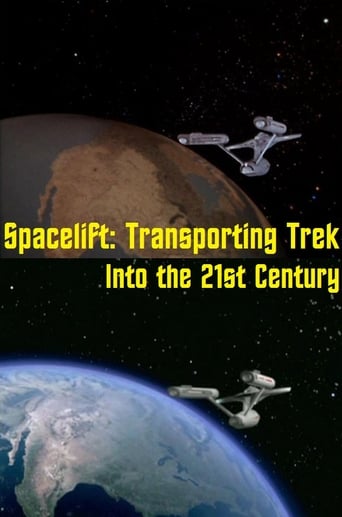
Spacelift: Transporting Trek Into the 21st Century
2011 · ★ 6.7
Spacelift Transporting Trek Into The 21st Century, shows you how they Remastered The Special Effects from Star Trek Classic to CGI, the re recording of the theme music and the look of the Enterprise.
More info →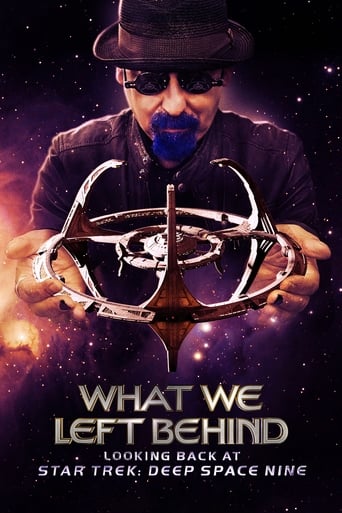
What We Left Behind: Looking Back at Star Trek: Deep Space Nine
2018 · ★ 7.1
A documentary exploring the legacy of Star Trek: Deep Space Nine, the reasons it went from the black sheep of Star Trek to a beloved mainstay of the franchise, and a brainstorm with the original writers on what a theoretical eighth season of the show could look like.
More info →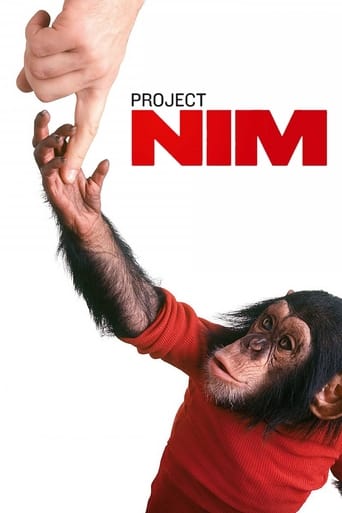
Project Nim
2011 · ★ 6.9
From the team behind Man on Wire comes the story of Nim, the chimpanzee who in the 1970s became the focus of a landmark experiment which aimed to show that an ape could learn to communicate with language if raised and nurtured like a human child. Following Nim's extraordinary journey through human society, and the enduring impact he makes on the people he meets along the way, the film is an unflinching and unsentimental biography of an animal we tried to make human. What we learn about his true nature - and indeed our own - is comic, revealing and profoundly unsettling.
More info →
American Tongues
1987 · ★ 8
Rich in humor and regional color, this sometimes hilarious film uses the prism of language to reveal our attitudes about the way other people speak. From Boston Brahmins to Black Louisiana teenagers, from Texas cowboys to New York professionals, American Tongues elicits funny, perceptive, sometimes shocking, and always telling comments on American English in all its diversity. (PBS)
More info →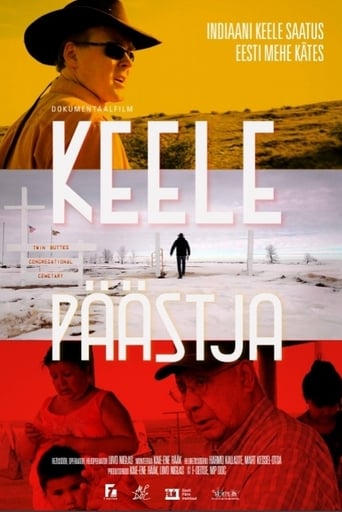
To Save a Language
2020
Linguist Indrek Park has been working with Native American languages for over ten years. The film sees him recording the language of the Mandan tribe, who live in the prairies of North Dakota, on the banks of the Missouri River. The job involves a lot of responsibility, and he is running out of time – his language guide, the 84-year-old Edwin Benson, is the last native speaker of Mandan.
More info →
je suis folles
2026
Nelly Arcan published her autobiographical novel *Folle* in 2004. She took her own life in 2009. She died because she was made to feel crazy. Because she was made to feel like a woman. Because when you’re a woman, madness lurks in every slightly too intense expression of emotion, in every behavior that deviates from prevailing patriarchal norms. We’re all crazy at some point. And the stigma stems from everyone’s discourse. Do you feel like you use the word “crazy” a lot?
More info →