Okay for Sound
★ 6.7 · 1946 · 20m · History · Documentary
This short was released in connection with the 20th anniversary of Warner Brothers' first exhibition of the Vitaphone sound-on-film process on 6 August 1926. The film highlights Thomas A. Edison and Alexander Graham Bell's efforts that contributed to sound movies and acknowledges the work of Lee De Forest. Brief excerpts from the August 1926 exhibition follow. Clips are then shown from a number of Warner Brothers features, four from the 1920s, the remainder from 1946/47.
More Like This
The First Scientific Science-Fiction Film
1993 · ★ 7.2
A short documentary about Fritz Lang's film 'Frau im Mond', and its relation to the science and history of real space travel.
More info →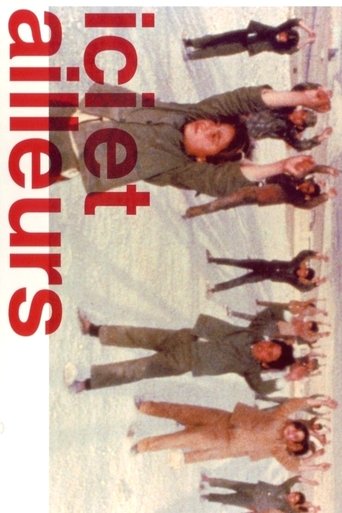
Here and Elsewhere
1976 · ★ 6.7
Here and Elsewhere takes its name from the contrasting footage it shows of the fedayeen and of a French family watching television at home. Originally shot by the Dziga Vertov Group as a film on Palestinian freedom fighters, Godard later reworked the material alongside Anne-Marie Miéville.
More info →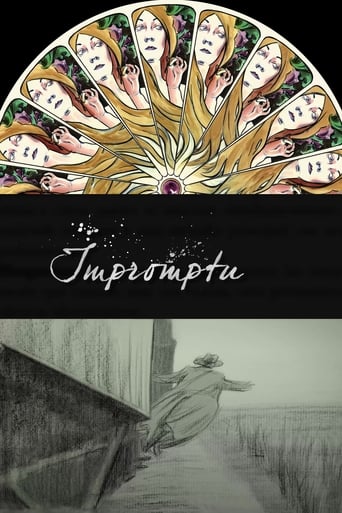
Impromptu
2017 · ★ 10
A journey to the origins of cinema, starting with its forgotten fathers: the pioneers who achieved moving images before 1895, the official year of the Lumière cinematograph. Through five studies by Frédéric Chopin, 'Impromptu' is also a tribute to the end of the 19th century, to its immortal muses, and to the fascination with movement itself.
More info →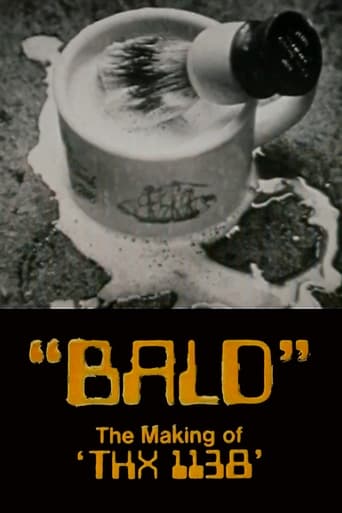
Bald: The Making of 'THX 1138'
1971 · ★ 6.7
The film features a conversation between Lucas and Francis Ford Coppola, producer of THX 1138. They discuss Lucas' vision for the film, including his ideas about science fiction in general and in particular his concept of the "used future" which would famously feature in his film Star Wars. Intercut with this discussion is footage shot prior to the start of production of THX 1138 showing several of its actors having their heads shaved, a requirement for appearing in the film. In several cases the actors are shown being shaved in a public location. For example, Maggie McOmie is shaved outside the Palace of Fine Arts in San Francisco, while Robert Duvall watches a sporting event as his hair is cut off. Another actor, Marshall Efron, who would later play an insane man in the film, cut off his own hair and was filmed doing so in a bathtub.
More info →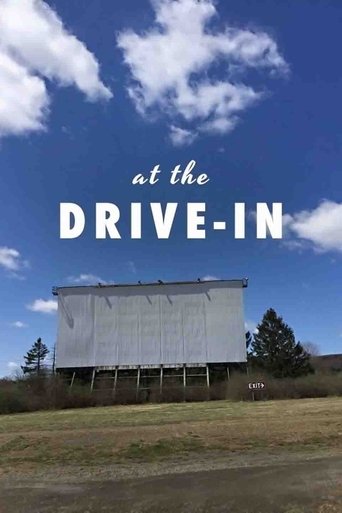
At the Drive-In
2017 · ★ 7.3
Unable to purchase a $50,000 digital projector, a group of film fanatics in rural Pennsylvania fight to keep a dying drive-in theater alive by screening only vintage 35mm film prints and working entirely for free.
More info →Open Your Eyes!
2008
Behind the scenes footage of Pasolini and crew filming 'Salò o le 120 giornate di Sodoma'.
More info →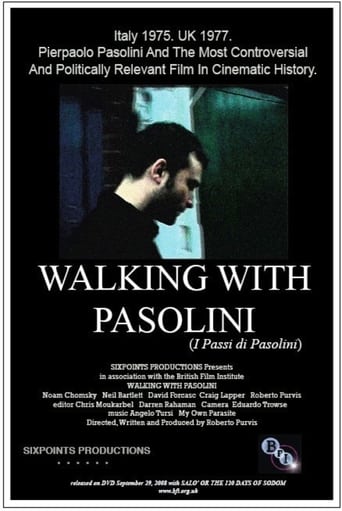
Walking with Pasolini
2008
A documentary about Pier Paolo Pasolini and his film 'Salò o le 120 giornate di Sodoma'.
More info →
Naturestyle: Hokkaido Japan
2016
Hokkaido, the North Island of Japan, is a powder-lover's paradise. If you’ve never been, it’s time to start planning your trip. And consider this new film from Director Jeremy Dubs to be your crash course in traveling to Japan. Follow Dubs and crew as they explore Hokkaido’s vast mountains, welcoming locals and exotic cuisine. Whether it’s wandering around abandoned resorts, carving snow caves with chainsaws or trying their best to woo women, there’s never a dull moment with this crew.
More info →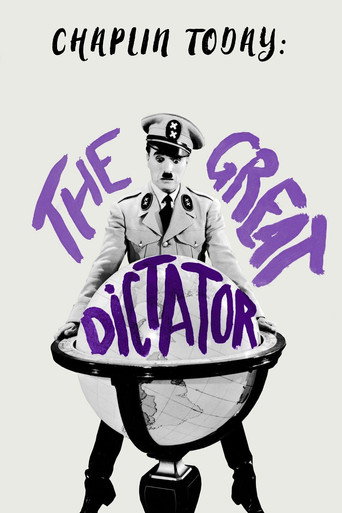
Chaplin Today: The Great Dictator
2003 · ★ 6.7
A short documentary about the making of "The Great Dictator."
More info →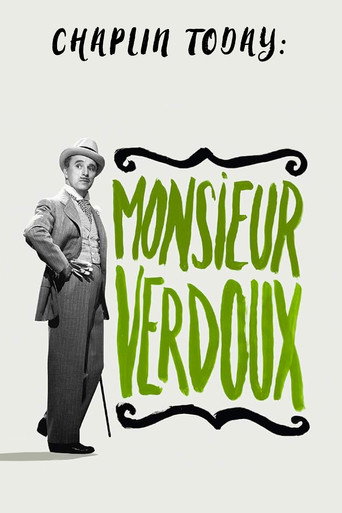
Chaplin Today: Monsieur Verdoux
2003 · ★ 5.8
A short documentary in the Chaplin Today series about Chaplin's "Monsieur Verdoux." Includes an interview with Claude Chabrol, whose 1963 film "Landru" concerns the same serial killer that inspired Chaplin's film.
More info →
Monsieur Truffaut Meets Mr. Hitchcock
1999 · ★ 6.8
When Francois Truffaut approached Alfred Hitchcock in 1962 with the idea of having a long conversation with him about his work and publishing this in book form, he didn't imagine that more than four years would pass before Le Cinéma selon Hitchcock finally appeared in 1966. Not only in France but all over the world, Truffaut's Hitchcock interview developed over the years into a standard bible of film literature. In 1983, three years after Hitchcock's death, Truffaut decided to expand his by now legendary book to include a concluding chapter and have it published as the "Edition définitive". This film describes the genesis of the "Hitchbook" and throws light on the strange friendship between two completely different men. The centrepieces are the extracts from the original sound recordings of the interview with the voices of Alfred Hitchcock, Francois Truffaut, and Helen Scott – recordings which have never been heard in public before.
More info →
Vivement Truffaut
1985 · ★ 7.5
A tribute to the late, great French director Francois Truffaut, this documentary was undoubtedly named after his last movie, Vivement Dimanche!, released in 1983. Included in this overview of Truffaut's contribution to filmmaking are clips from 14 of his movies arranged according to the themes he favored. These include childhood, literature, the cinema itself, romance, marriage, and death.
More info →