Ahasverus
1962 · 12m · Documentary
Short experimental 16mm film.
More Like This
The Great Ice-Cream Robbery
1971 · ★ 10
Two screens of film about - and sometimes shot by - Claes Oldenburg, detailing his inspiration, his methods and his relationship with his partner Hannah Wilke.
More info →
Chance, History, Art...
1980 · ★ 9
Anne Bean, John McKeon, Stuart Brisley, Rita Donagh, Jamie Reid and Jimmy Boyle are interviewed about their artistic practice and the legacy of Surrealism on their work.
More info →
Animal Eye
2025
Scientists and philosophers work to understand animal vision in this multi textured rumination exploring our relationship to the nonhuman world.
More info →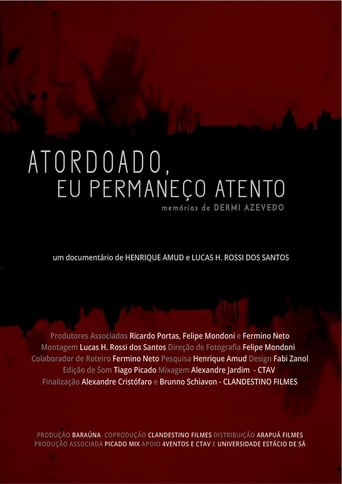
Stunned, I Remain Alert
2020
Journalist Dermi Azevedo has never stopped fighting for human rights and now, three decades after the end of the military dictatorship in Brazil, he's witnessing the return of those same practices.
More info →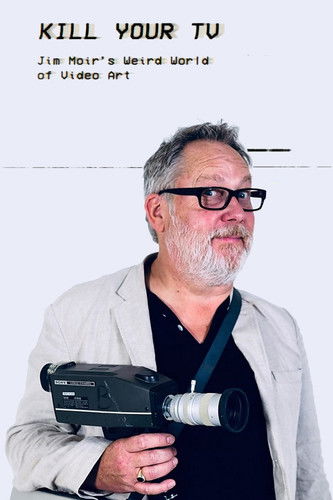
Kill Your TV: Jim Moir’s Weird World of Video Art
2019
Jim Moir (aka Vic Reeves) explores Video Art, revealing how different generations ‘hacked’ the tools of television to pioneer new ways of creating art that can be beautiful, bewildering and wildly experimental.
More info →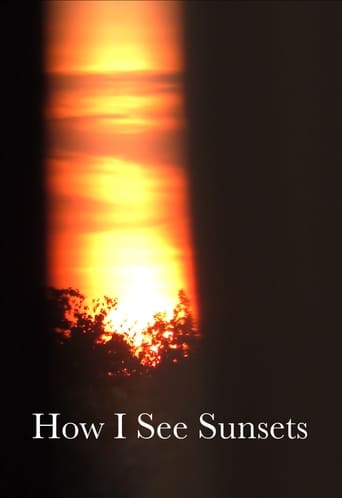
How I See Sunsets
2017
A poetic, semi-autobiographical short film of the sun setting over a village, shot from behind the curtains of a small, dimly lit room.
More info →
The Boundaries
2019
Shenzhen River (the border btw Hong Kong and Shenzhen), and the Second Line of Shenzhen Special Economic Zone (the border between Socialism China and Capitalism China) were compared to the Berlin Wall. The Second Line were constructed June 1982, demolished June 2015. The First Line (Shenzhen River) still flows, running deeper and deeper after 1997. Artist Miaoyuan LONG and Zen LU (the ON/OFF media Group) documented major checkpoints along these two boundaries. It’s a piece to illustrate the Big Escape (Touch Base Policy) from mainland China to Hong Kong during 1950-70’s and the geopolitical history of Shenzhen. The 48min audio-visual live performance version was Official selection of Draft Systems 2017 WRO Media Art Biennale, Poland.
More info →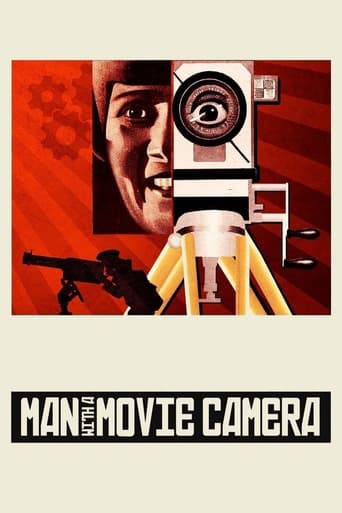
Man with a Movie Camera
1929 · ★ 7.8
A cameraman wanders around with a camera slung over his shoulder, documenting urban life with dazzling inventiveness.
More info →
To Teach a Bird to Fly
2020 · ★ 7
This experimental nature documentary by Minna Rainio and Mark Roberts depicts climate change and the wave of extinction from the point of view of our near future. Actually, it depicts the age we live in now, or rather its fateful consequences.
More info →Pyramid
2014 · ★ 6
Pyramid is a single screen work on Abraham Maslow's theory on the hierarchy of human needs filmed through the rhythms and choreography of middle class South England. Filmed in color and b&w on 16mm film, it continues Salmon's interest in the performance of the artist/cinematographer within both spontaneous and constructed situations and incorporates methods developed by various movements within documentary and avant-garde history. Using an array of sounds, music and conversation as well as silence, Salmon constructs an abstract documentary which both develops and challenges the themes presented in Maslow's theory as well as her own interest in human iconography, stereotype and domestic rhythm. The image of Maslow's pyramid and his pragmatic dissection of human needs and possible motivations provide a system of organization for the family and a philosophical framework for the video.
More info →
Conversation with Two Lovers
2025
Shot in two places marrying with each other by a single and fractured bridge between Condrieu and les Roches-de-Condrieu, this film is the continuation of exploring ephemeral movement through the use of editing, camera movements and color sampling.
More info →Crow
2022
An experimental work that explores sound and vision as an emotional response system.
More info →