
Double Labyrinthe
★ 6.5 · 1976 · 55m · Documentary
With this film-manifesto, the two artists invent what they called the Cinéma corporel (Cinema of the Body), they present themselves as a "double auteur femme" and they lay the foundations of the radical critical and esthetical positions of their work to come. Double Labyrinthe has a mirror structure based on their "mutual gaze": in the first part Katerina performs while filmed by Maria and in the second part Maria performs filmed by Katerina.
More Like This
Bukit Orang Salah
2013
At various points in its history, tiny St. John's Island was where Singapore's colonial founder Sir Stamford Raffles docked his ship upon arrival, a quarantine centre for immigrants and pilgrims returning from Mecca, a penal colony for political detainees and secret society leaders, and a sleepy holiday resort. Unlike its neighbouring islands, however, St. John's was never fully developed. It occupies an in-between space, the vestiges of its history scattered around the land. Its indeterminacy stands in sharp contrast to Singapore, where land use is meticulously planned to fulfil economic and social functions. In this film, St. John's Island - otherwise known as 'Bukit Orang Salah', a nickname coined by the people who were quarantined there - becomes a site of and for reflection, prompting questions about our history, heritage and identity.
More info →
Path of Cessation
1974 · ★ 6
In PATH OF CESSATION the image that is communicated to us by Fulton is a highly mystifying one. Rather than analyze, or enter into a dialogue with the Tibetan culture that he photographs, Fulton has succumbed to it, and through the process has presented us a work of great surface, as well as formal, beauty.
More info →
Série 7 (Éclatements de bulles de savon)
1907
Lucien Bull was a pioneer in chronophotography. Chronophotography is defined as "a set of photographs of a moving object, taken for the purpose of recording and exhibiting successive phases of motion."
More info →
The Game of Love
1967
A young woman and man are riding bikes through nature, having a good time. When she speeds up, he loses her, and after a while he stumbles across her bike without any trace of her. He stumbles through the forest looking for her, imagining how she kisses him. No dialogue, just "audio credits" instead of titles, saying the name of the film, actors and director.
More info →
Rummaging for Pasts
2001
Rummaging for Pasts is an experimental juxtaposition of two cinematic documents: the video diary of an international archaeological excavation and a collection of assorted eight millimeter found footage of Indian weddings.
More info →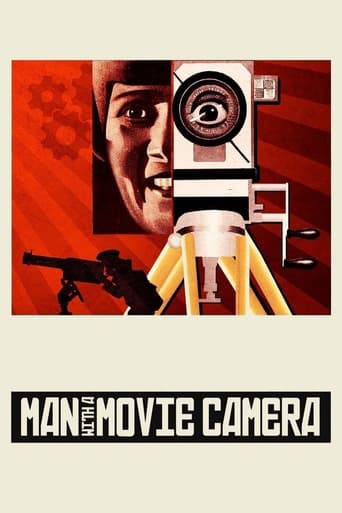
Man with a Movie Camera
1929 · ★ 7.8
A cameraman wanders around with a camera slung over his shoulder, documenting urban life with dazzling inventiveness.
More info →
The House That Eye Live In
2014 · ★ 4
Migrating by sea from Holland as an eight-year-old, Dirk de Bruyn went on to be a doyen of Australian experimental cinema. But as this intimate film reveals, his work is suffused with the trauma of migration, and the struggle to recognise himself as a ‘new Australian'. In conversation with documentarian Steven McIntyre, Dirk guides us through more than 40 years of his filmmaking: the early years exploring technique and technology, a subsequent phase of unflinching self-examination brought on by upheaval and overseas travel, and more recent projects where he attempts a fusion of personal, cultural, and historical identity. What emerges is an inspiring, rugged, and at times poignant portrait of an artist committed to self-expression and self-discovery through the medium of film.
More info →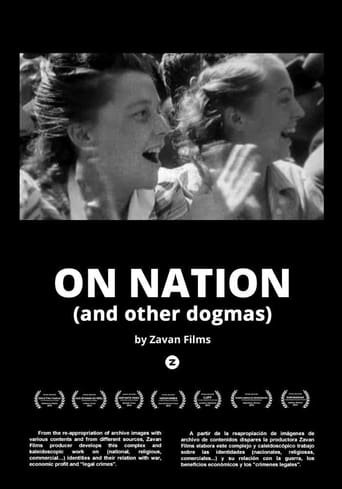
On Nation (and other dogmas)
2015 · ★ 6
From the re-appropriation of archive images with various contents (war images, soccer matches, social celebrations, religious rites, historical characters, etc.) and from different sources (including films by Chris Marker, Alain Resnais, Leni Riefenstahl or Gianikian and Ricci Lucchi, as well as images from ads and news...), together with reflections of Pierre Bourdieu, Zygmunt Bauman, Bertolt Brecht, Hannah Arendt, Stanley Milgram, Eric Hobsbawn, Amin Maalouf, Josep Fontana, etc., Zavan Films producer develops this complex and kaleidoscopic work on (national, religious, commercial...) identities and their relation with war, economic profit and "legal crimes".
More info →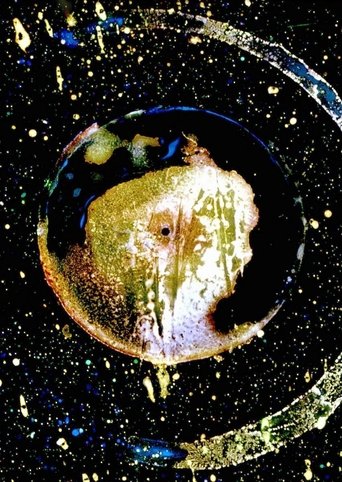
Impressions from the Upper Atmosphere
1989 · ★ 6
Sistiaga painted directly on 70mm film a circular (planetary?) form, around which dance shifting colours in a psychedelic acceleration matched by the soundtrack’s deep-space roar and howl. - Cinema Scope
More info →