The Green Line
★ 8.3 · 1998 · 33m · Documentary
Bahij Hojeij’s documentary studies the infamous Green Line between east and west Beirut during the civil war.
More Like This
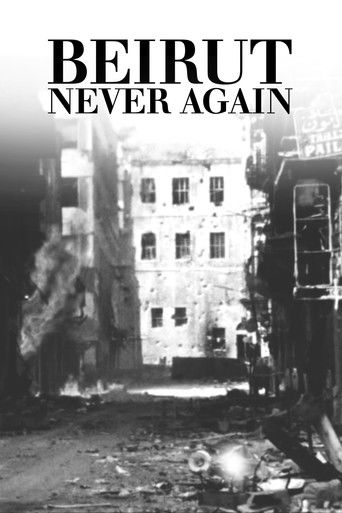
Beirut, Never Again
1976 · ★ 6.8
1976 marks the beginning of Beirut’s calvary. With a child’s eyes the filmmaker follows for six months the daily destruction of the city’s walls. Every morning, between 6 and 10am she roams around Beirut while the militia from both sides rest from their night of fighting.
More info →
untitled
2021
a state that used religion to control the mass. the mass reduced politics to the personal (social and domestic). religious shrines became political. And political figures became the new god. meanwhile, lebanon is collapsing. in this film, we are roaming within the lebanon with three individuals that are living the consequences of a failed state.
More info →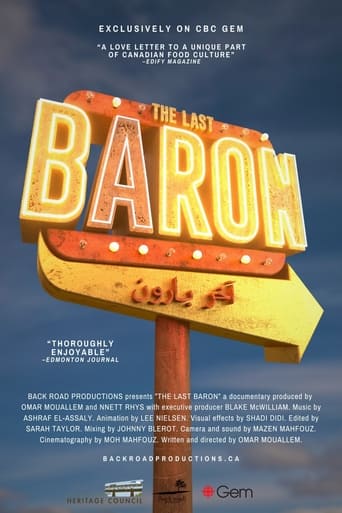
The Last Baron
2021 · ★ 10
The meaty saga of Burger Baron, a rogue fast-food chain with mysterious origins and a cult following, run by a loose network of fiercely independent Arab Canadian immigrants.
More info →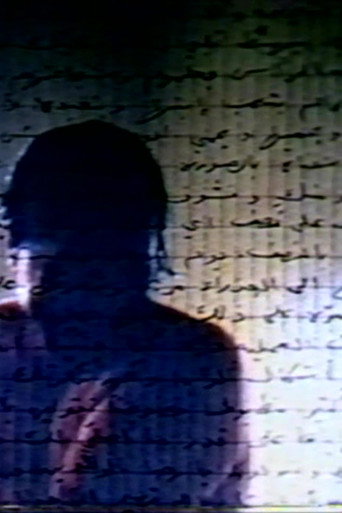
Measures of Distance
1988 · ★ 6.7
In this video, the artist tries to overcome the effects of distance, and reflects on geography represented in exile due to war, and on the psychological distance represented in each one’s approach to her womanhood. The video beautifully weaves personal images and audio recordings of a very intimate nature, binding the personal with the political. Reading aloud from letters sent by her mother in Beirut, Hatoum creates a visual montage reflecting her feelings of separation and isolation from her Palestinian family. The personal and political are inextricably bound in a narrative that explores personal and family identity against a backdrop of traumatic social rupture, exile and displacement.
More info →
Little Eagles
2016
Mohammed, the son of a simple worker, lives in the city of Alexandria with his father and dreams of moving to Cairo to become a filmmaker. In Cairo, Mohammed meets Salma and Bassam and is impressed by their self-confidence. When he discovers that Salma and Bassam’s parents were left-wing activists from the 1970s, he looks for a similar sense of purpose in his own father’s life. As he compares lives, Mohammed the filmmaker discovers answers. More importantly, he is led to new questions that connect the past with the present.
More info →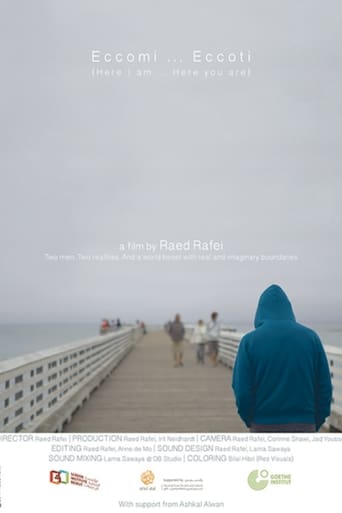
Here I Am...Here You Are
2017
Eccomi ... Eccoti unfolds as a virtual road trip navigating between Italy and Lebanon. Conditioned to live in a long-distance relationship with his partner because of strict European visa regulations, the director patches together the shared moments in an attempt to create a possible day-to-day reality for their couple. With a lyrical, ambient soundscape set atop a dreamy, atmospheric visual style that oscillates between still photography and moving images, the film explores what it means to be gay in contemporary Beirut and existential discomfort that blocks one from reaching a sense of complete-ness. Does such in-completeness have to do, in particular, with being gay? Or is it related to a grander malaise endemic to the human condition?
More info →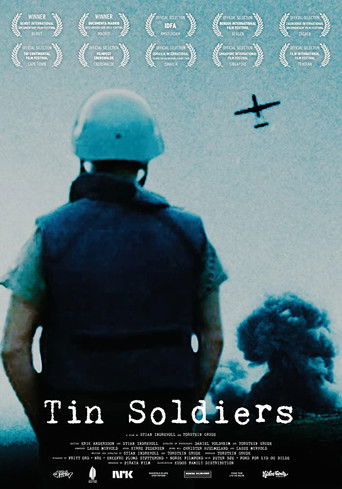
Tin Soldiers
2004
A group of young UN soldiers in Lebanon enters service with pro-Israeli views and a naive outlook on war. They go through a radical change of heart as they witness and film the Qana massacre. They secure video evidence indicating that Israel deliberately bombed a UN camp killing 106 refugees.
More info →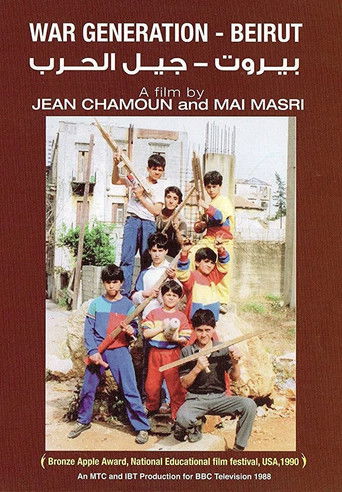
War Generation - Beirut
1986
War Generation - Beirut explores the lives, dreams and fears of three generations of young people living in the heart of the civil war in Lebanon. This seminal work from Jean Chamoun and Mai Masri remains one of the most powerful anti-war documents of the period.
More info →
Objects of War
2000
‘Objects of War’ is a series of testimonials on the Lebanese war. Each person chooses an object, ordinary or unusual, which serves as a starting point for his / her story. These testimonials while helping to create a collective memory, also show the impossibility of telling a single History of this war. Only fragments of this History are recounted here, held as truth by those expressing them. In ‘Objects of War’, the aim is not to reveal a truth but rather to gather and confront many diverse versions and discourses on the subject. ‘Objects of War’ started in 1999 assembling the testimonials of eleven persons. It was first shown in 2000 . It continued in 2003 with ‘Objects of War n°2’, recording seven additional testimonials. This time however, and since then, the recorded material is left unedited, shown in its integrity. The work of collecting and assembling these stories continued with ‘Objects of War n°3 & n°4’ in 2006 and ‘n°5 & 6’ in 2014.
More info →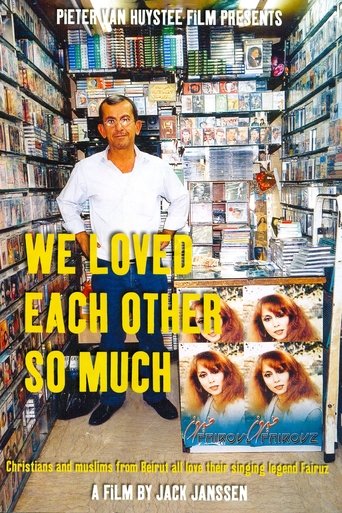
We Loved Each Other So Much
2003 · ★ 8.3
Inhabitants of Beirut talk about their love for the singer Fairuz.
More info →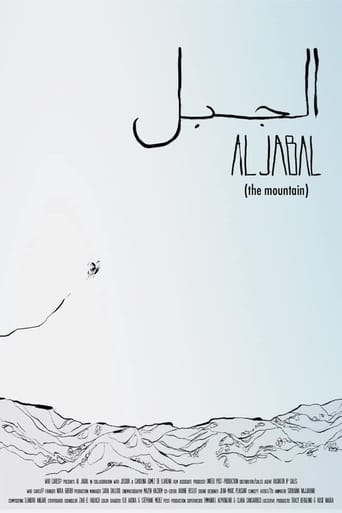
The Mountain
2020
While living in a deserted valley in eastern Lebanon, seven-year-old Rahaf describes the wonders of her past, present and future – without knowing the limits of her own imagination.
More info →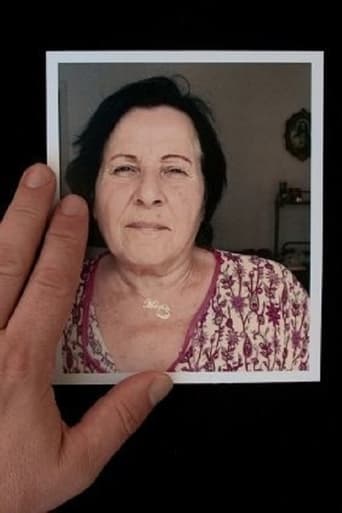
Minerva
2021
Severely battered from the Beirut Port Explosion on August 4th, Minerva passed away eight days later. Her son Joseph, while still grieving for his loss, sunk into a long and absurd bureaucratic path through the inept system that disowned his mother as a victim of the blast. Minerva is gone. The explosion has snatched her soul, and the city walls have not yet recognized her as a martyr. There is no poster of her smiling face among those of the victims. Their faces are memories that will haunt us for the rest of our lives. Perhaps her son, devastated by her passing, seeks to etch her image into the city's memory. Perhaps he is seeking some confession to the crime. This is a place that casts out its children, whether dead or alive.
More info →