Bruckner: Symphony No. 6
2014 · 58m · Music
Anton Bruckner’s 6th Symphony was written between 1879 and 1881: a very happy time in his life. Unlike most of Bruckner’s symphonies, the 6th was not revised. Of all his works, this one seems to come from a single source of inspiration. Bruckner himself called it his “boldest” symphony – probably due to its extreme degree of motivic, rhythmic and harmonic originality. This live recording of the seldom-performed 6th Symphony is the next instalment of the acclaimed Bruckner cycle by the Staatskapelle Berlin and Daniel Barenboim. Anton Bruckner Symphony No. 6 in A major (original version) Daniel Barenboim, Conductor Staatskapelle Berlin Recorded live at the Philharmonie Berlin, 22 June 2010
More Like This
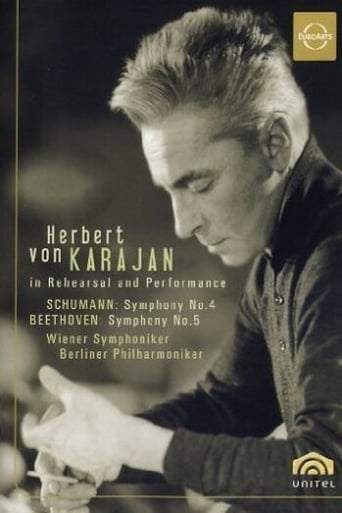
Karajan in Rehearsal
1965
Karajan conducts rehearsal and performance of Schubert's Symphony No. 4 with the Vienna Symphony in Vienna, Nov. 1965, and Beethoven's Symphony No. 5 with the Berlin Philharmonic, January 1966. Henri-Georges Clouzot directs.
More info →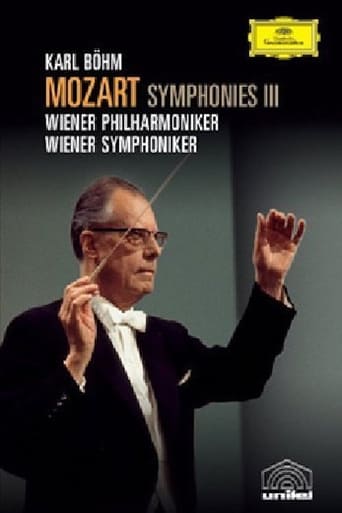
Mozart Symphonies Vol. III - Nos. 28, 33, 39, "Serenata Notturna" and Karl Böhm documentary
1978
Almost any recording of a Mozart symphony by Austrian conductor Karl Bohm (1894-1981) is a sure thing: excellent sound, and sensible, solid, non-sentimental interpretation. This DVD has 3 Mozart Symphonies, all conducted by Bohm: Nos. 33 and 39 with the Vienna Symphony, recorded in Studio-Wien in 1969, and a live 1970 performance of Symphony 28 with the Vienna Philharmonic, filmed in the Musikvereinsalle in Vienna. All 3 symphonies have excellent film quality and sound, although some viewers may prefer Symphony 28, as the presence of a live audience really brings out the best in the Vienna Philharmonic.
More info →
La Gazza Ladra Overture
1954 · ★ 5.3
In this short, Johnny Green leads the MGM Symphony Orchestra in a performance of the overture to Rossini's "La Gazza Ladra".
More info →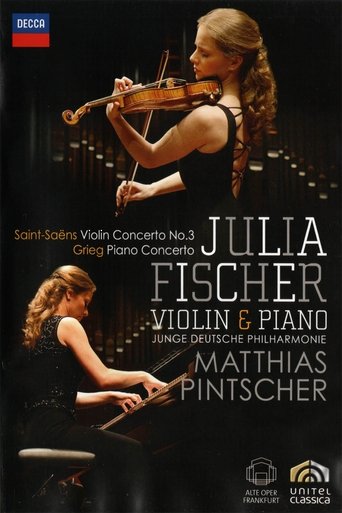
Julia Fischer - Violin & Piano
2010
German virtuoso Julia Fischer performs violin and piano concertos by Saint-Saens and Grieg, accompanied by the Junge Deutsche Philharmonie under the baton of Matthias Pintscher.
More info →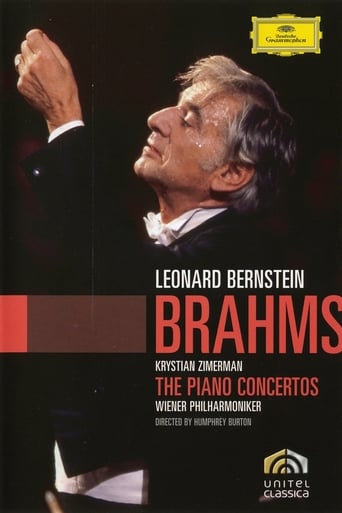
Brahms The Piano Concertos
1984
Between 1981 and 1984 Leonard Bernstein recorded nearly all of Brahmss orchestral works with the Wiener Philharmoniker to honor the 150th anniversary of the composer's birth in 1983. For the concertos, Bernstein enlisted the services of some of the finest Brahms interpreters of the time: the violoninst Gidon Kremer, the cellist Mischa Maisky and the pianist Krystian Zimerman. Leonard Bernstein, Krystian Zimerman, and the Wiener Philharmoniker, it's very hard to get a better group of musicians for these masterpieces. Mr. Zimerman and Mr. Wolfgang Herzer's piano cello duets in the third movement of Brahms' second is simply tearful.
More info →
Bruckner Symphony No. 9
2010
With nearly 450 years of tradition, the Staatskapelle Berlin is one of the oldest orchestras in the world. Daniel Barenboim has served as its music director since 1992, and in 2000 the orchestra appointed him Chief Conductor for Life. Having already performed important cycles such as Beethoven, Brahms and Schumann together, Daniel Barenboim and the Staatskapelle turned their focus toward Anton Bruckner's last six Symphonies, performed in the Philharmonie Berlin in the course of only one week in June 2010. This music is more serious and more significant than one had thought, the Berliner Zeitung summarized in its review of Daniel Barenboims celebrated Bruckner cycle with the Staatskapelle Berlin. Bruckners unfinished Symphony No. 9 brought to an end, in a poignant manner, the work of one of the greatest symphonic composers of the Classic-Romantic era.
More info →
Bruckner: Symphony No. 4
2010 · ★ 6
Daniel Barenboim is an expert in exploiting the impact of cyclical performances of composers works: This time he focuses his sharp intellect on all six of Anton Bruckners mature symphonies. Der Tagesspiegel described Barenboim's performance of the works with the Staatskapelle Berlin on six nearly consecutive evenings in June 2010 as a superhuman accomplishment and went on to praise how: His Bruckner is conceived and performed very theatrically, like an opera without words. Bruckners famous Romantic Symphony No. 4 forms the prelude to a spectacular DVD series from Accentus Music and Unitel Classica, exploring Bruckners symphonic cosmos.
More info →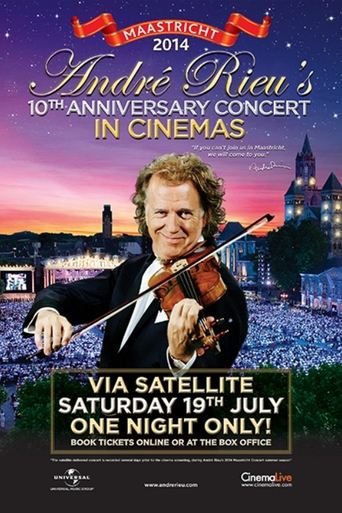
André Rieu - Maastricht 2014 (10th Anniversary Concert)
2014 · ★ 10
The King of the Waltz stages a spectacular anniversary concert in the Netherlands' most romantic city square. Hugely popular Dutch violinist and composer Andre Rieu regularly features alongside top rock and pop bands
More info →
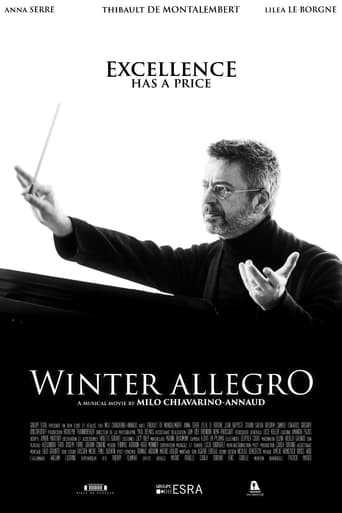
Winter Allegro
2023
Winter Allegro portrays the fierce competition between two violin prodigies to win the solo part of an abusive conductor's new rendition of Vivaldi's Four Seasons. Camille, first chair violinist, faces Anya, a younger American virtuoso.
More info →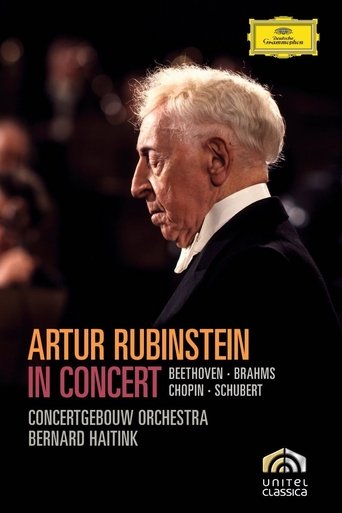
Rubinstein in Concert
1973 · ★ 7
Live 1973 concert performances by celebrated Polish-American virtuoso concert pianist Arthur Rubinstein, with the Concertgebouw Orchestra under conductor Bernard Haitink. Filmed in August 1973 at the Concertgebouw in Amsterdam, the performances include Beethoven's Third Piano Concerto, in C minor, op. 37; and Brahms's First Piano Concerto, in D minor, op. 15. These are followed by four short pieces for solo piano, by Schubert, Brahms, and Chopin. The 2008 DVD release by Deutsche Grammophon also includes a short documentary, "Rubinstein at 90", an interview with Robert MacNeil, filmed at Rubinstein's home in Paris in 1977.
More info →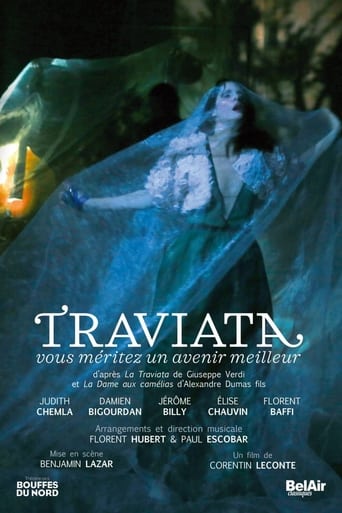
Traviata – You deserve a better future
2019 · ★ 7.7
The audience is invited into Violetta’s privacy to have a close look at the fire to which she abandons herself among the guests of this musical and phantasmagorical celebration that blends theatre and opera, voices that speak and sing, and where the distinction between the instrumentalists and the singers becomes blurred, where Charles Baudelaire is seated next to Christophe Tarkos, and where the phantoms of this Paris in full industrial boom whose future we are living at present, sing and die.
More info →