"Erscheinungsform Mensch": Adolf Eichmann
★ 6 · 1981 · 107m · Documentary
Documentary brings the time of the Holocaust to life and provides insight into the mind of the organizer of this crime: Adolf Eichmann. The documentary contrasts Eichmann's statements and memories - documented in the original soundtrack - directly with those of Holocaust survivors. The picture of the person and the crime is rounded off by the many contemporary witnesses who were involved either in Eichmann's arrest or the subsequent trial - such as the doctors and psychologists who looked after him, the guards and police officers through to the interrogator, the public prosecutor and the judge at the trial.
More Like This
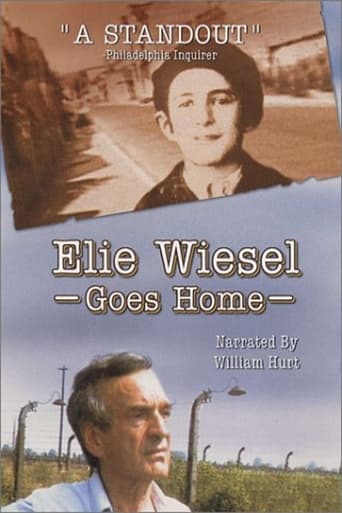
Elie Wiesel Goes Home
1997 · ★ 9
A documentary chronicling the adolescent years of Elie Wiesel and the history of his sufferings. Eliezer was fifteen when Fascism brutally altered his life forever. Fifty years later, he returns to Sighetu Marmatiei, the town where he was born, to walk the painful road of remembrance - but is it possible to speak of the unspeakable? Or does Auschwitz lie beyond the capacity of any human language - the place where words and stories run out?
More info →
1944: Should We Bomb Auschwitz?
2019 · ★ 7.5
In 1944, two prisoners miraculously escaped from Auschwitz. They told the world of the horror of the Holocaust and raised one of the greatest moral questions of the 20th century.
More info →
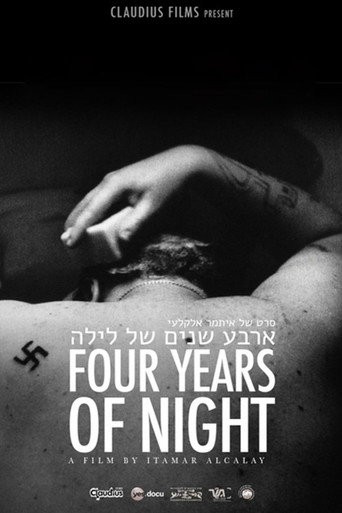
Four Years of Night
2013
For four years (1977-1981) Esaias Baitel documented a violent Parisian neo-Nazi gang. Having gained their trust, he was able to get close to them. Living among the gang members, he witnessed horrific events, and while hiding his real identity, he photographed a one-of-a-kind collection of gripping stills. Over thirty years have passed. Esaias Baitel has laid his camera down. He returns to the dark nights he spent in the City of Lights, the city where he lived a double life, going back and forth from the gang to the young family he had just started.
More info →Vernichtung durch Arbeit - KZ-Häftlinge: Sklaven für die deutsche Industrie
1986
No synopsis available.
More info →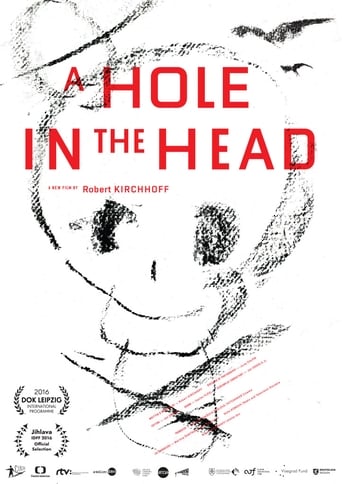
A Hole In The Head
2017 · ★ 6.3
A pig farm in Lety, South Bohemia would make an ideal monument to collaboration and indifference, says writer and journalist Markus Pape. Most of those appearing in this documentary filmed in Slovakia, the Czech Republic, Poland, France, Germany and Croatia have personal experience of the indifference to the genocide of the Roma. Many of them experienced the Holocaust as children, and their distorted memories have earned them distrust and ridicule. Continuing racism and anti-Roma sentiment is illustrated among other matters by how contemporary society looks after the locations where the murders occurred. However, this documentary film essay focuses mainly on the survivors, who share with viewers their indelible traumas, their "hole in the head".
More info →Charlotte Salomon - Ein Tagebuch in Bildern 1917-1943
1972
Charlotte Salomon died in the Auschwitz concentration camp in 1943. The pictures she painted while on the run in unoccupied France have survived - a cycle in which Charlotte Salomon tells the story of her life like a diary.
More info →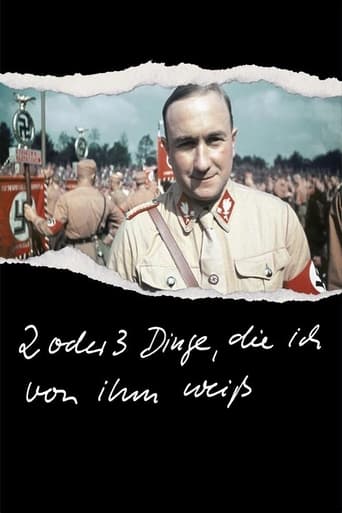
2 or 3 Things I Know About Him
2005 · ★ 6.6
What would your family reminiscences about dad sound like if he had been an early supporter of Hitler’s, a leader of the notorious SA and the Third Reich’s minister in charge of Slovakia, including its Final Solution? Executed as a war criminal in 1947, Hanns Ludin left behind a grieving widow and six young children, the youngest of whom became a filmmaker. It's a fascinating, maddening, sometimes even humorous look at what the director calls "a typical German story." (Film Forum)
More info →
Modus Operandi
2008
Between 1942 and 1944 some 24,916 Jews were deported from Belgium to Auschwitz. The roundups and deportations were organized and carried out by the Nazis with the - not always conscious - cooperation of Belgian authorities. The attitude of the authorities here varied from outright resistance to voluntary or unwitting collaboration.
More info →
In His Father's Footsteps
1982
An American family visits a concentration camp in Germany. At the museum, the father makes the acquaintance of an older man who questions his prejudices.
More info →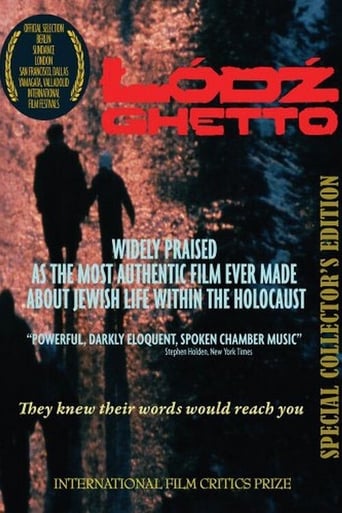
Łódź Ghetto
1989 · ★ 8
The Polish city of Łódź was under Nazi occupation for nearly the entirety of WWII. The segregation of the Jewish population into the ghetto, and the subsequent horrors are vividly chronicled via newsreels and photographs. The narration is taken almost entirely from journals and diaries of those who lived–and died–through the course of the occupation, with the number of different narrators diminishing as the film progresses, symbolic of the death of each narrator.
More info →