Claire
★ 10 · 2016 · 4m · Animation
Claire is composed of digital scans and blow-ups of a series of three ink-on-paper artworks created in 2012 by French-Spanish researcher, publisher and artist Claire Latxague. While collecting drawings, written documents and other printed materials for a (yet unreleased) project called Un film de papier, I’ve stumbled upon Latxague’s artwork, entitled À la renverse. The blow-ups were made in an attempt of unearthing cartographic imagery in abstract compositions.
More Like This
The Faithful Furniture
1910 · ★ 6.2
A man who no longer can afford his rent is forced to sell his beloved furniture. The furniture can not bear to be parted from their owner and decides to return home. Often confused with Bosetti's film Le Garde meuble automatique (1912).
More info →
Harem Scarem
1928 · ★ 5.2
A lost animated short centered on Oswald the Lucky Rabbit's disadventures in the Moroccan desert. Some drawings survived and were put together in an animated clip.
More info →
Super (8) Skate
2020
Skating is cool. Super 8 films too. Fuck-shit! That was dope! // "Super (8) Skate" is a Stop-Motion short, shot on Super 8 film to express the love of skating and filmmaking.
More info →
Logos
1957 · ★ 5
Jane Conger Belson Shimane's first film, Logos, premiered in 1957 and was screened at festivals in North America, Europe, and Latin America. The animated film featured an electronic score by Henry Jacobs. Preserved by the Academy Film Archive in 2001.
More info →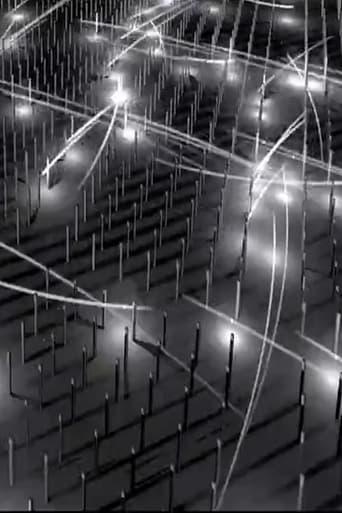
Barcode III.0
2013 · ★ 6
A unique journey across a topography created entirely from a form of digital light and shadow—a bristling terrain of poles bending the light in every direction. This film is the remake of Barcode, an abstract road-movie about light and shadows.
More info →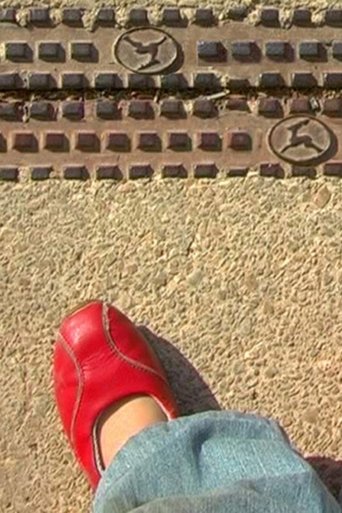
Marbles
2006 · ★ 8
A little girl's marbles lead to a fascinating journey and opens up lots of new perspectives on the everyday surroundings.
More info →
Monkey and Crabs
1939 · ★ 7
Chestnuts, bees, and a mortar join forces to punish a villainous monkey.
More info →
Kamishibai Kintaro
1934 · ★ 4
Kintaro, gentle and strong, is popular in the forest. He eventually becomes a great samurai with the name Sakata no Kintoki.
More info →Kamishibai: The Story of the Tanuki
1933 · ★ 6
A picture-story showman is reading a story about a troublemaking tanuki on the street to children. A starving tanuki with nowhere to go plots to steal offerings from Mangokuzan Temple, which has a lot of offerings. The raccoon sneaks into the temple. While he is eating bean-paste buns, a child bonze comes. So, the tanuki turns himself into a statue of Buddha. A shortened and revised version of The "Enchanted Kettle". According to The History of Japanese Animation written by Katsunori Yamaguchi and Yasushi Watanabe, the picture-story scene at the beginning of the film and the scene of the raccoon dog dancing at the end were added in this version.
More info →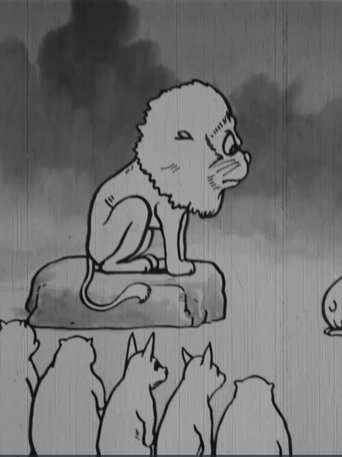
Tonpei and Sarukichi
1932 · ★ 8
The lazy Tompei is still asleep past 10 o'clock and even at 11 o'clock. He finally wakes up at 12 o'clock at the deafening sound of the angry clock. Hungry, Tompei walks to Sarukichi's house and grabs food Sarukichi has harvested. The next day, while Sarukichi is working in the hills, Tompei beats Sarukichi's two children who are staying at home and tries to steal things from Sarukichi's house. Sarukichi, who is alerted of the situation via telephone from his children races home, is infuriated at the cruel Tompei and punches him so hard he falls down.
More info →The Equation X + X = 0
1936 · ★ 10
“If abstract films are really abstract films… they deal exclusively with those abstract relations that can be expressed in terms of shape and motion” wrote Robert Fairthorne in Film Art in 1936. A mathematician and information scientist, Fairthorne saw aesthetic potential in an animation made as a teaching aid by Salt, and proposed this collaboration. (Tate.org.uk)
More info →