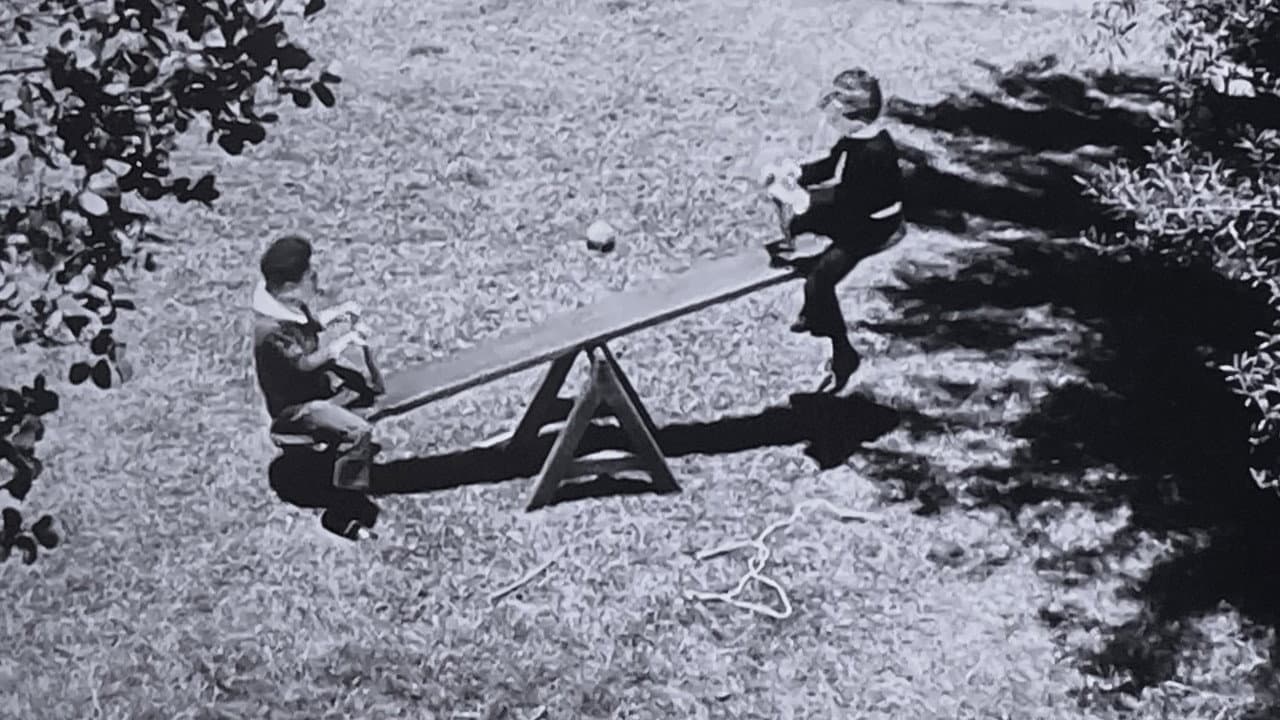
The Seesaw and the Shoes
★ 6.5 · 1945 · 11m · Drama · Documentary · History
This short shows how two objects led to important discoveries. Children playing with a seesaw inspire French physician Rene Laennec to invent the stethoscope, and a pair of shoes made of caoutchouc lead Charles Goodyear to discover the process for vulcanizing rubber.
More Like This
I've Loved You So Long
2008 · ★ 7.3
A woman struggles to interact with her family and find her place in society after spending fifteen years in prison.
More info →
The First Kiss
1928 · ★ 9
The Talbots, formerly one of the Eastern Shore's first families, have gone to seed: Pap is a drunk, soddenly decaying in his ruined ancestral home, and three of his sons (William, Carol, and Ezra) are lazy, shiftless young men. Mulligan, Pap's second son who supports the entire family by oyster fishing, falls in love with wealthy Anna Lee, but when he first kisses her, she calls him "white trash."
More info →

Colors of Wind
2018 · ★ 7.8
Yuri leaves Ryo with mysterious words. Ryo goes to Hokkaido knowing that his doppelganger magician is missing. Ryo realizes Yuri was also the magician’s lover and he learns magic. The story that crosses over two identities, illusion and magic.
More info →
A Really Important Person
1947 · ★ 7.5
A policeman's son searches for a suitable subject for an essay about an important person.
More info →
Half Angel
1936 · ★ 7.5
Allison Long is acquitted on charges of poisoning her father but then her benefactor is poisoned. Reporter Duffy Giles has faith in her innocence.
More info →
Mr. Whitney Had a Notion
1949 · ★ 6.3
Historical short showing how Eli Whitney (best known for the invention of the cotton gin) played a significant role in the introduction of mass production techniques to the USA in the late 18th century.
More info →That's Why I Left You
1943 · ★ 8
Young couple Joe and Mary Thompson love each other and their children despite the struggles that they have that are typical of most young couples early on in their married life, such as the basics of trying to make ends meet. But after Joe leaves Mary and their inner city life, she finds an unpostmarked envelope under their apartment door with her name written in Joe's handwriting. It contains a letter explaining why he left. It has primarily to do with his feeling that another part of his life was being left behind for his married life, that other life which consists of a want to travel, especially sail the south seas. The actual impetus to leave was inadvertently fostered by Mary through the birthday present she bought for him. So what actually did happen to Joe and will he ever return to his loving wife?
More info →
Trifles of Importance
1940 · ★ 7.5
Part of John Nesbitt's Passing Parade series, this short shows how three seemingly unimportant things can affect people. The first is how the number 7 affects a student accused of theft charges. The second segment shows that a person's doodles can reveal personality traits. The final segment shows why certain items are on men's suits, such as lapels.
More info →Madero of Mexico
1942 · ★ 7
This Passing Parade series short chronicles the political life of Francisco Madero, who tried to bring democracy and land reform to Mexico.
More info →To My Unborn Son
1943 · ★ 7.3
A Yugoslav man, dying after being shot while attempting to help defend his village, writes a letter of encouragement and hope to his unborn child, explaining what he was fighting for in resisting the Nazi invasion of his homeland. A John Nesbitt's Passing Parade short.
More info →Strange Testament
1941 · ★ 7.5
This MGM Passing Parade series short tells the story of Julian Poydras, whose encounter with a girl at Mardi Gras had a profound effect on his later life.
More info →