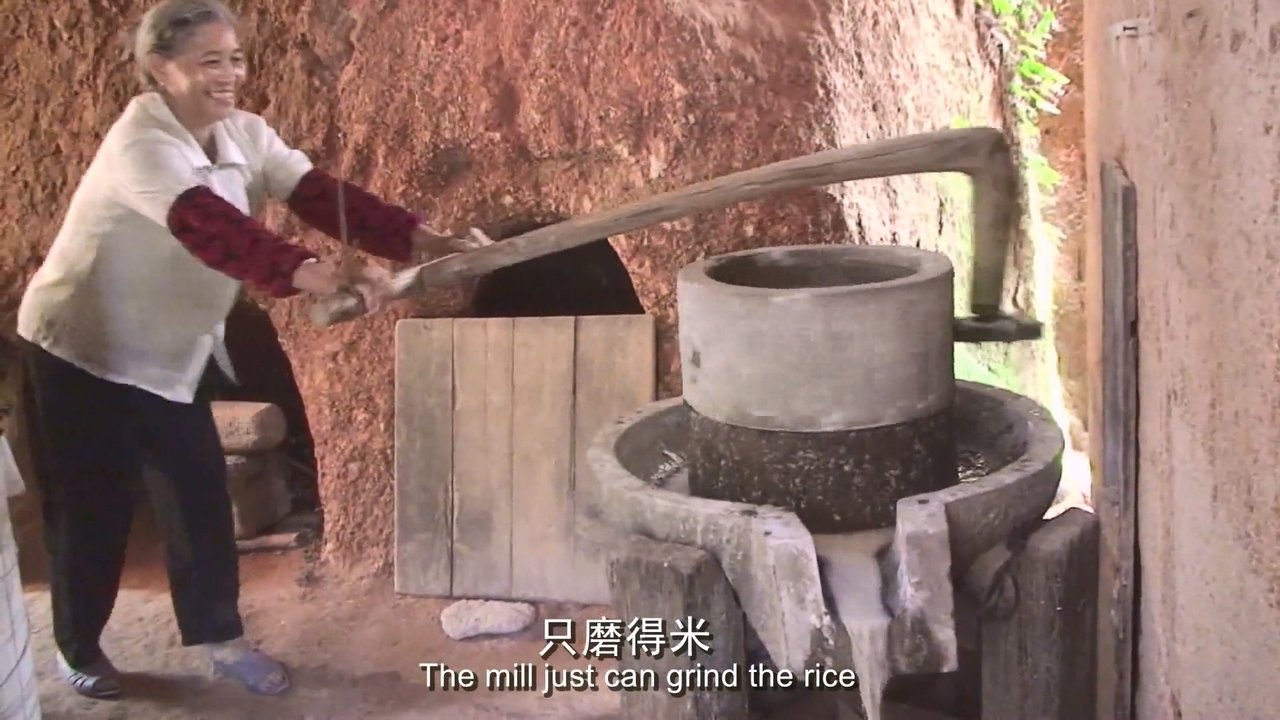
Chronicles of Hulling Rice
2011 · 64m · Documentary
In the sound of rice huller, the rice falls to the jar; and in the booming sound of thunder, the rain drops falldown on the ground. Witha shovel on shoulder, we're farming under the sky. -- This is a children's folk rhymes used to be very popular among the Hakka people lived in the westernpart of Fujian Province, China. While farming is not an easy work, rice hulling is an even more laborious work. Rice-huller is a tool used by the peasants in southern China to hull the rice for thousands of years in theirfarming history. This documentary films the making of probably the last rice-huller ever made by mankind.
More Like This

Trash Village
2013
This is the fourth film in my Zoujiacun series within the Folk Memory Project. In 2013, I came back to my village and faced the trash all over the village. The children and I tried to improve the environment of our village. This was a tough fight against the trash and ideas of villagers. I felt like that the trash was in my heart. The 95-year-old grandma Sha and her 49-year-old son Xizhu, their lonely solitary life is also in this film. This film is about the progress that I fight with myself.
More info →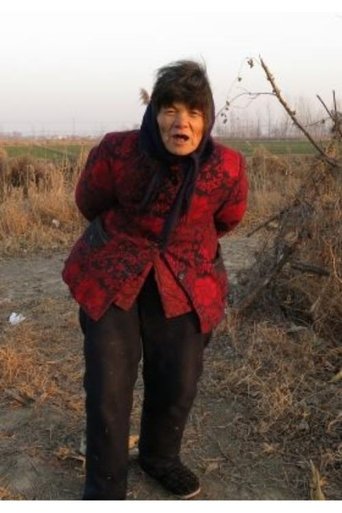
Foolish Village
2014
This is my fifth time coming back to my own village, where I was born and brought up. After I graduated from college, when I was staying in my village, I was always suspected and judged by the village people. Xizhu grandpa was called ‘fool’ by other villagers, and Zengxiang aunty was looked down by others. They come into my life, and I stayed with them. Their naïve and strange thought made think about my village in a new way. In this quite ‘normal’ village, who are normal people? In those normal people’s eyes, am I another fool of this village?
More info →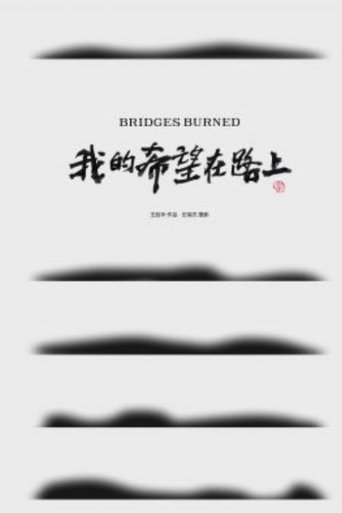
Bridges Burned
2016
In the autumn of 2010, the poet Xiaozhao set off from Beijing and took a national tour of his personal poem collection "My Hope is on the Road" printed at a print shop. All the way up and down, full of ambition. Photographer Zhuang Ruijie went to Guangdong halfway to shoot. He recorded a trip to Guangzhou, Shenzhen, Chengdu, Shaanxi Shanyang, Huashan, Zhongnanshan, Xi'an and returned to Beijing for about 15 days.
More info →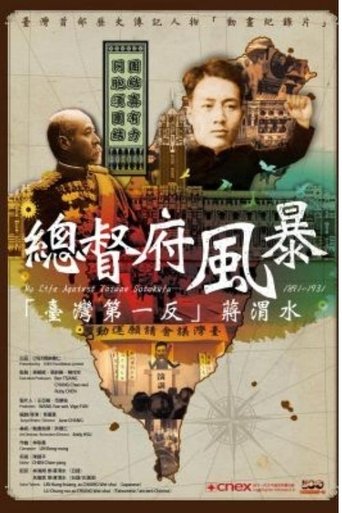
My Life Against Taiwan Sotokufu - 1891-1931
2012
“My Life Against Taiwan Sotofuku – 1891~1931” is Taiwan’s first biographical animated documentary. The film combines animation, archival photos, footage, and sound theater to recreate the heroic epic of CHIANG Wei-shui, the “the Savior of Taiwanese People,” during Japan’s colonial rule of Taiwan. Through first-person flashback narrations, Taiwan’s pioneer revolutionary CHIANG Wei-shui tells the turbulent tale of the rise and fall of Taiwan’s non-violent anti-Japanese movements, as well as a lifetime of remarkable resistance against Taiwan Sotofuku (Japan’s colonial government). Cast
More info →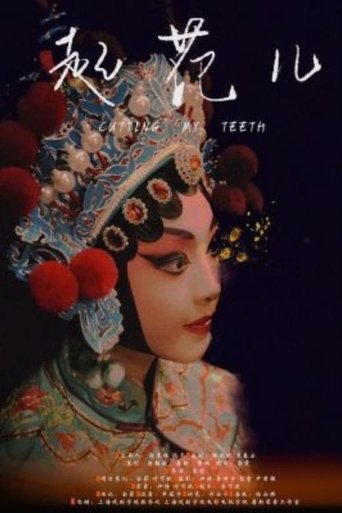
Cutting My Teeth
2020
This film mainly records the story of two adolescent children receiving primary education of Peking Opera in Shanghai Opera School in a documentary form. As they are in their adolescence, they gradually form their own plans and ideals for the future. On this unusual learning path, they face the problem of choice between reality and ideals, and gradually learn to accept and grow up.
More info →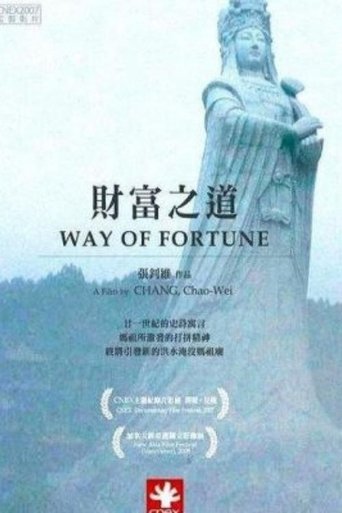
Way of Fortune
2007
"Mazu" or "The Sea God" has been the most important religious belief of ordinary people in my hometown for four hundred years. Along the coast of China and even in the Nanyang region, there is at least one temple dedicated to Mazu in various seaside cities-this geographical and historical distribution coincides with the contemporary economic or industrial area of Chinese society. It is frustrating that rapid economic development has led to global warming. The factories located on the coast of southern China from all over the world will eventually cause flooding and inundate these temples dedicated to Mazu. This is indeed a very ironic discovery for our civilization, "We", not only Chinese or all human beings, now or in the past, how can we Chinese avoid this upcoming tragedy?
More info →

Umbrella
2007 · ★ 6.3
Workers, peasants, soldiers, students and merchants were five groups of Chinese society in the 1950s, after the so-called elimination of the exploited class. Borrowing this concept, the umbrella is taken as the clue to rediscover changes in various social classes after the economic reform, and to analyze the social problems in China. Workers making umbrellas, merchants selling umbrellas, students looking for jobs in the rain. Umbrella is used as a metaphor that can be seen everywhere. As the raindrop, what we see is sometimes clear, sometimes untraceable.
More info →

WHO IS MY LORD
2017
The story of a girl attempted suicide for love and finally returned to religion.
More info →
MAGUEY
2016
This story is about the group's marvellous life without money.The film tell this story from six points of view: the screenwriter, the recording, the photography, the art, the performer and the director.
More info →
SCAR
2015
Scars, which are unfortunate or unexpected results, are also signs of healing. This new connective tissue replaces the process of injured tissues, and at the same time it becomes a metaphor for the pain and frustration of life: the sadness of the body, the union of pain... In short, scars have become a proof, a proof of existence, a proof of alive, a proof of pain, and a proof of a certain age. Beginning in 1949, in this vast land, these various scars, these healing marks, patterns, sad shapes, bring personal memories, collective pains, the marks of history, and come together Gaze, the meaning of the record. This film is the first part of the "Scar" project, the story of 110 Chinese scars.
More info →