A Celebration of Hope
★ 10 · 1963 · 76m · Documentary
A film poem in four parts following the first four days after Algeria's independence in 1962. Footage of the nationwide celebrations is intercut with footage shot among the fighters of the Algerian Army of National Liberation, refugees exiled to the mountains of Tunisia and Morocco, and ordinary people from the towns and villages of Algeria.
More Like This
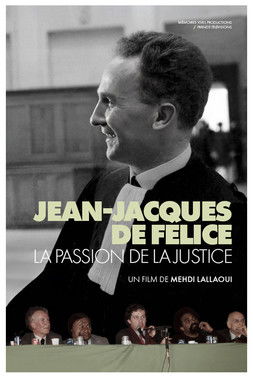
Jean-Jacques de Félice, The Passion For Justice
2018 · ★ 10
From the rights of minors before the juvenile court, young offenders from the neighborhoods of eastern Paris, or children of Algerian origin from the shantytowns of Nanterre, to the defense of colonized Kanaks and Polynesians; from the fight for conscientious objector status to the denunciation of torture and the death penalty, lawyer Jean-Jacques de Félice has been involved in every struggle. His pacifism knows no bounds: with organizations like Cimade, LDH, and the Louis-Lecoin Committee, he assists draft dodgers in numerous countries. These include Portuguese conscientious objectors refusing to fight in the wars in Angola and Mozambique, American deserters opposed to the Vietnam War, and Israeli objectors refusing to serve in the Occupied Territories. It is no surprise that, as early as 1971, he was one of the very first lawyers representing the farmers of the Larzac plateau.
More info →
Pierre Clément, Cinéma et Révolution
2023 · ★ 10
Pierre Clément, student and photographer of René Vauthier, first accompanied him to Tunisia to make a film on the country's independence in 1957. Destiny led him to Algeria and his presence in February 1958 at the Tunisian-Algerian border changed his life. . Forever. He took his camera and photographed the attacks on Sakia Sidi Youssef before committing himself body and soul to the Algerian cause. Shortly after, he directed the film “Algerian Refugees” before being arrested, tortured and imprisoned, while his third film, “The National Liberation Army in Almaki”, was not finished. Abdel Nour Zahzah, a director who commemorates Pierre Clément, the director who risked his life, the brother of the Algerian resistance, who disappeared in 2007.
More info →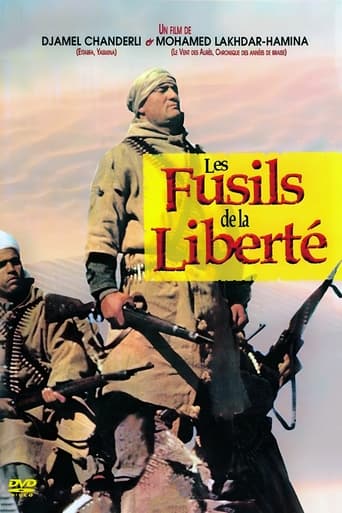
Guns of Freedom
1961 · ★ 10
This docu-fiction recounts the difficulties overcome by an ALN detachment whose perilous mission is to transport weapons and ammunition from Tunisia across the Algerian Sahara during the Algerian liberation war (1954-1962) against the French army of occupation.
More info →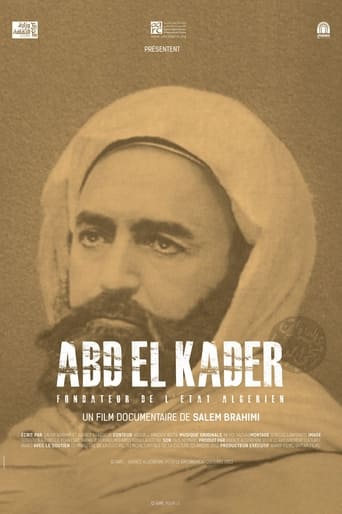
Abd El-Kader
2014 · ★ 10
Illustrated with archival photographs, animations and live action, this film explores the history and historical and spiritual heritage of Emir Abd El-Kader. Algerian leader of the 19th century, was admired by Abraham Lincoln and celebrated to this day by the Red Cross as a great humanitarian. Emir Abd el-Kader, the man who challenged the French armies from 1832 to 1847 before creating the bases of a real Algerian state, is today considered by independent Algeria as one of the most outstanding figures. of its history. The nobility of his attitude after his capture and the very effective protection he brought to the Christians of Damascus at the end of his life also earned him great prestige among his former adversaries. A documentary told in dialectal Arabic by the voice of Amazigh Kateb.
More info →
Brothers in Arms
1992 · ★ 10
From 1954 to 1962, during the Algerian War, French citizens provided concrete assistance to the FLN in France: sheltering refugees, forging documents, facilitating border crossings, and transporting funds. Whether committed to the ideals of the Republic or driven by Third Worldist revolutionaries, they sought to build a bridge of friendship between nations. They paid for their commitment with imprisonment and exile. Four veterans of the Jeanson network recall this period. Today, they are no longer seen as traitors or heroes, but as witnesses recounting "their" war... Silent for 30 years, the "Jeanson network" now bears witness to this history.
More info →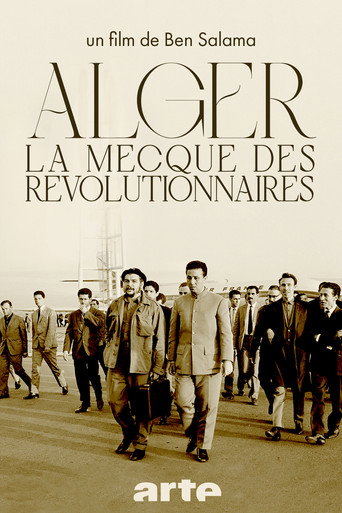
Algiers, the Mecca of Revolutionaries (1962-1974)
2016 · ★ 10
From the early 1960s to the mid-1970s, independent Algeria provided significant support to anti-colonial movements and revolutionaries worldwide. Successive presidents, Ahmed Ben Bella and then Houari Boumédiène, made Algiers a haven for activists fighting against colonial and racial oppression. Algiers the White became Algiers the Red. The internationalist Che Guevara established his base of operations there for his guerrilla activities in Africa. The African-American leader Eldridge Cleaver made it the international headquarters of the Black Panther Party. During this period, Algiers was known as "The Mecca of Revolutionaries."
More info →
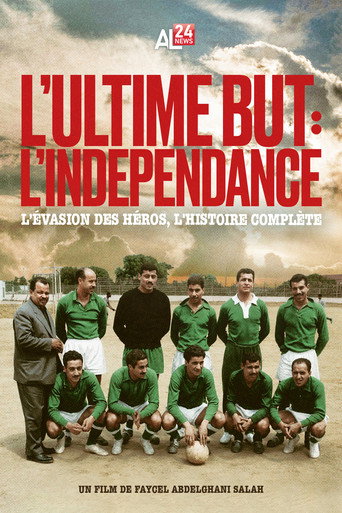
The Ultimate Goal: Independence
2025 · ★ 10
Delve into the story of the Algerian footballers who traded European pitches to join the fight for independence. In 1958, in the midst of the War of Independence, talented players secretly left their clubs to form the FLN team – a living symbol of the Algerian people's struggle. This clandestine team, banned by FIFA, served as a mouthpiece for the Algerian provisional government until 1962. Footballer Rachid Mekhloufi explained: “This departure of the best Algerian players playing in France was no accident. With the control of the media, few French people knew what was happening in Algeria. The FLN representatives in France were ahead of the curve in terms of publicity. Truly ahead of the curve, because a move like this allowed the French people and the rest of the world to open their eyes.”
More info →
Daniel Ali, a rebellious schoolteacher in colonial Algeria
2012 · ★ 10
In 1954, Daniel Vérin, a young schoolteacher of Algerian descent, made a radical decision: he turned his back on colonial France and joined the Algerian insurgents. He enlisted in the FLN, then the ALN, and became "Ali," a soldier in the struggle for independence. At the end of the war in 1962, he became an Algerian citizen. But the long-awaited independence did not bring Ali the taste of victory. On a scholarship, he went to study in the United States. Upon his return, the Algerian administration forbade him from entering his homeland. Rejected by the country he had defended, he obtained American citizenship in 1969. Condemned by France for his activism and ignored by Algeria for more than forty years, Ali was not officially recognized as a mujahid, a fighter of the Revolution, until 2004.
More info →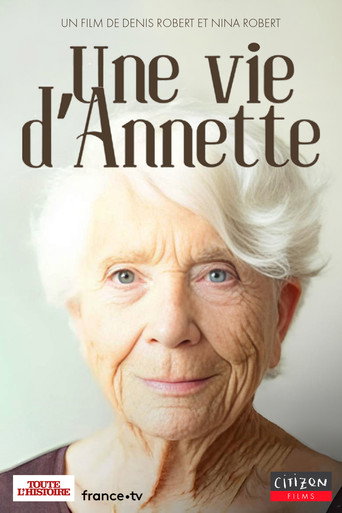
Annette's Life
2018 · ★ 10
At just 19 years old, in 1942, Anne Beaumanoir had already experienced so much: involved in the clandestine communist youth movement, she had begun medical studies, secretly distributed parcels, saved Jewish children, changed her identity, lost her first love, and narrowly escaped death several times. Twelve years later, as a courier for the FLN (National Liberation Front), she was sentenced by France to 10 years in prison for terrorism, but fled to Algeria where she became the principal advisor to the Minister of Health under Ben Bella. Until the military coup, she went to Switzerland where she would head the neurophysiology and epileptology division of the Geneva University Hospital for 26 years. Through the eyes of Annette, witnesses, and rediscovered friends, this film recounts Algeria, France and its litany of buried tragedies, racism, and the fight for freedom and independence. Annette ultimately instills in us a necessary and difficult-to-define virtue: courage.
More info →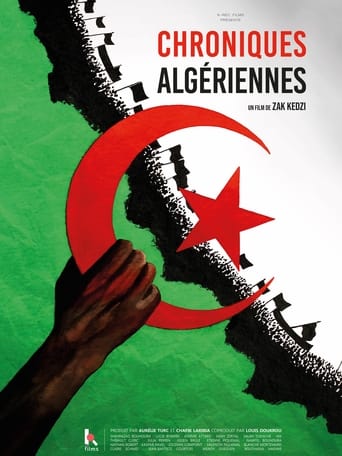
Chroniques algériennes
2021 · ★ 10
Summer 2019, Zak wanders the streets of Algiers and dives into the Hirak, a series of protests taking place in Algeria since February of that year. His chronicles are nourished by encounters with men and women who take an enlightened look at their country and its struggles: through their words, the strength and complexity of such a movement emerge.
More info →