Nicaragua Part 4: Changes
1985 · 89m · Documentary
A portrait of a remote area in the rural north of Nicaragua facing difficulties with the revolutionary process. It follows Marlon Stuart, the regional FSLN political organiser, at the time of the 1984 elections.
More Like This
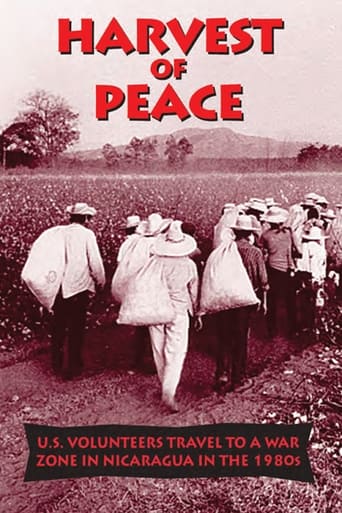
Harvest of Peace
1985
Portrait of a group of 150 U.S. citizens who spent two weeks participating in the cotton harvest in a remote village in Nicaragua, seeing for themselves the impact of the U.S.-backed Contra war.
More info →
Nicaragua: A Nation's Right to Survive
1983 · ★ 6.7
How can a country survive when its jungle borders hold 4000 hostile troops?
More info →untitled minneapolis project
2025
A homeless man living in a encampment in Minneapolis tells his perspective on the ongoing crisis of homelessness.
More info →Land
2010 · ★ 4.2
American resort developers bear down on the wild west coast of Nicaragua, hoping to build the next tourist paradise. With lax labour and environmental regulations, some of the developers take full advantage of the situation, and the local fishermen start accusing them of exploitation and land thievery. Unexpectedly, in the midst of this conflict, firebrand Daniel Ortega and the Sandinistas sweep back into government, boldly empowering the local fishermen. The tables turn viciously on the American developers, who get much more than they bargained for. But when the local fishermen, corrupted by new found power, begin acting in the same manner as the American developers, questions are posed about human nature, morality, and ethics on a much larger scale.
More info →Flower Power Ost - Die Blumenkinder des Sozialismus
There was also flower power under socialism. From the late 1960s to the late 1980s, hippies from East Berlin, Warsaw, Prague and Budapest dreamed of conquering a world that was actually closed to them. They wore long hair, beards and parkas, squatted houses, lived in communes, listened to blues and rock 'n' roll - music was their philosophy and world view. The documentary looks back at the flower children of the East, for whom Woodstock was further away than the moon.
More info →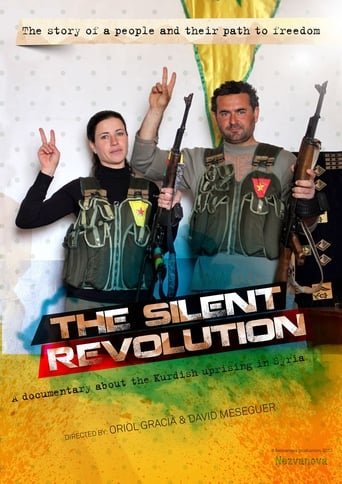
The Silent Revolution
2013
The documentary The Silent Revolution explains the revolution involving nearly 3 million kurds living in Syria. With the outbreak of the civil war —in the frame of the called ‘Arab Spring'— the Kurds of Syria have taken advantage of the context to fight for their political and cultural recognition and thus end the repression that started more than 50 years ago.
More info →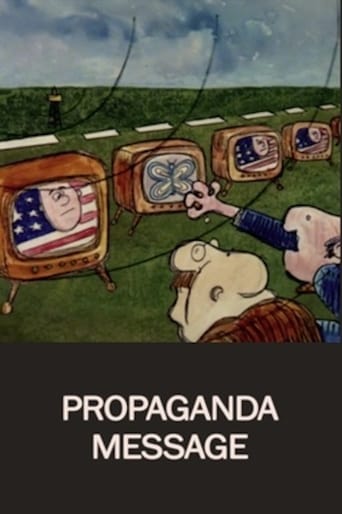
Propaganda Message
1974 · ★ 8
A cartoon film about the whole heterogeneous mixture of Canada and Canadians, and the way the invisible adhesive called federalism makes it all cling together. That the dissenting voices are many is made amply evident, in English and French. But this animated message also shows that Canadians can laugh at themselves and work out their problems objectively.
More info →
Maidan
2014 · ★ 7.8
A chronicle of the civil uprising against the regime of Ukrainian president Viktor Yanukovych that took place in Kyiv in the winter of 2013/14. The film follows the progress of the revolution: from peaceful rallies, half a million strong in the Maidan square, to the bloody street battles between protesters and riot police.
More info →Die Dichter und die Räterepublik
1990 · ★ 6
Documentary film with play scenes about the rise and fall of the short-lived Bavarian Soviet Republic in 1919 from the perspective of various well-known poets and writers who experienced the events as contemporary witnesses.
More info →
The Russian Revolution
2017 · ★ 6.3
Starting in 1881 this film shows the personal battle between Lenin's Ulyanov family and the royal Romanovs that eventually led to the Russian revolution.
More info →
The Law of the Land - Alentejo 1976
1978 · ★ 7.5
The agriculture reforming process, after the 1974 revolution, is seen through an analysis of the social structures and class struggles of the Portuguese society.
More info →
Independent Miss Craigie
2020 · ★ 8
Some time after her death, film director Jill Craigie (1911- 99), re-opens an old suitcase, prompting memories of the extraordinary life and loves of this forceful, charismatic woman, whose work has been long neglected. Craigie was one of the first women to direct documentaries. Working outside the British Documentary Movement in the 1940s and early 1950s, her films such as To Be Woman (1951), on equal pay, and Out of Chaos (1944), the first film about artists at work, featuring Henry Moore and Paul Nash, tackled new subjects for the cinema through a unique blend of drama, polemic and humour. Independent Miss Craigie uses the director’s unseen papers, and her films, to reveal her energetic struggles to get her radical projects made and distributed, including her last one, on the Yugoslav conflict, made when she was 83, with her husband, former Labour leader, Michael Foot.
More info →