The Great Depression: The Road to Rockbottom
54m · Documentary
As the Great Depression progressed economic collapse took its toll on rural America. Crops went unsold, farm mortgages were called in by banks, hungry farmers protested, and robberies increased dramatically. The U.S. Army was called in to defend the nation's capital from veterans. They were demanding that President Hoover and Congress pay a bonus for their services in World War I. The film ends with Franklin Roosevelt's landslide election to the presidency.
More Like This
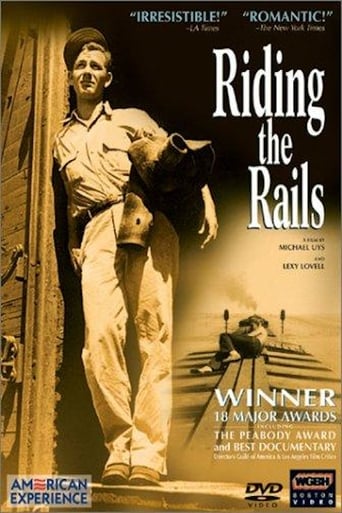
Riding the Rails
1997 · ★ 6.2
Riding the Rails offers a visionary perspective on the presumed romanticism of the road and cautionary legacy of the Great Depression. The filmmakers relay the experiences and painful recollections of these now-elderly survivors of the rails. Forced to travel more by economic necessity than the spirit of adventure, the film's subjects dispel romantic myths of a hobo existence and its corresponding veneer of freedom. Riding the Rails recounts the hoboes' trade secrets for survival and accounts of dank miseries, loneliness, imprisonment, death, and dispossession. Sixty years later, the filmmakers transport their subjects back to the tracks, where the surging impact of sound and movement resuscitates memories of a shattered adolescence and devastating rite of passage.
More info →
These were the reasons
2011
This film takes us into the harsh realm of BC's early coal mines, canneries, and lumber camps; where primitve conditions and speed-ups often cost lives. Then, the film moves through the unemployed' struggles of the '30s, post WWII equity campaigns, and into more recent public sector strikes over union rights.
More info →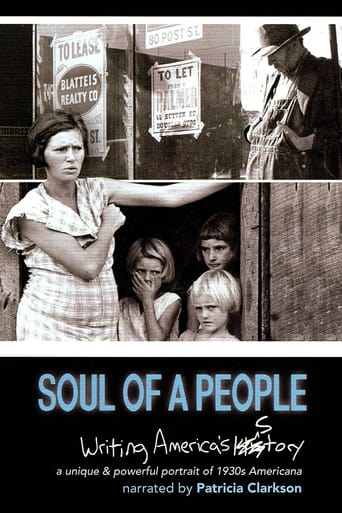
Soul of a People: Writing America's Story
2009
In the grip of the Great Depression, unemployed men and women joined an unlikely WPA program to document America in guidebooks and interviews. With the Federal Writers' Project, the government pitted young, untested talents against the problems of everyday Americans. From that experience, some of America's great writers found their own voices, and discovered the Soul of a People. — Spark Media
More info →
Woody Guthrie: Ain't Got No Home
2006
Every American who has listened to the radio knows Guthrie's "This Land Is Your Land." The music of the folk singer/songwriter has been recorded by everyone from the Mormon Tabernacle Choir to U2. Originally blowing out of the Dust Bowl in Depression-era America, he blended vernacular, rural music and populism to give voice to millions of downtrodden citizens. Guthrie's music was politically leftist, uniquely patriotic and always inspirational.
More info →FDR: A Presidency Revealed
2005 · ★ 7
For twelve years he stood as America's 32nd President, a man who overcame the ravages of polio to pull America through the Great Depression and WWII. From his legendary Fireside Chats to his sweeping New Deal, Franklin Delano Roosevelt revolutionized the American way of life. FDR: A Presidency Revealed examines one of history's most compelling figures. Inspired by his cousin Teddy Roosevelt, Franklin D. Roosevelt rose to the nation's highest office during the depths of one of its darkest periods. A man of few words, he brought a nation together through his revolutionary Fireside Chats. He introduced vast reforms like Social Security and work relief for the unemployed. At the same time, his administration hid a dark underbelly teeming with covert maneuvers, spy rings, and powerful enemies.
More info →
The Money Masters
1996 · ★ 7.5
A documentary that traces the origins of the political power structure that rules our nation and the world today. The modern political power structure has its roots in the hidden manipulation and accumulation of gold and other forms of money.
More info →The Dust Bowl
2016
Exploring the devastation of the 1930s, Lisa Jackson shapes amateur-shot archival film from a South Dakota town and audio interviews of residents who lived through the Great Depression to craft a moving and powerful allegory of contemporary financial corruption.
More info →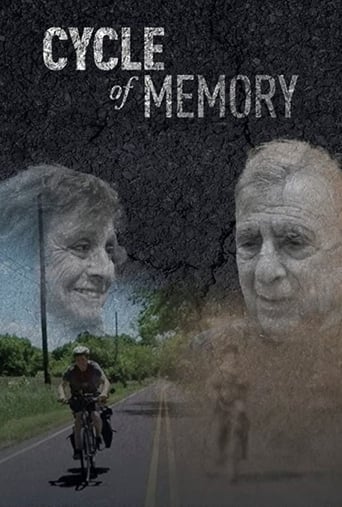
Cycle of Memory
2022
Mel Schwartz escaped the Great Depression on a bicycle adventure he'd remember for the rest of his life... until Mel lost his memory to Alzheimer's. Now over seventy-five years later, his grandchildren set out to recreate his life-changing journey and find those memories before they slip away. Cycle of Memory explores the importance of intergenerational connection, healing painful pasts, and leaving a meaningful time capsule for the future.
More info →
Brother, Can You Spare a Dime?
1975 · ★ 6.3
Period music, film clips and newsreel footage combined into a visual exploration of the American entertainment industry during the Great Depression.
More info →The Great Depression: New Deal/New York
In his first one hundred days in office, in a effort to stem the effects of the Great Depression, President Roosevelt created many new federal agencies. They gave jobs and relief to people and transformed the American landscape with public works projects. Nowhere was this transformation more apparent than in Mayor Fiorello La Guardia's New York City. Together Roosevelt and La Guardia expanded and redefined the role of government in the lives of the American people.
More info →The Fighting President
1933 · ★ 7
Showcases incidents based on the life of President Franklin D. Roosevelt. This mostly accurate privately produced biography of FDR is a cinema and political curiosity. Its lavish praise for the new president who had been in office for less than a month indicates how desperate the nation was for hope and change. The projections of FDR's future accomplishments and powerful leadership likewise were based more on hope than prior knowledge. Fortunately many of these projections proved to be accurate. Another oddity is about 1/3 of this biopic is devoted the life of the UK's Labor ex-PM Ramsey MacDonald.
More info →
For Twenty Cents A Day
1979
A film documenting work shortages during the Depression of the 1930s and the attempts to deal with the unemployed, in particular young men. The film discusses the establishment of relief camps and projects, where men were paid twenty cents per day; the founding of organizations such as the Co-operative Commonwealth Federation (CCF), Workers' Unity League, and Relief Camp Workers' Union; general unionization and protest of the unemployed, including the On To Ottawa Trek, Regina Riot, sit-in strike from May to June 1938 at the Vancouver Main Post Office, Vancouver Art Gallery and Hotel Georgia, and the resulting Bloody Sunday of June 19.
More info →