Modulaciones en la Terraza
2015 · 5m · Documentary
Film made with two photographs taken at the Unité d’Habitation, built by Le Corbusier in Marseille. For the editing the film are used a film adaptation of the rules of the Modulor, measurement system designed by Le Corbusier himself. Includes a tribute to Paul Sharits and another to Agnès Varda.
More Like This
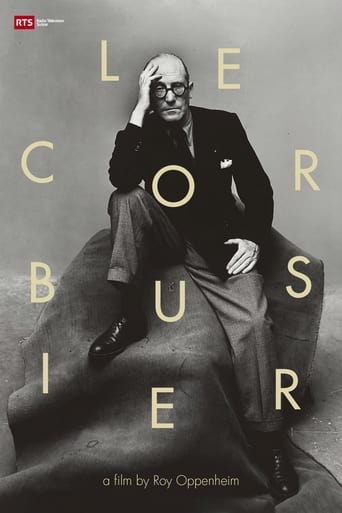
Le Corbusier
1967 · ★ 10
Making a documentary on Le Corbusier is not easy, because he is undoubtedly the architect most familiar to the general public but also the most unknown. If most people know his great achievements, such as the Cité radieuse of Marseille, the pavilions of the Cité universitaire de Paris or the Tourettes convent, many are unaware of his works in Moscow, Rio de Janeiro or Chandigarh. Roy Oppenheim pays a vibrant tribute to Corbusier, dismissing the criticisms and darker facets of the character. It presents the career of this pioneering architect, as well as his thinking, the essential principle of which was aimed at the development of human beings and the balance of society. Light, space and greenery are integrated into his large futuristic cities, because according to him the eyes of the inhabitants should be drawn into the distance and not into their neighbor's bathroom.
More info →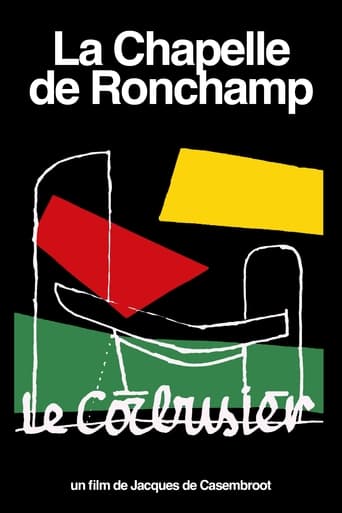
La Chapelle de Ronchamp
1969 · ★ 10
Harmonious, inspired by nature, moving, luminous... there is no shortage of words to describe La Chapelle Notre-Dame du Haut in Rochamp (France) and its curves. To create this Catholic place, at the beginning of the 1950s, Le Corbusier was inspired by the mosque of the Algerian Sahara of Sidi Brahim, by a crab shell for the shapes of the roof, and by the nearby Vosges valleys. .. Multiple influences for a building full of contradictions, a mixture of round and square lines, slender or squat depending on the angle of view, apparently vast from the outside, but small and intimate from the threshold crossed. Both a place of contemplation and major architectural innovation, the Chapelle de Ronchamp has been listed as a Historic Monument since 1965. Labeled “Heritage of the 20th century” in 1999, it entered the UNESCO World Heritage list in 2016 with 16 others works of Le Corbusier.
More info →
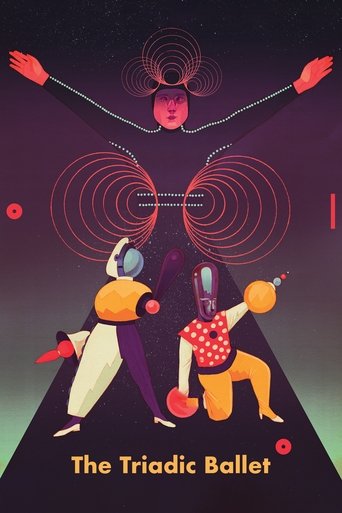
The Triadic Ballet
1970 · ★ 4.7
A film in three parts after Oskar Schlemmer's Triadische Ballett (Triadic Ballet).
More info →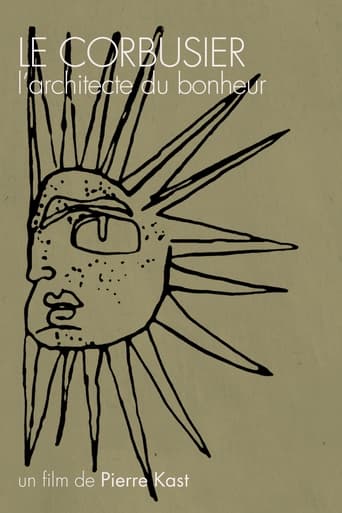
Le Corbusier, l'architecte du bonheur
1957 · ★ 10
Documentary devoted to the architectural and urban planning designs of Le Corbusier. The architect supports his in-depth reflection on the city and its necessary adaptation to modern life with plans, drawings and images, particularly Paris, whose revolutionary development dreamed of by Le Corbusier is exhibited here. Its first projects will remain at the stage of a model: the modernization plan for the city of Algiers. Some will be created by other architects: Ministry of Education in Rio de Janeiro, UN Palace in New York. From the post-war period in less than 10 years, Le Corbusier created large housing units in Marseille, Nantes, a chapel in Ronchamps, a factory in Saint-Dié, a town in Chandigarh in India. Through diagrams, the architect presents his theory of the "radiant city", the mathematical key modulor of his work as well as his project for reorganizing the countryside, industrial and urban cities into a grouping around a cooperative system.
More info →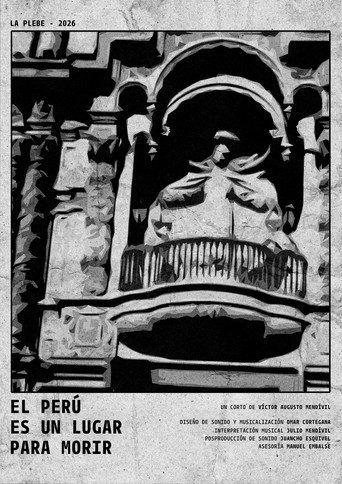
El Perú es un lugar para morir
2026
Using footage filmed in Peru in 1950 by a foreigner, Víctor writes a letter to his son to question the country he will inherit: among heartbeats and ruins, he searches for a hope that still endures amid disillusionment.
More info →Man and Mask, Oskar Schlemmer and the Bauhaus Stage
1969 · ★ 10
Documentary on the design and choreography of Oskar Schlemmer (1888-1943), an artist and teacher associated with the Bauhaus. After a discussion of his artistic philosophy and goals, illustrated by his drawings, reconstructions of his choreographic works are seen in action, each with a brief introduction.
More info →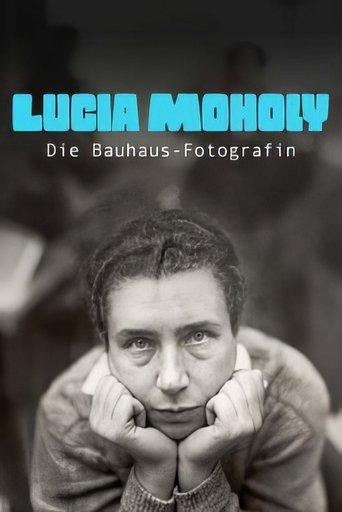
Lucia Moholy, la photographe du Bauhaus
2025
As a Bauhaus photographer, Lucia Moholy (1894-1989) was a pioneer of New Objectivity. Her husband László Moholy-Nagy was appointed to the Bauhaus in 1923. They worked there together and László became famous as the inventor of the photogram, a photo without film. Lucia's contribution to this only became known later. When the Czech-born Jew was forced to leave Germany in 1933 after the Nazis seized power, she was unable to take her most important possession, her glass negatives, with her. She struggled to keep her head above water in London and worked for the British secret service on the microfilming of valuable documents. With her vision of microfilm as freely accessible information for all, she is now regarded as a pioneer of the Internet. After the war, Lucia set out in search of her glass negatives.
More info →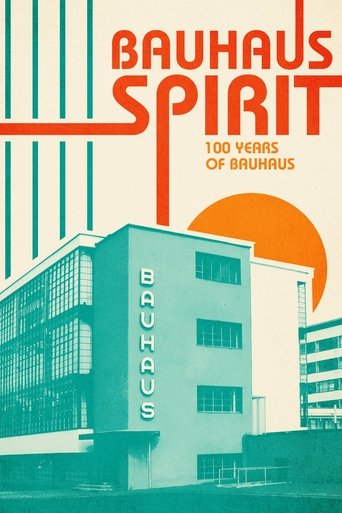
Bauhaus Spirit: 100 Years of Bauhaus
2018 · ★ 6
Founded in 1919 by Walter Gropius, Bauhaus was supposed to unite sculpture, painting, design and architecture into a single combined constructive discipline. It is a synthesis of liberated imagination and stringent structure; cross-medial concepts that embellish and enrich our existence, illumination and clarity, order and playfulness. But Bauhaus was never just an artistic experiment. Confronted with the social conditions of that particular time, as well as the experience of WWI, the movement concerned itself with the political and social connotations of design from the very outset. Hence, Bauhaus history is not just the history of art, but also the history of an era that stretches from the early 20th century to the modern day.
More info →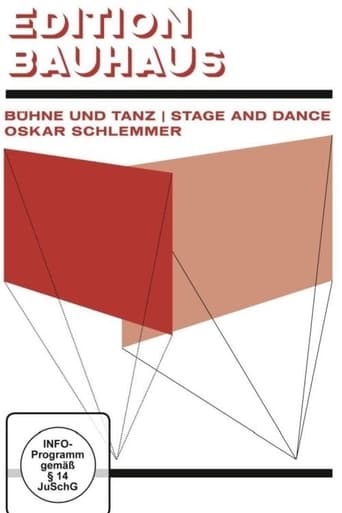
Oskar Schlemmer and Dance
1980
Original film material from the Bauhaus dances of Oskar Schlemmer.
More info →Gerhard Bohner: Dancer and Choreographer
1984 · ★ 4.5
Short documentary on the reconstruction of the Bauhaus dances of Oskar Schlemmer by Gerhard Bohner.
More info →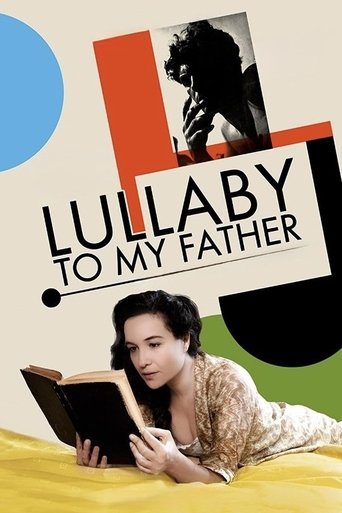
Lullaby to my Father
2012 · ★ 7.5
The film intertwines historical events and intimate memories. I observe how architecture represents the transformations of society and those who give form to this architecture. We follow the journey of Munio, my father, born in 1909 in Silesia, Poland, the son of a tenant farmer of a Prussian junker. At the age of 18, Munio goes to Berlin and Dessau to meet Walter Gropius, Kandinsky and Paul Klee at the Bauhaus. In 1933, the Bauhaus was closed by the Nazis, who accused Munio of treason against the German people. Munio was imprisoned, then deported to Basel. He left for Palestine. Upon his arrival in Haifa, he began a career as an architect and adapted European modernist principles to the Middle East.
More info →