Door to Door Salesman
1961 · 1m · Documentary
Ever had a good experience with doorstep salespeople? Maybe you were lucky, but the doorstep has never seemed the best place for a sensible sales decision – which is exactly why companies use it.
More Like This

Men of the Manosphere
2025
James Blake joins three young men to explore why they're turned to the so-called manosphere to achieve success, and how it influences their real lives.
More info →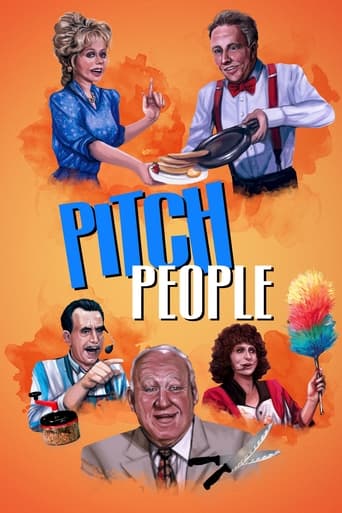
Pitch People
1999 · ★ 8.5
The art of the "pitch" and its role in society, as told by many of the pitch industry's greatest salesmen, including Arnold Morris, Sandy Mason, Lester Morris, Wally Nash and Ed McMahon as well as a look at the Popeil family.
More info →
How to Drive on Snow and Ice
1957
Sponsored by Seiberling Rubber Company, this public service film demonstrates the important points of winter driving. Shows how to start on slippery roads, what to do when stuck, how to manipulate a skidding car and the distances it takes to stop on icy roads.
More info →Planning For Emergence From Public Shelters
1963
A training film for public shelter managers explaining when people should be allowed to leave the shelter after a disaster.
More info →Public Shelter Supplies: What Does The Government Supply
1963
Training film for shelter managers. Food, water, sanitation, medical, and radiation detection systems are explained.
More info →Information Program Within Public Shelters
1963
This Cold War film "Information Within Public Shelters" (1953) takes place in a fallout shelter, showing how a well-trained staff that provides information to shelter occupants, can keep them busy and calm during nuclear armageddon. This film was produced as the U.S. Government began to shift from promoting privately-owned "family" fallout shelters to the concept of large, public shelters.
More info →Public Shelter Organization and Staff
1963
Created in 1963 at the height of the Cold War, this Civil Defense training film uses a dramatic premise to show how emergency staff should manage and organize a large public fallout shelter during a crisis. A Shelter Manager is shown immediately taking control of the situation in the shelter, speaking calmly to those who have made it into the facility, closing the door promptly once the shelter is full, and sticking to the "shelter plan" as the situation unfolds. Some of the areas discussed in this nuclear war drama are the safety plan, regular inspections, supervised public entry into shelters, ventilation, first aid, sanitation, fire prevention, decontamination of personnel, and more. "Shelter living is different," the Manager states, "But we have a trained staff that will make your stay in this shelter livable for us all."
More info →
The Countess and the Russian Billionaire
2020 · ★ 8
Inside the secret world of Sergei Pugachev, a Russian oligarch, and his British partner Countess Alexandra Tolstoy, mother to their three children.
More info →
More Dangerous Than Dynamite
1941 · ★ 3.7
A short film warning the unaware housewife of the dangers of “dry cleaning” with gasoline at home.
More info →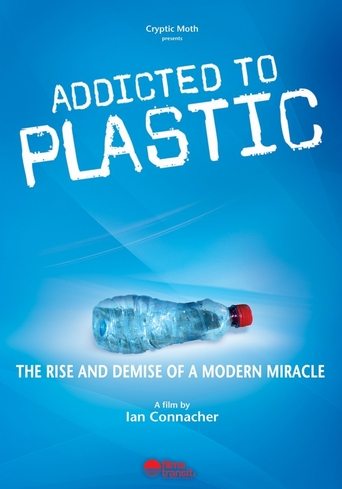
Addicted to Plastic
2008 · ★ 5.8
Reveals the history and worldwide scope of plastics pollution, investigates its toxicity and explores solutions. From styrofoam cups to artificial organs, plastics are perhaps the most ubiquitous and versatile material ever invented. No invention in the past 100 years has had more influence and presence than synthetics. But such progress has had a cost.
More info →
Killing Us Softly 4: Advertising's Image Of Women
2010 · ★ 6.7
The documentary focuses on images of women in advertising, in particular on gender stereotypes, the effects of advertising on women's self-image and the objectification of women's bodies.
More info →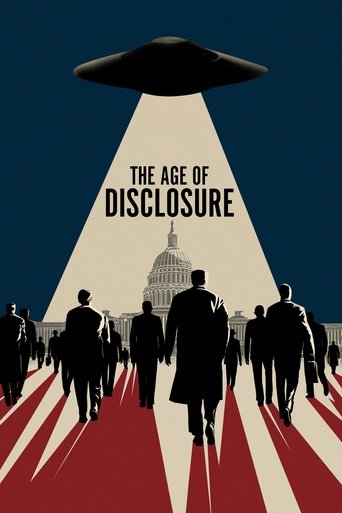
The Age of Disclosure
2025 · ★ 7.5
Director Dan Farah got 34 senior members of the U.S. Government, military, and intelligence community to come on camera. He says they reveal an 80 year cover-up of the existence of non-human intelligent life and a secret war amongst major nations to reverse engineer technology of non-human origin. The film explores the profound impact the situation has on the future of humanity, while providing a look behind-the-scenes with those at the forefront of the bi-partisan disclosure effort.
More info →