The Peach Blossom Fan
1961 · 115m · History · Drama · Music · Romance
A Shaw Brothers Chinese Opera based on the Qing dynasty musical play that recounts the death of the Ming dynasty through the love story of its two main characters, young scholar Hou Fangyu and a courtesan named Li Xiangjun.
More Like This
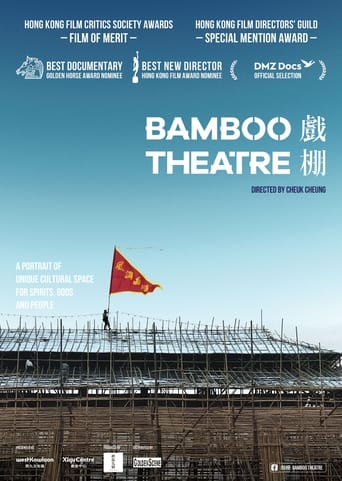
Bamboo Theatre
2019 · ★ 6.8
This film is a portrait of unique cultural space for Spirits, Gods and People. While permanent theatres are commonly built in most cosmopolitan modern cities, Hong Kong preserves a unique theatrical architecture, a Chinese tradition that has lasted more than a century - Bamboo Theatre.
More info →
The Rainbow Pass
1964 · ★ 3
The Rainbow Pass is a Chinese Opera starring Sammo Hung in a child role
More info →
Qin Xianglian
1955 · ★ 5.8
Qing (i.e. Qin) Xianglian was the wife of a man named Chen Shimei, who won the first title of national examination and awarded as husband of the emperor's daughter. Then Qing (i.e. Qin) sues Chen as a murderer who plans to kill his wife and son. In spite of the royal power, gownsman Bao Zhen settles the lawsuit and sentences Chen to serve his head.
More info →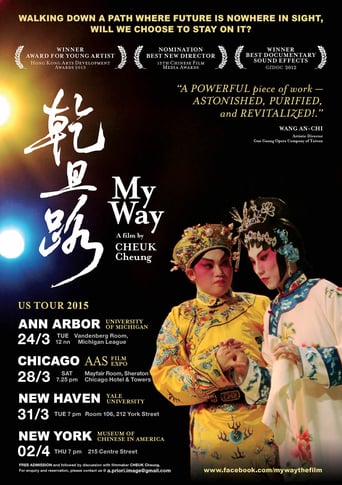
My Way
2012 · ★ 8
When facing a path with no future or precedent success, will we ever choose to stay? Cheuk Cheung’s My Way explores the Cantonese Opera tradition of male Dan performers, men who play female roles, against the backdrop of a Hong Kong society increasingly putting less value on art. Although female performers have long been part of the mainstream of Cantonese Opera, the film follows the stories of two young men who are still fascinated by the art of the male Dan, striving to find their own way to carry on the practice. A moving and searching look at the struggle for identity, My Way is a colourful, musical and moving film which offers a unique and highly personal look at perseverance in the face of a changing society.
More info →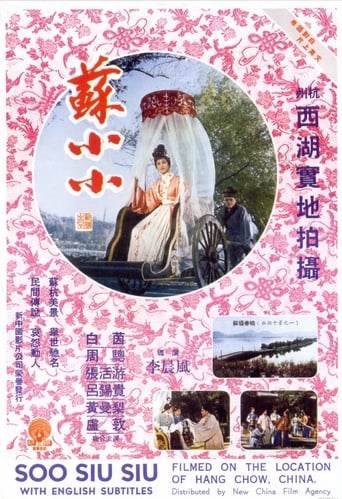
So Siu Siu
1962 · ★ 10
The film opens with a travelogue, showcasing West Lake and the real Mainland Chinese locations used by the film to which only the Left Wing of Hong Kong Cinema had access to at the time. The title character is a young woman raised by her courtesan aunt in the West Lake scenic resort area in Hangzhou. Siu Siu is perused by a local Official, but falls in love with the son of the Prime Minister. They marry, but are separated by the Prime Minister who arranges another marriage for the son. Siu Siu remains at West Lake, where she regretfully uses the desire of the earlier Official to help another of the girls find happiness.
More info →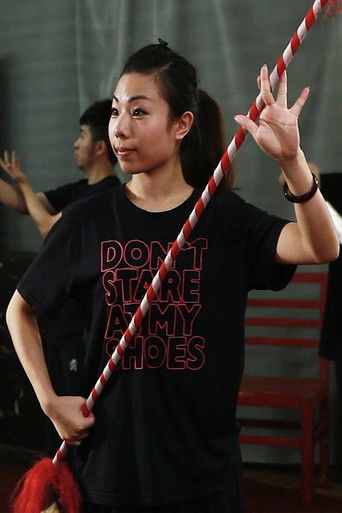
Ting & Yuk
2012 · ★ 6
Ting enjoys the limelight, thrives on the attention and rises to the occasion each time she struts her stuff on the Cantonese opera stage, an amateur passion she pursues with the austere self-discipline and competitiveness of a professional. Her best friend, Yuk, is her polar opposite, a companion who feels more comfortable on the sidelines in a supporting role. When the threat of losing the lead role to Yuk, complicated by an injury, creates a rift between the two friends and sours her relationships with her opera mentor and family, Ting learns to confront her inner demons and swallow her ego to mend broken ties.
More info →Iron-beaked Hen's Sudden Rise to Power
1957
Iron-Beaked Hen and Fatso Bo on their way to the city to help a relative out of some trouble, they run into a band of robbers. They stop over an allegedly haunted house where they save the lovers To Lok-yin and Yu Mei-yung from their attemped suicide. Hen learn their story and decide to help them out. Yin comes from a rich family, he lost his father when he was very young and was brought up by his uncle. Now that he is old enough to claim his inheritance, the guardian, his uncle, in order to keep the fortune under control, forces him to marry a girl of his choosing. The couple cannot face separation and resolve to end their lives together. Hen thinks of a way to help them, which involves Yin pretending to comply; that is, to go ahead with the marriage arrangement. On the wedding day, they swap the bride with Yung. Disguised as a matchmaker and a county official respectively, Hen and Bo reprimand To's uncle who schemes to seize To's family fortune. To and Yu marry.
More info →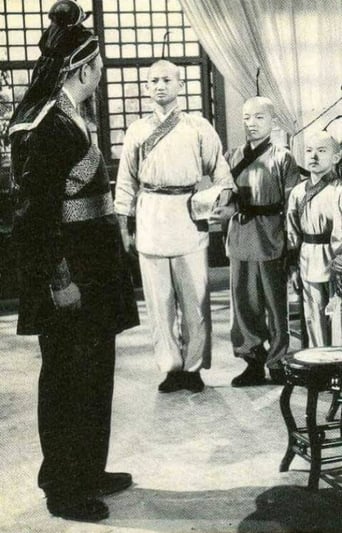
The Eighteen Darts (Part 1)
1966
The Eighteen Darts (Part 1) is a Chinese Opera Musical starring Jackie Chan, Sammo Hung and Yuen Biao in child roles.
More info →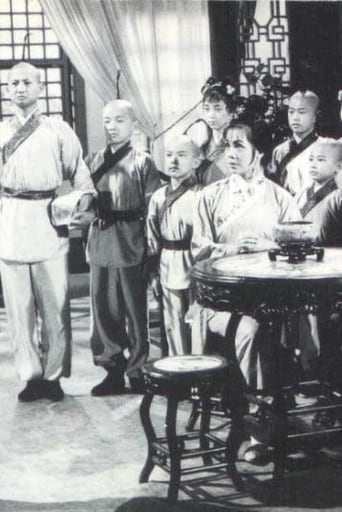
The Eighteen Darts (Part 2)
1966
The Eighteen Darts (Part 2) is a Chinese Opera Musical starring Jackie Chan, Sammo Hung and Yuen Biao in child roles.
More info →
White Powder and Neon Lights
1947 · ★ 9
This is the first 16mm Cantonese film in full colour, shot on 1940s state-of-the-art Technicolor film stock. Opera star Man-ha (Leung Bik-yuk) enjoys tremendous popularity during her performances in San Francisco, but drowns herself in the vices and temptations of the big city. Increasingly, she fails to show up for performances, almost causing the theatre to go bankrupt. When she sees her lover for the scoundrel that he is, she also sees the errors of her own ways and saves the theatre, restoring it to glory. Joseph Sunn Jue established the Grandview Film Company in Hong Kong during the 1930s and continued making films in the USA during wartime by collaborating with Chinese opera performers in exile there. Wong Hok-sing, an opera actor himself, directed, wrote and starred in this film. He staged a spectacular play-within-a-play at the end, not only to promote the art of Cantonese opera but also to boost solidarity among overseas Chinese through difficult times.
More info →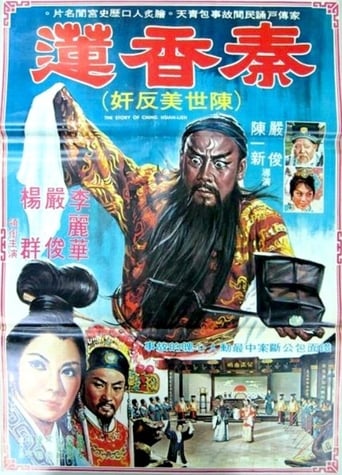
The Story of Qin Xiang-Lian
1964 · ★ 8
The Story of Qin Xiang-Lian is a Hong Kong Chinese Opera musical starring Jackie Chan in a child role.
More info →