Der Judenhetzer – Julius Streicher und "Der Stürmer"
2001 · 45m · Documentary · TV Movie
Even high Nazi leaders like Joseph Goebbels and Hermann Göring were almost contemptuous of this party comrad, and yet he was one of the most influential figures in the Third Reich: Julius Streicher, publisher of the anti-Semitic weekly "Der Stürmer", responsible for the worst propaganda and infamous for his corrupt and violent regime as Gauleiter of Franconia. By the Allies he was considered a symbol of Nazi hatred of the Jews. In 1946 he was sentenced to death in Nuremberg and executed.
More Like This
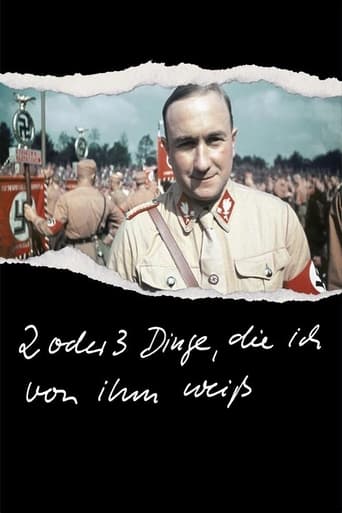
2 or 3 Things I Know About Him
2005 · ★ 6.6
What would your family reminiscences about dad sound like if he had been an early supporter of Hitler’s, a leader of the notorious SA and the Third Reich’s minister in charge of Slovakia, including its Final Solution? Executed as a war criminal in 1947, Hanns Ludin left behind a grieving widow and six young children, the youngest of whom became a filmmaker. It's a fascinating, maddening, sometimes even humorous look at what the director calls "a typical German story." (Film Forum)
More info →
Holocaust: An Untold Story
2022 · ★ 1
With the help of a Baptist minister and people abroad, the son of Holocaust survivors unshackles his inherited trauma and reconstructs his future.
More info →
Olympia Part One: Festival of the Nations
1938 · ★ 6.9
Starting with a long and lyrical overture, evoking the origins of the Olympic Games in ancient Greece, Riefenstahl covers twenty-one athletic events in the first half of this two-part love letter to the human body and spirit, culminating with the marathon, where Jesse Owens became the first track and field athlete to win four gold medals in a single Olympics.
More info →
Olympia Part Two: Festival of Beauty
1938 · ★ 6.7
Part two of Leni Riefenstahl's monumental examination of the 1938 Olympic Games, the cameras leave the main stadium and venture into the many halls and fields deployed for such sports as fencing, polo, cycling, and the modern pentathlon, which was won by American Glenn Morris.
More info →
America and the Holocaust: Deceit and Indifference
1994 · ★ 10
As the campaign to force Jews out of Germany ramps up, the American government blocks efforts to help rescue many of these displaced persons, and Americans' antisemitism only seems to get worse.
More info →
After Mein Kampf?
1961 · ★ 9
By combining actual footage with reenactments, this film offers both a documentary and fictional account of the life of Adolf Hitler, from his childhood in Vienna, through the rise of the Third Reich, to his final act of suicide in the waning days of WWII. The film also provides considerable, and often shocking, detail of the atrocities enacted by the Nazi regime under Hitler's command.
More info →
Stanisław Lem: Autor Solaris
2016 · ★ 6.6
An account of the life and work of the Polish writer Stanisław Lem (1921-2006), a key figure in science fiction literature involved in mysteries and paradoxes that need to be enlightened.
More info →
Out of the Ashes
2003 · ★ 6.1
The real-life story of Gisella Perl, a Jewish Hungarian doctor imprisoned in the notorious Auschwitz death camp of World War II.
More info →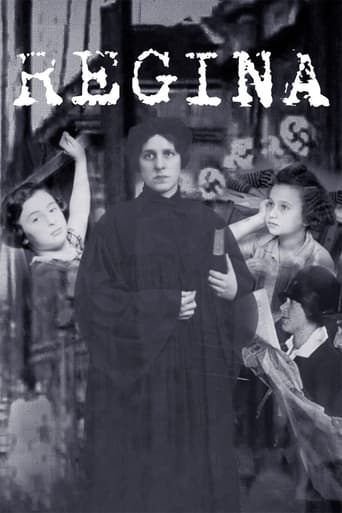
Regina
2013 · ★ 6.8
The first woman rabbi in the world, Regina Jonas, comes to light, courtesy of Rachel Weisz – who plays her – and her father George Weisz, who was the executive producer for this poetic and beautiful documentary. The daughter of an Orthodox Jewish peddler, Jonas was ordained in Berlin in 1935. During the Nazi era and the war, her sermons and her unparalleled devotion brought encouragement to the persecuted German Jews. Regina Jonas was murdered in Auschwitz in 1944. The only surviving photo of Jonas serves as a leitmotif for the film, showing a determined young woman gazing at the camera with self-confidence.
More info →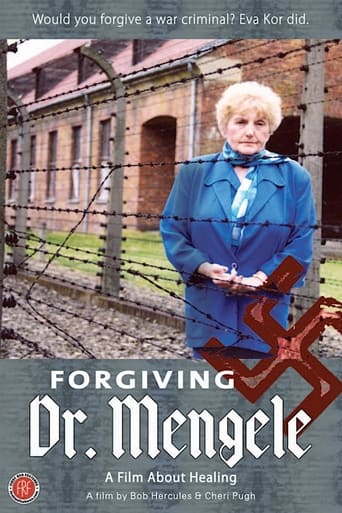
Forgiving Dr. Mengele
2006 · ★ 7.8
Eva Mozes Kor, who survived Josef Mengele's cruel twin experiments in the Auschwitz concentration camp, shocks other Holocaust survivors when she decides to forgive the perpetrators as a way of self-healing.
More info →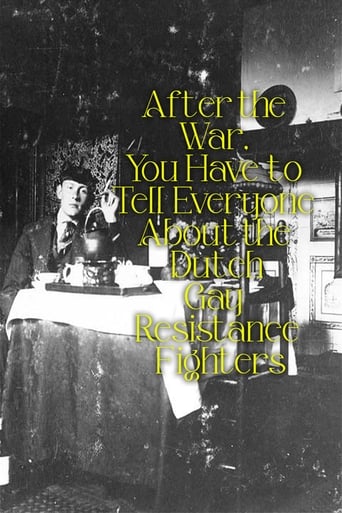
After the War, You Have to Tell Everyone About the Dutch Gay Resistance Fighters
1991 · ★ 3.3
Many members of the Dutch Underground were gay and lesbian. This film pays homage to them and recounts their story.
More info →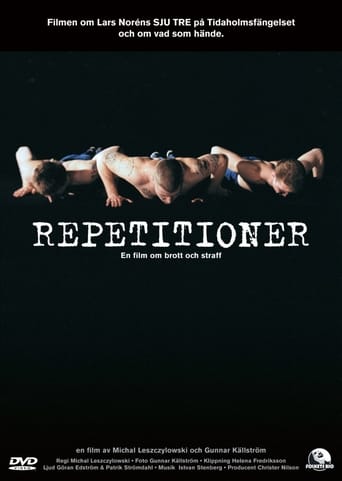
Repetitioner
2005 · ★ 6
The theatre 7:3 project was conducted at the Tidaholm prison 1998-1999. What started as an artistic experiment, ended up in police killings at Malexander. The process in the prison were filmed during 6 months.
More info →