The Olympic Hero
★ 9 · 1928 · 50m · Comedy
A story with a college background revolves around sprinter Charles Paddock, utilizing newsreel footage of the 1924 Olympic Games.
More Like This

The Boomerang
1925 · ★ 10
Lacking patients, Dr. Sumner sets himself up as a psychologist and opens a sanitarium, becoming quite successful. Virginia Zelva, a clairvoyant who wants to get into what she regards as a racket, signs on as his nurse. Sumner falls in love with Virginia and, after numerous complications, wins her for his bride.
More info →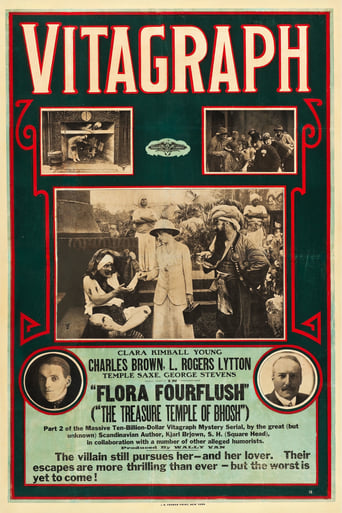
The Fates and Flora Fourflush
1914
Three part adventure serial starring Clara Kimball Young. Chapter Titles: 1. "Treachery in the Clouds" 2. "The Treasure Temple of Bhosh" 3. "A Race for Life"
More info →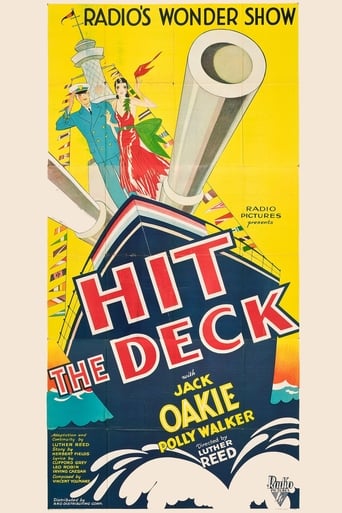
The House Built Upon Sand
1916
Evelyn Dare is a butterfly of fashion. David Westebrooke, her fiancé, is an altruist interested in sociology. He has made his home in the factory town of Oreville, where he works as factory manager. He takes her to their home in the factory town and there orders his housekeeper to take away her useless clothes and to supply those befitting the wife of a factory manager. Trouble lies ahead.....
More info →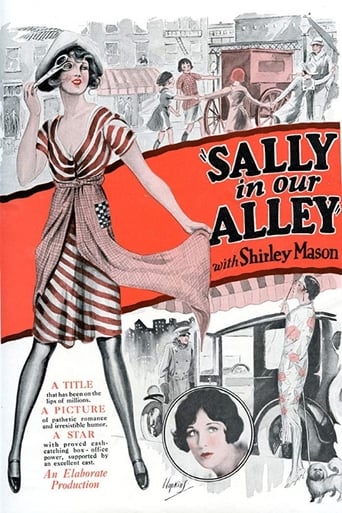
Sally in Our Alley
1927 · ★ 10
Sally, a girl of the tenements, is being raised by three bachelor foster-fathers, a pawnbroker, an organ-grinder and a peddler, and is very happy preparing their meals and keeping the house, while the old men bask in the attention she gives them. However, this happy home is broken up when Sally wealthy aunt appears on the scene and takes Sally back to her luxurious penthouse in order to give her the advantages of money and social position. But Sally's heart is back across the river with her plumber sweetheart, Jimmie Adams.
More info →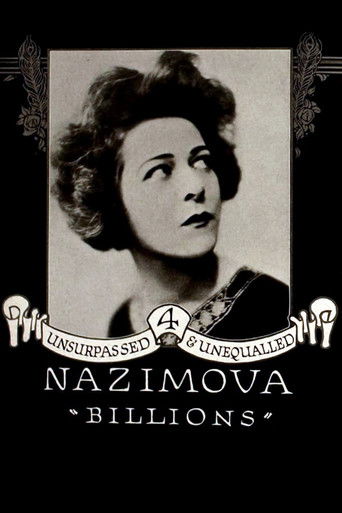
Billions
1920 · ★ 6
Princess Triloff, an emigrée from Czarist Russia, escapes to America where she becomes a patron of the arts. She falls in love with the verses of impoverished poet Owen Carey and becomes his anonymous benefactor. When Owen inherits a fortune from his rich Uncle Krakerfeller, he assumes his uncle's identity and confers his own upon an impoverished friend, Frank Manners. At a resort, Owen meets the princess and falls in love with her, but is chagrined to discover that she is enamored with Manners. The princess finally discovers Owen's real identity and the two fall in love.
More info →My Lady's Ankle
1920 · ★ 9
Not being able to afford fine stockings, a young artist paints his wife's legs to create the illusion for her dance performance in a cabaret. It works so successfully that other women want to follow her example, which leads to several fights with angry husbands and lovers.
More info →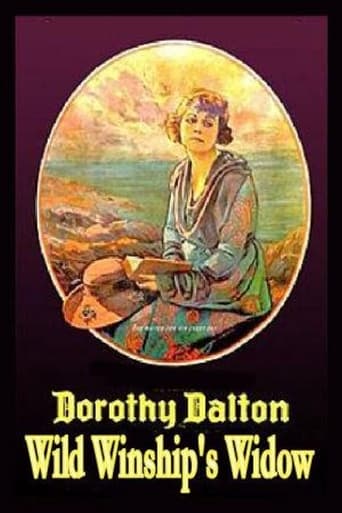
Wild Winship's Widow
1917 · ★ 8
Widow Catherine Winship cherishes the memory of her late husband so greatly that she has given up her life to the adoration of his memory. However Catherine's idealism is rudely shattered when she discovers a package of love letters in a secret drawer in Winship's desk.
More info →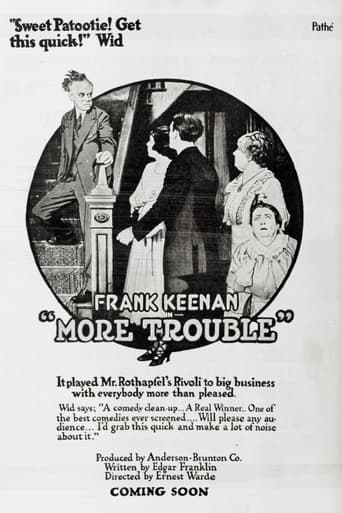
More Trouble
1918
Lemuel Deering's son Harvey graduates from college at the top of his class, then returns home to become a partner in his father's steel business. Because Harvey appears to be an exemplary young man who neither drinks nor smokes, when bills from liquor dealers, tobacconists, and billiard emporia pour in, the proud father is mystified. Harvey stoutly denies having contracted the bills, including one for $25,000, and Lemuel, though puzzled, believes him until the workers threaten to strike and the bank places an attachment on the mill. Lemuel is about to disown his son when Harold Morrowton, Harvey's college roommate, confesses that he forged Harvey's name to the bills because his own father refused to give him spending money, and Harvey adds that because the two were fraternity brothers, he could not betray Harold's trust. Exasperated, Lemuel orders both young men to pay their debts through hard labor in the mill.
More info →