Geld regiert die Welt – Die Macht der Finanzkonzerne
2014 · Documentary
More Like This
In These Parkas We Can Only Be Warm
2023 · ★ 10
Two parka-adorned silhouettes engage in a barely-audible conversation about Snapchat, grades, money, and other unintelligible topics, until one notices something on the other's glasses. It is not ice.
More info →
The Monopoly on Violence
2020 · ★ 7
This is a story of the violence and coercion that underlies our modern societies. Most of the time, our interactions are peaceful and consensual, but there is a large notable exception. The state maintains its power and ability to create law by the constant threat of force. It prohibits competition to its authority, and in this sense, represents a monopoly.
More info →
Generation Zero
2010 · ★ 3.3
An examination of the causes of the global economic crisis which began in 2008, studying how decades of social changes have influenced financial systems and practices.
More info →
The Light Bulb Conspiracy
2010 · ★ 7.6
Once upon a time... consumer goods were built to last. Then, in the 1920’s, a group of businessmen realized that the longer their product lasted, the less money they made, thus Planned Obsolescence was born, and manufacturers have been engineering products to fail ever since. Combining investigative research and rare archive footage with analysis by those working on ways to save both the economy and the environment, this documentary charts the creation of ‘engineering to fail’, its rise to prominence and its recent fall from grace.
More info →
Las Vegas and the American Dream
2026 · ★ 7
The desert city of Las Vegas embodies the American Dream in its most extreme form. Turbo-capitalism and gigantic shows are a magnet for gamblers and adventurers. Since its founding, Las Vegas has developed into a global entertainment center, attracting millions of people and generating billions of dollars in revenue. From a dusty backwater, it has become a glittering gambling metropolis.
More info →
System Error
2018 · ★ 7.2
Melting glaciers, gullied seas, the financial markets are about to collapse. Spectacular images of how growth continues to be blinding. Outside you can hardly see anything because of the smog and the smoke screen.
More info →
A Very Animated War
2021 · ★ 6.7
From 1945 to 1989, after the capitulation of Nazi Germany, two rival ideologies, communism and capitalism, faced each other in a merciless battle. On one side of the Iron Curtain and on the other, throughout the Cold War, the USSR and the United States sought to shape children’s imaginations through their magazines and films. Never in the history of mankind have so many comic books been published and so many cartoons produced for young people. In November 1989, communism collapsed with the Berlin Wall; capitalism was left to decide the future of the world. What if this victory had been prepared for a long time, and our thinking conditioned, from our early childhood, to ensure this absolute triumph?
More info →
The Rise of Disaster Capitalism
2009
In this revealing program, noted author and economic activist Naomi Klein offers a lecture and a candid interview in which she expounds on the ideas at the heart of her best-selling book.
More info →
The Secret of Oz
2009 · ★ 6.3
It is well known in economics academia that The Wonderful Wizard of Oz written by L. Frank Baum in 1900 is loaded with powerful symbols of monetary reform which were the core of the Populist movement and the 1896 and 1900 president bid of Democrat William Jennings Bryan. The yellow brick road (gold standard), the emerald city of Oz (greenback money), even Dorothy’s silver slippers (changed to ruby slippers for the movie version) were the symbol of Baum’s and Bryan’s belief that adding silver coinage to gold would provide much needed money to a depression-strapped, 1890s America. We believe Baum’s symbols represent the only solution to relieve the growing economic hardship here in America – and the rest of the world. Practically speaking, 2009 marks the 70th anniversary of the 1939 MGM release of the The Wizard of Oz movie, so interest will be very high. Even Oz websites put up by kids get millions of hits.
More info →The Capitalist Conspiracy
1971 · ★ 7.3
Culled mostly from archival footage, this thought-provoking first volume of the Hidden Agenda series relays the little-known history of an elite group of power brokers who wield considerable influence over world affairs. Tracking the growth of the world's largest banking dynasties through the eyes of a conspiracy theorist, the program maintains that the true motivation behind their activities is to control the world itself.
More info →
The One Percent
2006 · ★ 5.9
Jamie Johnson takes the exploration of wealth that he began in Born Rich one step further. The One Percent, refers to the tiny percentage of Americans who control nearly half the wealth of the U.S. Johnson's thesis is that this wealth in the hands of so few people is a danger to our very way of life.
More info →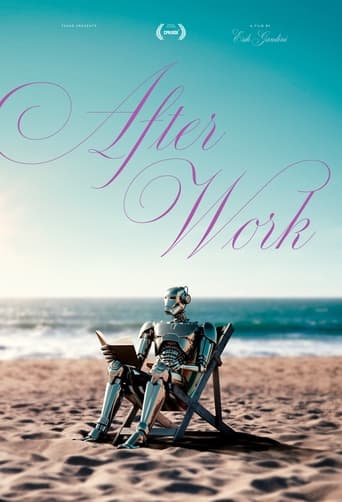
After Work
2023 · ★ 6.4
Kuwait’s constitution says that every person has the right to a job, so in some places 20 people are employed for one person’s job. In South Korea, they work so much that a policy has been introduced to turn off computers at the end of the day so that employees can’t work any more. In the US, they give up over 500 million holiday hours each year, while Amazon’s drivers are trying to form a union. Meanwhile, robots are poised to take over most jobs and put the rest of us out of work. Work is so crucial to our identity and what we spend our waking hours on that it is barely noticed anymore. A lot has happened since a group of Puritan priests invented the concept of work ethic in the 1600s, and in the 21st century the very concept of work is in many ways disintegrating. A perfect situation for a filmmaker like Swedish mastermind Erik Gandini, who travels the world to explore what the concept of work means today – if it means anything at all.
More info →