
Lambe sujos X Caboclinhos
2018 · Documentary · Music · History
Lambe sujos X Caboclinhos is a documentary that addresses the characteristics, contradictions and conflicts of the folk manifestation Lambe sujos x Caboclinhos, an open-air street theater in which the battle is staged between negroes fled from the senzala and Indians who were hired by the lord of ingenuity to capture them and bring them back to the slavery.
More Like This
Bittersweet
2023
An oral history documentary of people of color at Miami University during its Public Ivy period—from 1970 to the early 2000s.
More info →
Pollinator
2023
The artist walks through a garden, with additional footage featuring Black trans activist Marsha P. Johnson.
More info →
Acts of Reparation
2024
Two friends, one Black and one white, journey to their Southern ancestral homes, exploring reparations' meaning. Their travels uncover opportunities that transform their bond, communities, reclaiming and reckoning with their roots.
More info →
Black Trans Masculine Experience
2025
"Last year in the summer, I was speaking to Kings-Lee Rose in my living room in Crown Heights, Brooklyn, about my transition. The drastic shift in social perception is quite destabilizing and ultimately isolating, because there aren't many people I can turn to who might have some understanding of what this shift could feel like. I'm 41, so the shift is drastic. Everything has changed, but everything is the same all at once. Kings-Lee then shared candidly his truth in his transition, and with his permission, I recorded the conversation. I took the recording and felt inspired to compose music around it. Over the course of a month, I used my iPhone to shoot slow-motion footage of my life on tour, as well as intimate moments with loved ones in my Queer and Trans community in Brooklyn..." - TYGAPAW
More info →
YOU WILL NOT REPLACE US
2024
A documentary drama addressing the shared tribulations and historical unity between Black and Jewish Americans.
More info →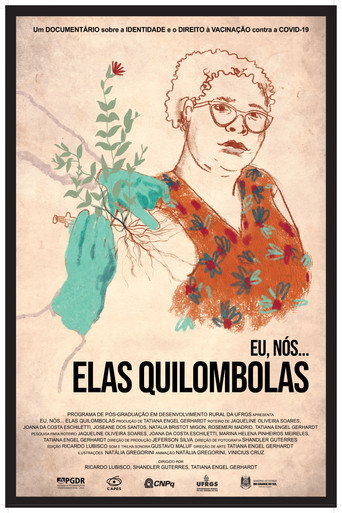
Eu, Nós... Elas Quilombolas
2022
A documentary about identity and the right to Covid-19 vaccination for Quilombolas. We arrived at the Morro Alto quilombo exactly one year after the administration of the first dose of the Covid-19 vaccine was completed for the quilombola population. The vaccine arrives in the territory based on the count of available doses and the "number of arms" of people belonging to the quilombola community. Quilombola territoriality demonstrates that numbers and headcounts are not enough for the recognition of Quilombolas, whose identity encompasses kinship ties sustained by ancestry, affection, solidarity, and the connections between land and people, which structure and strengthen the sense of belonging and permanence in the territory. Therefore, these are arms that speak of bonds, histories, memory, identity, and the struggle for recognition, making up the doses that reach the descendants of the Morro Alto quilombola community.
More info →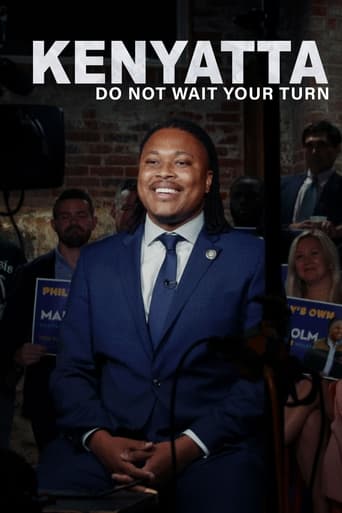
Kenyatta: Do Not Wait Your Turn
2023 · ★ 10
An inspiring love story about a self-described “poor, gay, black man from North Philly” on his historic run for the United States Senate. But this race is about more than taking on the political competition. It’s about taking on an entire system.
More info →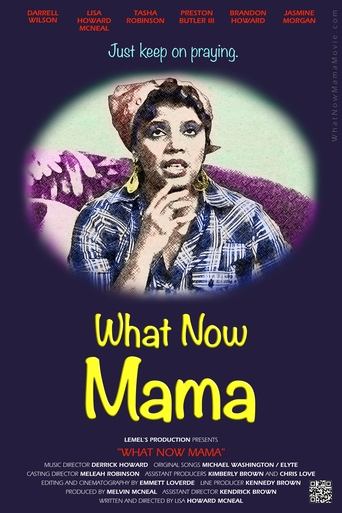
What Now Mama
2025
A mother struggles to hold her family together as multiple crises threaten to destroy them.
More info →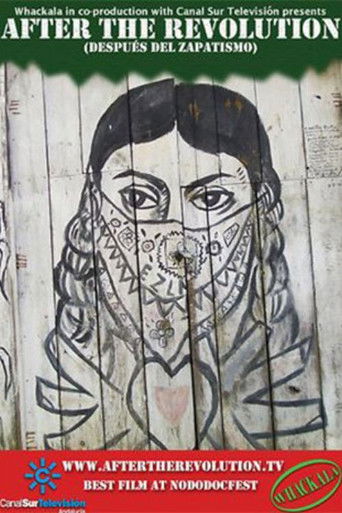
After the Revolution
2010
The impact of the Zapatista uprising in Chiapas, Mexico, on the lives of the Mayan women who joined as rebels to seek justice within their own culture.
More info →
Caixa D'Água: Qui-Lombo é Esse?
2012
The documentary "Caixa D'água: Qui-lombo is this?" It reports, through testimonies from former residents and photographic collections, the importance in the cultural and historical scope of the Getúlio Vargas neighborhood located in Aracaju, capital of Sergipe. Emphasis is placed on black culture and the presence of black slaves and their descendants, with the rescue of issues related to their origin, orality, geographical location and awareness of their racial identity, showing that, although this community exists in an urban area, it still maintains many aspects of the quilombo life of the former black slaves in Brazil.
More info →