Capturing the Electrons
★ 10 · 2024 · 61m · Documentary
Capturing the Electrons documents the life and career of Nobel Prize-winning Hungarian physicist Ferenc Krausz. His research team has generated and measured the first attosecond light pulse and used it for capturing electrons' motion inside atoms, marking the birth of attophysics. In 2023, jointly with Pierre Agostini and Anne L'Huillier, he was awarded the Nobel Prize in Physics.
More Like This
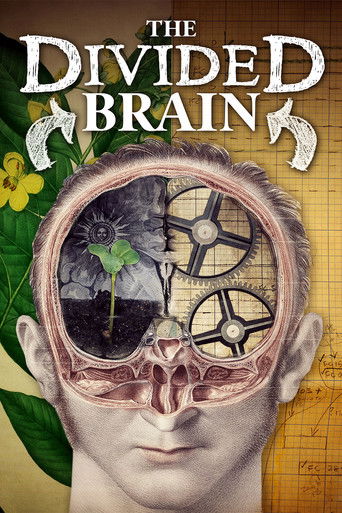
The Divided Brain
2019 · ★ 7
A film which explores a radical new idea - is there an imbalance between our brain hemispheres that is affecting how we live in our modern society?
More info →
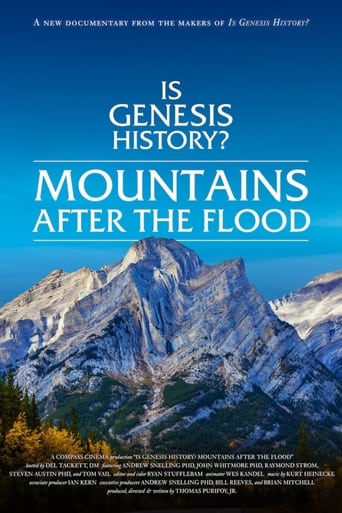
Is Genesis History? Mountains After the Flood
2023 · ★ 7
In this fascinating sequel to "Is Genesis History?", watch a team of scientists discover new evidence for the global Flood. By the time the journey is over, you'll understand exactly how modern science connects to the book of Genesis.
More info →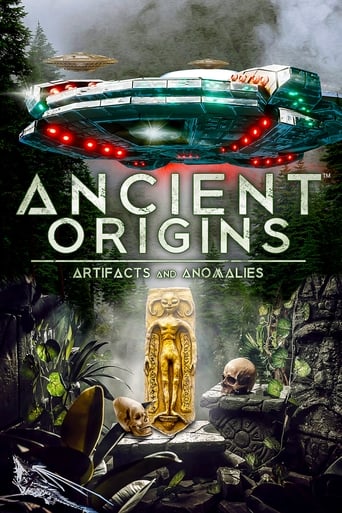
Ancient Origins: Artifacts and Anomalies
Archaeologists generally regard Mesopotamia as "the beginning of civilization" but shocking new evidence that defies comprehension clearly suggests that highly advanced civilizations existed in pre-history. With new advanced technology, archaeologists are now able to image undiscovered worlds before our own from above. The truth to mankind's true origins is being rapidly revealed to be very different than what we've been told.
More info →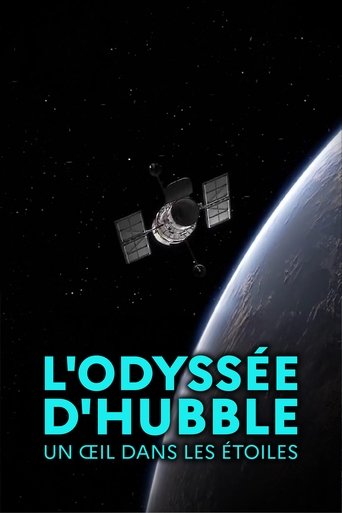
L'odyssée d'Hubble, un œil dans les étoiles
2022 · ★ 8
The Hubble Space Telescope has spent more than 30 years scrutinizing the cosmos in an attempt to unravel the secrets of the Universe and go as close as possible to its origin. But Hubble has also become the superstar of space, offering us magnificent paintings of the Universe.
More info →
A Brief History of Time
1991 · ★ 7.2
This shows physicist Stephen Hawking's life as he deals with the ALS that renders him immobile and unable to speak without the use of a computer. Hawking's friends, family, classmates, and peers are interviewed not only about his theories but the man himself.
More info →
Inside Chernobyl's Mega Tomb
2016 · ★ 7.5
Documentary which follows the construction of a trailblazing 36,000-tonne steel structure to entomb the ruins of the nuclear power plant destroyed in the 1986 Chernobyl disaster.
More info →
Fabulous Insects - Beetles
2024 · ★ 8
„The Fabulous Insects – Beetles“ presents colourful and bizarrely shaped species as well as the largest beetle in the world, in its habitat in the South American rainforest. The film also shows that the colourful diversity and beauty of beetles and their exciting natural history can be experienced right on our doorstep, in Central Europe. In aesthetic and never-before-seen macro slow-motion and time-lapse shots, the viewer experiences the world of beetles, which is more beautiful, colourful and surprising than many of us realise. No other group of animals on earth is so diverse: beetles come in a wide variety of ‘models’, from miniature versions a quarter of a millimetre in size to large versions twenty centimetres long. Some beetles flaunt jewel-like iridescent colours, while others wear plain black. Some come in eye-catching warning colours, while many wear an astonishing camouflage.
More info →
Hydrogen - Revolution or Illusion?
2025 · ★ 4
Steel giant Thyssen Krupp in Germany and cargo ship operator Maersk in Denmark are investing huge sums of money with public support to convert their huge and dirty energy consumption to ‘green’. Hydrogen plays a central role in this. At the same time, countries in Africa such as Morocco and Namibia are gearing up to become giga-suppliers of the new energy source. But does it all make sense? Why not just produce green steel in Africa? And what's the story behind the blue hydrogen that is supposed to come from Norway via pipeline? The film follows pioneers on breathtaking projects and shows that the energy transition is more complicated than expected and holds many surprises in store.
More info →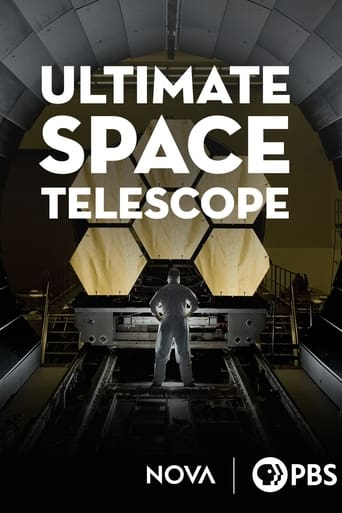
Ultimate Space Telescope
2022 · ★ 7.3
NASA's James Webb Space Telescope, from its conception to completion.
More info →