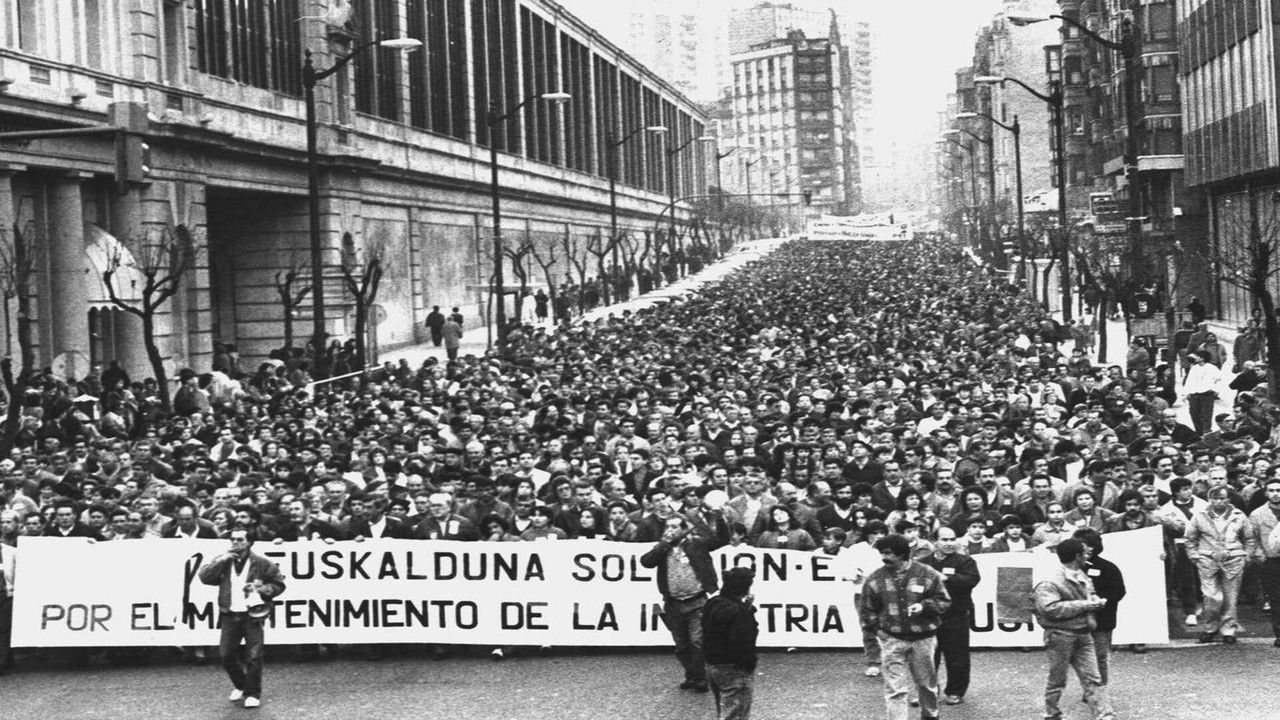
Batalla de Euskalduna
1985 · Documentary
More Like This
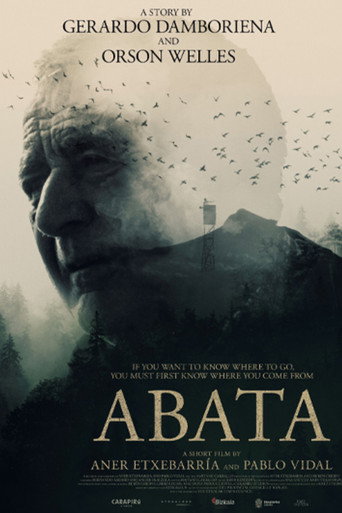
Abata
2026
In 1955, fascinated by the ingenious pigeon hunting with wooden paddles and nets, Orson Welles directed the documentary The Land of the Basques. Today, from a mountain hut on the border between Navarre and France, Gerardo Damboriena, a veteran pigeon hunter, reveals to us in basque the secrets of this more than 700-year-old tradition, now on the verge of extinction.
More info →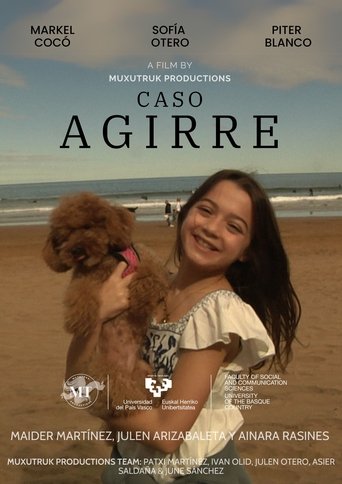
The Agirre Case
2025 · ★ 10
The Agirre family, made up of Iñaki and Miren, and their children Aitor, Janire and Arene, is a wealthy family that enjoys a privileged position in Basque society. At the beginning of the story, a journalist interviews the perpetrator of the macabre murder of the owners of the well-known company “Talcos Agirre”. A call to the emergency services alerts the police to the event. The viewer is immersed in the intrigue surrounding the case until the identity of the murderer is revealed.
More info →
Luigi
2026 · ★ 5
When Luigi Mangione is charged with murder, he becomes the subject of fevered obsession. Through letters, fantasies, and conspiracies, strangers turn Luigi into a cultural sensation and a canvas for their rage, desire, and misplaced hope.
More info →
More Art Upstairs
2017 · ★ 5.7
A revolution is taking place in the art world and it isn’t happening in Paris, Berlin or Hong Kong—but in Grand Rapids, Michigan. ArtPrize is the most highly attended art show in the world, and it awards cash prizes larger than all other competitions combined. International critics and general crowds pack bars, galleries and abandoned buildings all over town, taking in over 1,500 works from cerebral conceptualists and weekend hobbyists. An acclaimed jury awards a winner $200,000 and the ballot-carrying public does the same. Nimble cameras follow four artists, each vying not only for critical recognition but for every public vote they can drum up. Part classy game show, part engaging art exploration, More Art Upstairs captures the debates ArtPrize has intentionally (or inadvertently?) triggered: Can culture be democratized? Do artists need or want to connect with audiences? And is the canonical art establishment on its way out? (Myrocia Watamaniuk)
More info →Rouen, naissance d'une cité
1939
The destruction of the city and its architectural heritage during the Allied bombing of the Second World War.
More info →
My Friend Pınar
2024
Pınar Gültekin went missing on July 16, 2020, in the Ula district of Muğla, and her lifeless body was found on July 21, 2020, in a rural forested area of the Menteşe district. The murderer, Cemal Metin Avcı, first wounded Pınar, then burned her, and finally poured concrete over her body. Through Pınar’s case and historical precedents, the film exposes how impunity perpetuates these crimes while highlighting women’s hard-won legal victories and solidarity networks. It juxtaposes the brutality of her murder with her friends’ relentless campaign to preserve her memory, framing their activism as part of a broader feminist resistance. By connecting individual trauma to systemic failure, the film challenges viewers to confront both the roots of gender violence and the transformative power of collective struggle, where mourning becomes mobilization, and loss fuels demands for justice.
More info →The Long Drag
1963
A real labour of love, this film is a fine demonstration of how amateur filmmakers could play a part in campaigning for local services. With the impending Beeching Report of 1963 there could hardly have been a better plea for the retention of the Settle to Carlisle railway and all its services than this traversing of the whole length of the line by train and by foot, stopping off to reveal its many wonders and recording the fascinating history of the line and of those who built it.
More info →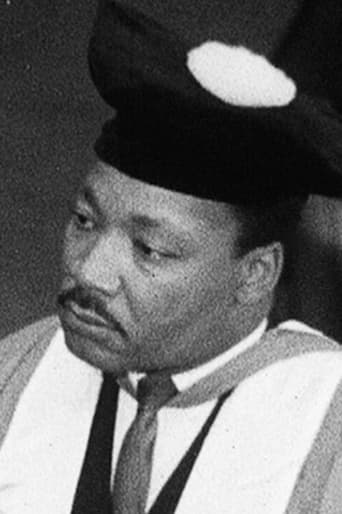
Martin Luther King at Newcastle University
1967
A remarkable event the great American civil rights leader, Martin Luther King makes a powerful speech on a unique visit to Newcastle University.
More info →Dracula and the Turn of the Tide
1981
The association of Whitby with Bram Stoker’s Dracula is fairly well-known; the writer Leo Walmsley less so. Michael Clegg takes us on a journey around the places that inspired both authors, Whitby and Robin Hood’s Bay, just five miles apart on the Yorkshire coast. With the help of excerpts from two films based on their novels, ‘Turn of the Tide’ (1935), and ‘Scars of Dracula’ (1970), Clegg provides a guide to their work and the very different tales they have to tell.
More info →We Grew A Frog
1970
An educational film intended for children from 6 to 8 years of age. ‘We Grew A Frog, 1970’ tells the story of two schoolchildren, Lynne and Martin, who collect frog spawn from the village pond, take it to school, and there, in a tank, watch the spawn grow into frogs. The film shows in close-up the developmental stages of the spawn-to-frog process. This educational film features the pupils of Whatfield School in Suffolk. Headteacher, Gwen Dunn wrote and told the story.
More info →