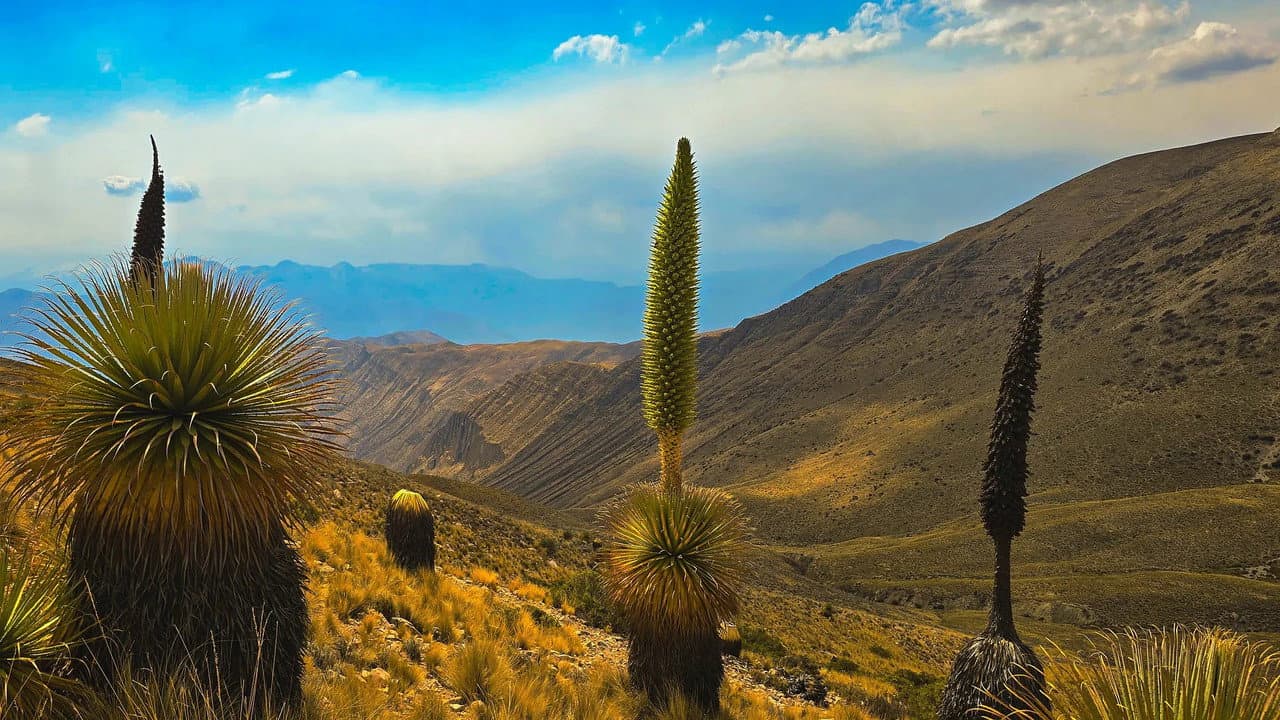
Oasen: Inseln des Lebens
2025 · 91m · Documentary
Oases are more than fairytale places in the desert sand. Amidst the stony heights of the Andes, the endless expanse of the Pacific, or the hectic concrete sausages of Mumbai, islands of life flourish. In breathtaking shots, the documentary explores the phenomenon of oases – and the magical places in the Saharan sand are of course included.
More Like This
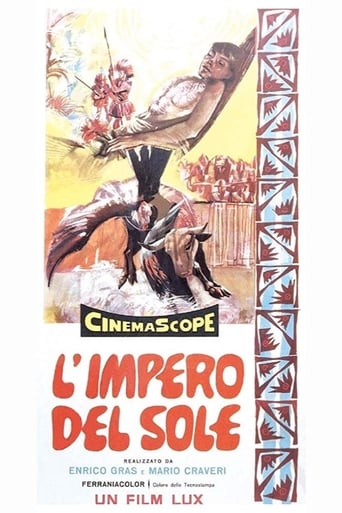
Empire in the Sun
1956 · ★ 5.8
Colorful widescreen travelogue along the Amazon River jungle of Peru, featuring an indigenous village carnival and a snake dance.
More info →

The Hand of the Butterfly
2010
Fourth film in the Mafrouza series. Two events mark the early winter in Mafrouza: the birth of a boy and a young woman's engagement. Within their homes, the intimate and the holy, cries, whispers and rituals: individuals' destinies are taking shape. Amidst the familial agitation, each finds their own way to live. Through their actions, but also through what they say, summoning the imaginary to reflect on reality, make it livable, and speaking of life, death and gender roles.
More info →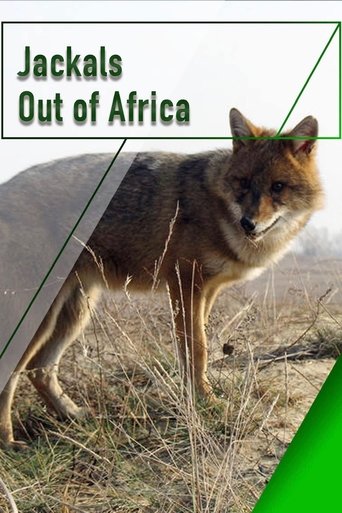
Jackals - Out of Africa
2007
In some cultures, jackals were pursued and condemned as pests that fed on parasite-infested carcasses. In others, such as Ancient Egypt, they were divinely celebrated. This documentary accompanies a young scientist, who is drawn to these mythical mammals, and takes us on a journey to explore golden jackals, from Egypt to the barren hills of Greece.
More info →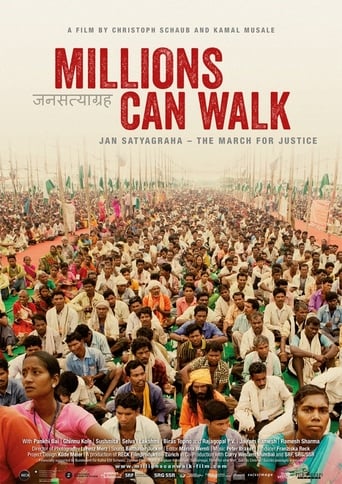
Millions Can Walk
2014
Hundreds of thousands of Indian men and women – indigenous inhabitants and landless farmers – demand their right to existence by making a 400 kilometre protest march from Gwalior to Delhi. How can one fight for one’s rights without using violence? With such an important contemporary question, the film spreads far beyond the borders of India. It shows the multiple facets of this imposing protest march and focuses as well on the daily realities of these proud people.
More info →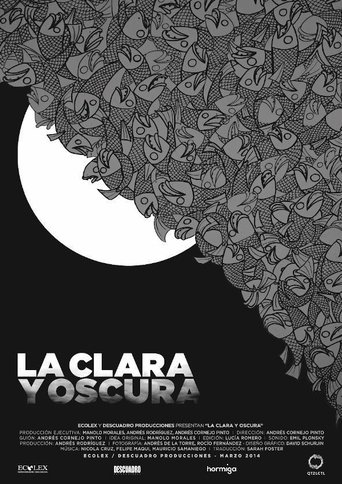
La clara y oscura
2014
Salango is a small parish south of Manabí. What this land means to Ecuador, however, is huge. Its name is associated with the pre-Columbian legacy of the Manta Wancavilca cultures, the humpback whales that arrive each year to mate, the homonymous island and its coral reefs, the great wealth of marine fauna. It is there, in one of the places with the greatest archeological and environmental heritage of our country, where the Polar fishmeal processor has been operating for 35 years. What does not emerge from the idyllic postcards of the area is the foul smell that pollutes the air, the portrait of people sick from the factory's toxic wastes, the disgusting black smoke that flows into the sea directly from the processor pipeline. That is why it is the struggle of the few members of the community who have not given up and demand that Polar leave.
More info →

Nefertiti's Daughters
2015
Nefertiti's Daughters is a story of women, art and revolution. Told by prominent Egyptian artists, this documentary witnesses the critical role revolutionary street art played during the Egyptian uprisings. Focused on the role of women artists in the struggle for social and political change, it spotlights how the iconic graffiti of Queen Nefertiti placed her on the front lines in the ongoing fight for women's rights and freedom in Egypt today.
More info →
The Ramayana
1965
The Little Ballet Troupe of Bombay performs a "puppet ballet" of the Hindu epic, the Ramayana.
More info →
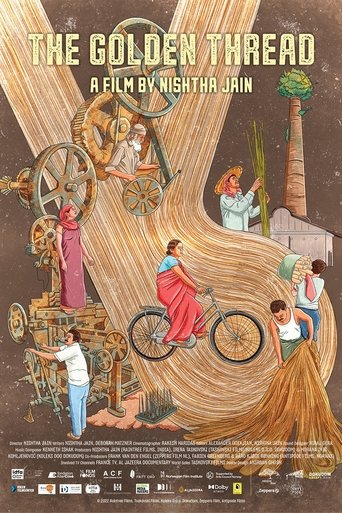
The Golden Thread
2022 · ★ 7.8
In the heyday of the jute industry, millions of people in Bengal made their living doing this laborious work, which has hardly changed since the industrial revolution. The 100-year-old machinery has been endlessly repaired. State aid kept this sustainable alternative to plastic going, but its future looks bleak.
More info →
Egypt's Great Pyramid: The New Evidence
2017 · ★ 8
Egypt's Great Pyramid may be humanity's greatest achievement: a skyscraper of stone built without computers or complex machinery. This super-sized tomb has fascinated historians and archaeologists for centuries, but exactly how the ancient Egyptians finished the monument and fitted its two and a half million blocks in a quarter of a century has long remained an enigma. Today the secrets of the pyramid are finally being revealed thanks to a series of new findings. At the foot of the monument, archaeologists are uncovering the last surviving relic of the pharaoh Khufu, whose tomb it is: a huge ceremonial boat buried in flat-pack form for more than 4500 years. It's a clue that points to the important role that ships and water could have played in the pyramids' construction. This documentary follows investigations that reveal how strong the link between pyramids and boats is. It's a story of more than how Egypt built a pyramid: it's about how the pyramid helped build the modern world.
More info →