Amy
2004 · 17m · Documentary
'Amy, is narrated by a model (Liisa Repo-Martell) who’s painfully uncomfortable with her own body and “old woman’s” face. Astonishing closing image is a tightly composed telephoto shot on the start of a marathon race among young schoolgirls, dashing toward and then across the screen in ultra-slo-mo, and accompanied by a girls’ chorus hauntingly singing Brian Wilson’s God Only Knows. Widely eclectic lensing and looks in various media and in color and black-and-white flow nicely from one section to the next, aided by gifted editor Mark Karbusicky.' ~ Robert Koehler, Variety - Part 7 of 7-part bio-feature Public Lighting (2004).
More Like This
Ludwig van
1970 · ★ 5.7
An odyssey through Beethoven’s lasting presence and influence in our modern world – viewed through the eyes of the composer himself.
More info →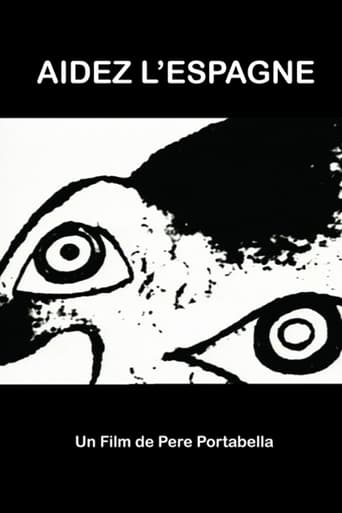
Aidez l'Espagne
1969 · ★ 6.4
The Colegio de Arquitectos de Catalunya commissioned Pere Portabella to make this film for the Joan Miró retrospective exhibit in 1969. There were heated discussions on whether it would be prudent to screen the film during the exhibit. Portabella took the following stance: "either both films are screened or they don't screen any" and, finally, both Miro l'Altre and Aidez l'Espagne were shown. The film was made by combining newsreels and film material from the Spanish Civil War with prints by Miró from the series "Barcelona" (1939-1944). The film ends with the painter's "pochoir" known as Aidez l'Espagne.
More info →
La ruta de don Quijote
1934 · ★ 6
A poetic journey through the paths and places of old Castile that were traveled and visited by the melancholic knight Don Quixote of La Mancha and his judicious squire Sancho Panza, the immortal characters of Miguel de Cervantes, which offers a candid depiction of rural life in Spain in the early 1930s and illustrates the first sentence of the first article of the Spanish Constitution of 1931, which proclaims that Spain is a democratic republic of workers of all kind.
More info →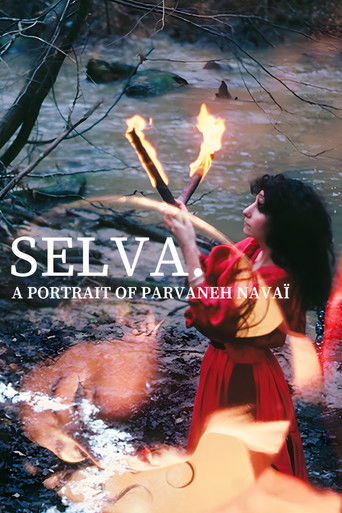
Selva. A Portrait of Parvaneh Navaï
1982 · ★ 10
Trance dances and out of body projection. In front of the camera, Parvaneh Navaï becomes a mediator who enters in contact with and immerses into the energies of Nature, while her own energy radiates and echos in the forest ("selva"). The camera amplifies and expands her presence, transforming the forest into an imaginary space. The camera becomes a painter's brush.
More info →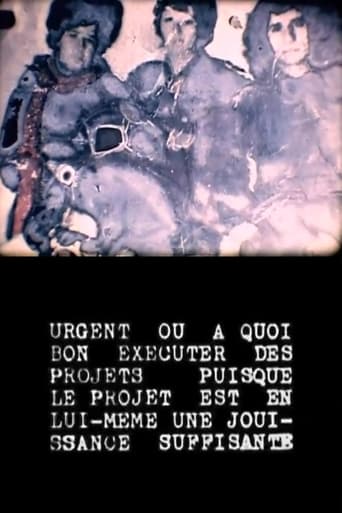
Urgent ou à quoi bon exécuter des projets puisque le projet est en lui-même une jouissance suffisante
1977 · ★ 7
Gérard Courant applies the Lettrist editing techniques of Isidore Isou to footage of late 70's pop culture. Courant posits that his cinema offers an aggressive détournement to the French mainstream, reifying a Duchampian view of film: "I believe in impossible movies and works without meaning... I believe in the anti-movie. I believe in the non-movie. I believe in Urgent... My first full length movie that is so anti-everything that I sometimes wonder if it really does exist!"
More info →Black Hole Radio
1992 · ★ 10
Black Hole Radio is an installation that consists of taped confessions of callers of the New York City Phone Confession Line and video images. The Phone Confession Line is based on anonymous callers ringing to confess on things they had done or thought like adultery, theft, murder or regrets. Thereafter anybody could call and listen to the confessions. Although making a confession was free, listening to a confession costs money. After Cohen got his hands on the confessions, he used them as an audio heartbeat to accompany video-images of every day life in New York City he had taken over the years. This installation is a portrait of the city with its dark secrets, hushed voices and nocturnal images. In this way Cohen tries to bring across an experience to the viewer that relies on absence, waiting and the effort to hear something in the dark.
More info →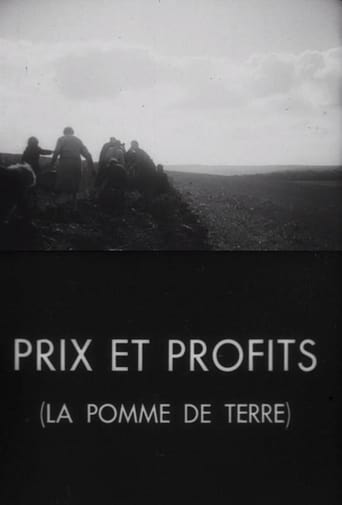
Prices and Profits, the Potato
1932 · ★ 5.5
Prix et Profits is a 20-minute short film originally made for educational purposes and released in 9.5mm format. As the title suggests, the film follows the supply chain of a potato, from farmers to consumers, and examines the mechanisms of capitalism.
More info →
Film Is. 7-12
2002 · ★ 6
The second half of Gustav Deutsch's experimental Film ist. series, constructing new narratives and moods out of existing footage, mostly from early silent era films.
More info →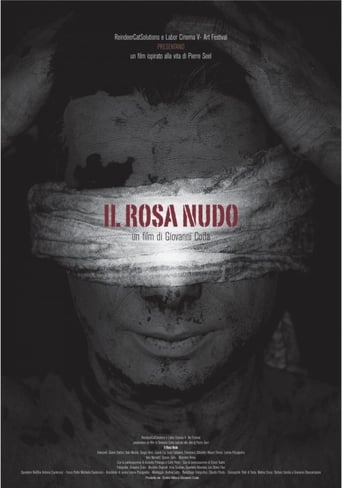
Naked Rose
2013 · ★ 4.2
Among the millions of victims of the Nazi madness during the Second World War, Pierre Seel was charged with homosexuality and imprisoned in the Schirmeck concentration camp. He survived this terrifying experience of torture and humiliation, and after the war he married, had three children, and tried to live a normal life. In 1982, however, he came to terms with his past and his true nature and decided to publicly reveal what he and thousands of other homosexuals branded with the Pink Triangle had undergone during the Nazi regime. Il Rosa Nudo (Naked Rose), inspired by the true story of Pierre Seel, depicts in a theatrical and evocative way the Homocaust, focusing on the scientific theories of SS Physician Carl Peter Værnet for the treatment of homosexuality, which paved the way for the Nazi persecution of gay men.
More info →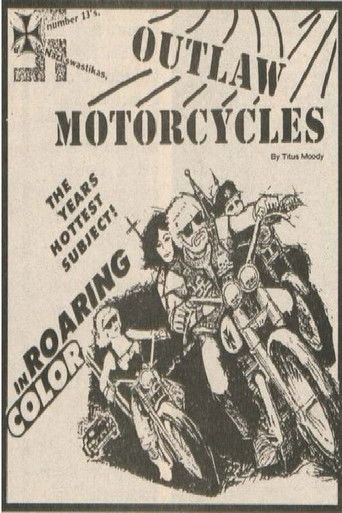
Outlaw Motorcycles
1966 · ★ 4.8
In 1965 actor and hopeful first time director Titus Moede befriended ‘Preacher’ of the outlaw motorcycle club the Coffin Cheaters while looking for a project. He soon realized that this was exactly the subject he had been looking for.
More info →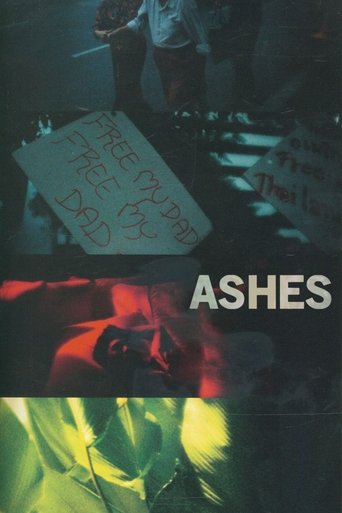
Ashes
2012 · ★ 5.3
In collaboration with Lomo, an Austrian camera company, and Mubi, a global film website, Weerasethakul was invited to make a work to launch the new LomoKino, a portable motion picture camera. Ashes juxtaposes the intimacy of his daily routine with the destruction of memories and his observations of the dark side of Thailand’s social realities.
More info →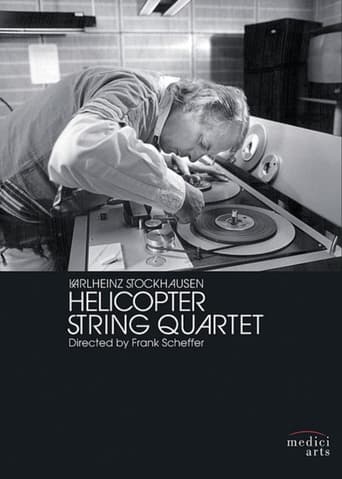
Helicopter String Quartet
1996 · ★ 6
One morning, the late Karlheinz Stockhausen awoke from a dream that told him to take to the sky. Stockhausen envisioned four helicopters swirling in the clouds, with each of a quartet’s members tucked inside his own chopper, communicating through headsets, stringing away in sync to the rotor-blade motors. He immediately set forth to make that dream a reality. In 1995, Dutch film director Scheffer followed Stockhausen in the days leading up to the premiere performance of his Helicopter String Quartet in Amsterdam. The resulting film offers a rare glimpse of Stockhausen as he patiently dictates every agonizingly detailed measure to the Arditti Quartet.
More info →