Victory in the West
★ 6.8 · 1941 · 114m · Documentary
A Nazi propaganda film about the lead up to World War II and Germany's success on the Western Front. Utilizes newsreel footage of battles and fell into disfavour with propaganda minister Goebbels because of it's lack of emphasis on Adolf Hitler.
More Like This
Munich, or Peace in Our Time
1967 · ★ 8
A television documentary directed by Marcel Ophüls examining the Munich Conference of September 28, 1938, when European leaders met to avert the outbreak of war. Through archival documents and interviews, the film reconstructs the political atmosphere surrounding negotiations between Britain and France on one side and Nazi Germany and Fascist Italy on the other, situating the agreement within the broader context of European appeasement in the face of fascism.
More info →
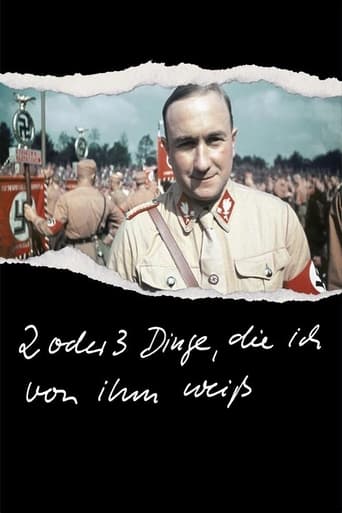
2 or 3 Things I Know About Him
2005 · ★ 6.6
What would your family reminiscences about dad sound like if he had been an early supporter of Hitler’s, a leader of the notorious SA and the Third Reich’s minister in charge of Slovakia, including its Final Solution? Executed as a war criminal in 1947, Hanns Ludin left behind a grieving widow and six young children, the youngest of whom became a filmmaker. It's a fascinating, maddening, sometimes even humorous look at what the director calls "a typical German story." (Film Forum)
More info →
John Ford Goes to War
2002 · ★ 5.5
When World War II broke out, John Ford, in his forties, commissioned in the Naval Reserve, was put in charge of the Field Photographic Unit by Bill Donavan, director of the soon-to-be-OSS. During the war, Field Photo made at least 87 documentaries, many with Ford's signature attention to heroism and loss, and many from the point of view of the fighting soldier and sailor. Talking heads discuss Ford's life and personality, the ways that the war gave him fulfillment, and the ways that his war films embodied the same values and conflicts that his Hollywood films did. Among the films profiled are "Battle of Midway," "Torpedo Squadron," "Sexual Hygiene," and "December 7."
More info →
The Liberation of Auschwitz
1986 · ★ 7.7
This chilling, vitally important documentary was produced to mark the 40th anniversary of the liberation of Auschwitz Concentration Camp. The film contains unedited, previously unavailable film footage of Auschwitz shot by the Soviet military forces between January 27 and February 28, 1945 and includes an interview with Alexander Voronsov, the cameraman who shot the footage. The horrifying images include: survivors; camp visit by Soviet investigation commission; criminal experiments; forced laborers; evacuation of ill and weak prisoners with the aid of Russian and Polish volunteers; aerial photos of the IG Farben Works in Monowitz; and pictures of local people cleaning up the camp under Soviet supervision. - Written by National Center for Jewish Film
More info →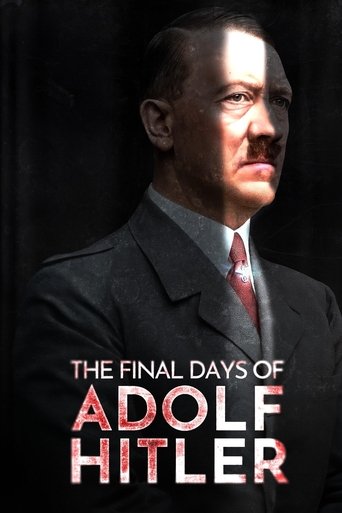
Dear Babe
1995 · ★ 9
Filmmaker Rosanne Ehrlich unearths hundreds of letters her father wrote her mother while he was away from home, fighting in WWII, and shares them in this documentary that blends narration with, archival footage.
More info →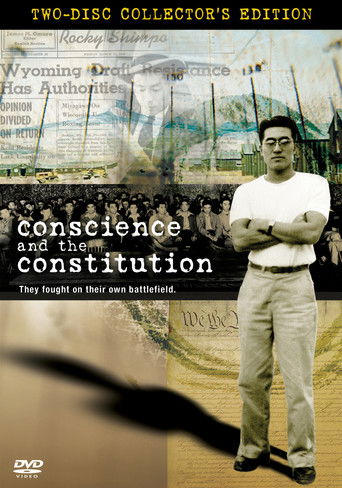
Conscience and the Constitution
2000 · ★ 8.7
Americans refused to be drafted from the concentration camp at Heart Mountain, Wyoming. Ready to fight, but not before their rights as U.S. citizens were restored and families released.
More info →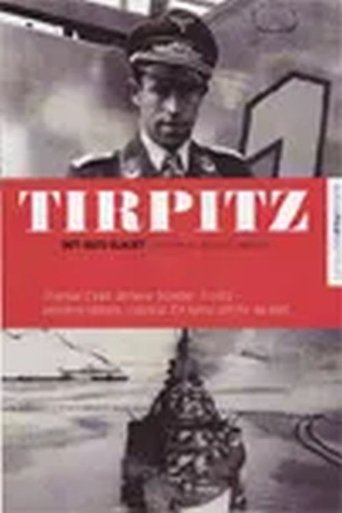
Tirpitz - The Last Battle
2007
The German battleship Tirpitz was a constant threat to Allied merchant ships from 1942. On November 12, 1944, the ship was sunk off the coast of Tromsø, where it had been lying damaged since being disabled off the coast of Alta in September 1943. Along with the Bismarck, the Tirpitz was Germany’s largest battleship, and its sinking was a significant blow to German prestige.
More info →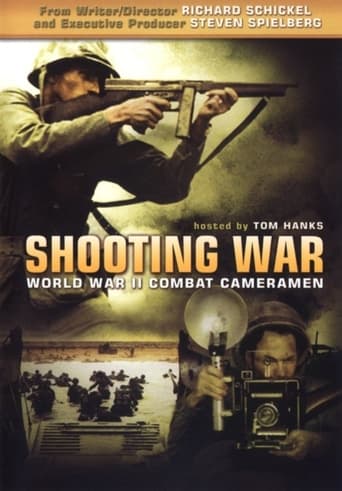
Shooting War
2000 · ★ 6.4
A remarkable film that takes a special look at the first war to be truly reported and recorded by one of the more unsung heroes of World War II: the combat photographer. Through the unflinching eye of their camera's lenses, these courageous soldiers continually risked their lives in their brave attempts to capture history.
More info →John Huston War Stories
1999 · ★ 9
During World War II, the propaganda engine of the U.S. government made a pivotal decision with unforeseeable results: they tapped John Huston to shoot war documentaries with an expressly patriotic spin. Few could guess the degree to which Huston's documentaries would depict the sheer brutality and horror of modern warfare - particularly his Let There Be Light and The Battle of San Pietro. The films served (by default) as cinematic protests, even as they graced new and brilliant heights within the scope of American documentary. (Indeed, Light was banned by the government for 35 years). Midge Mackenzie's 1998 documentary John Huston: War Stories explores this little known facet of Huston's career, intercutting clips from the various documentaries with a Huston interview shot just prior to his death.
More info →
The Four Elements
1966 · ★ 5.2
An educational film about power sources that’s rendered as a lyrical meditation on heat and vapor, The Four Elements is a poetic and avant-garde documentary Curtis Harrington made for the United States Information Agency.
More info →