Coral Dreamscapes: An Exotic Aquarium
★ 4.8 · 2000 · 53m · Documentary
Fascinating species bursting with color Gentle, meditative ocean water bubble away as exotic fish swim to the soft sounds of piano and strings. In this video, over 700 salt water fish will glide and drift across your screen. No feeding, no water testing and no clean up. It's as simple as hitting play on your DVD. Fascinating species bursting with color like you've never seen. Kick back and float along in the tidal pools of your very own trouble-free T.V. Aquarium. Turn your television into a coral reef teeming with underwater life.
More Like This
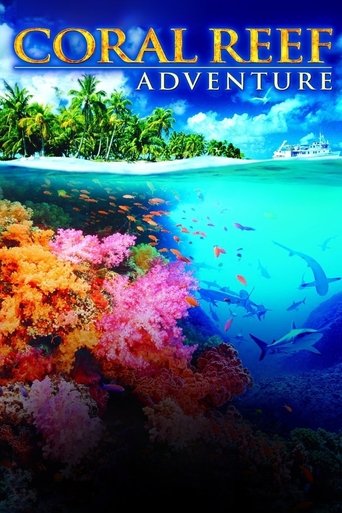
Coral Reef Adventure
2003 · ★ 6.5
Coral Reef Adventure follows the real-life expedition of ocean explorers and underwater filmmakers Howard and Michele Hall. Using large-format cameras, the Halls guide us to the islands and sun-drenched waters of the South Pacific to document the health and beauty of coral reefs. Featuring songs written and recorded by Crosby, Stills & Nash.
More info →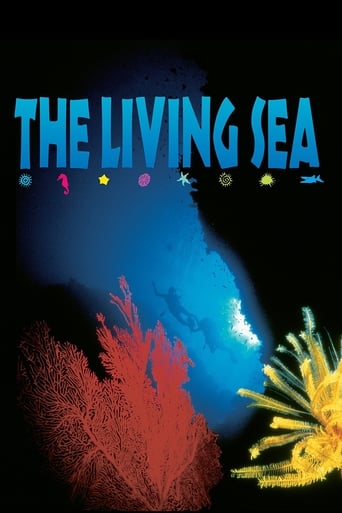
The Living Sea
1995 · ★ 7
The Living Sea celebrates the beauty and power of the ocean as it explores our relationship with this complex and fragile environment. Using beautiful images of unspoiled healthy waters, The Living Sea offers hope for recovery engendered by productive scientific efforts. Oceanographers studying humpback whales, jellyfish, and deep-sea life show us that the more we understand the ocean and its inhabitants, the more we will know how to protect them. The film also highlights the Central Pacific islands of Palau, one of the most spectacular underwater habitats in the world, to show the beauty and potential of a healthy ocean.
More info →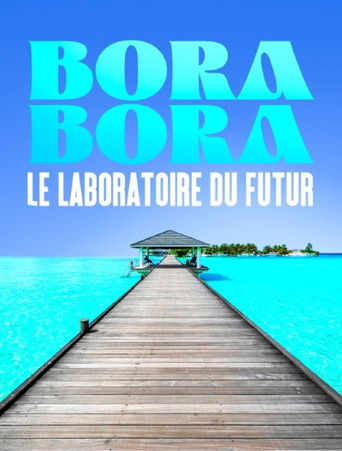
Bora Bora, le laboratoire du futur
2022 · ★ 3
Bora Bora is the most popular destination in French Polynesia, certainly because of its lagoon, considered the most beautiful lagoon in the world. In this context, the islet could have sunk under concrete and pollution, and the reef could have been irreparably impacted. However, thanks to the will of a handful of inhabitants including the mayor of the island, Bora Bora is today a model of sustainable development, with water treatment technologies that are 15 years ahead of France, programs to rebuild corals and protect wildlife, educational actions and the rehabilitation of Polynesian traditions such as “rahui” and the establishment of a monitoring network using new technologies. All of this makes the island a veritable open-air laboratory that shows the way for all tropical coastal environments around the world.
More info →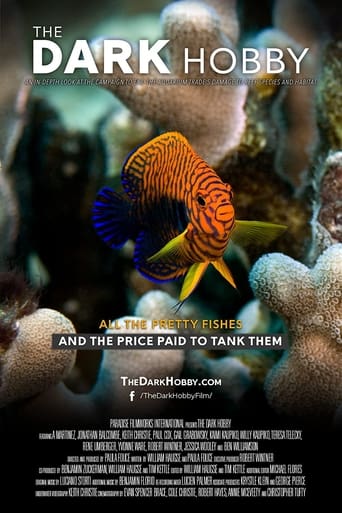
The Dark Hobby
2021 · ★ 8.3
The Hawai'ian Islands are ground zero for the aquarium trade who capture and traffic reef fish for hobbyists’ tanks, decimating the reef, ocean and earth’s oxygen. Native Hawai'ians, conservationists, scientists, aquarium fish collectors and breeders are locked in a controversy over the stunning “treasure of Hawai'i” – the ornamental fish.
More info →Alien Reefs
2012 · ★ 10
Coral reefs are believed by many to have the highest biodiversity of any ecosystem on the planet. A lot of the life found here can seem very alien at first, they occupy less than 1 percent of the ocean floor but yet are home to more than 25 percent of all marine life. Warm water reefs typically come to mind when thinking of the Pacific Ocean and the Caribbean Sea, these reefs are very well known but they don’t just occur in warm waters. In this one hour special, we are brought into this alien environment and discover for ourselves a strange, hidden world that is simply abundant with life, ranging from the weird to the wonderful.
More info →
Breaking Boundaries: The Science of Our Planet
2021 · ★ 7.5
David Attenborough and scientist Johan Rockström examine Earth's biodiversity collapse and how this crisis can still be averted.
More info →
The Chagos Islands - Hope for Coral Reefs?
2023
In the middle of the Indian Ocean, more than 1.500 km from the nearest continent, lies an untouched, mysterious archipelago – the Chagos Islands. This group of 60 islands is one of the last pristine wildernesses on Earth. The Chagos Archipelago is one of the world’s largest marine national parks, and is strictly protected. A scientific expedition has been granted access to this politically disputed territory for the first time. In times of climate change, as global reef communities face a growing crisis, the researchers seek to show how coral reefs fare in places with minimal human interference. During a journey into the unknown, we follow in the footsteps of internationally renowned scientists, who aim to unlock the secrets of a lost world and gain astonishing insights into one of the last true wildernesses on Earth.
More info →Digital Aquarium: Turtles of the Caribbean
A 59 minute video displaying beautiful tropical fish and reefs set to relaxing music
More info →
Herrings
1940
This informative herring aid from WWII makes no bones about the need to make the most of every fish.
More info →
Oceans
2010 · ★ 7.5
An ecological drama/documentary, filmed throughout the globe. Part thriller, part meditation on the vanishing wonders of the sub-aquatic world.
More info →