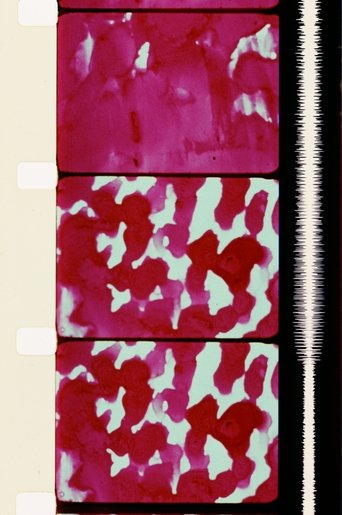
Five Film Exercises: Film 4
★ 4.6 · 1944 · 7m · Animation
The entire film is divided into four consecutive chosen approaches—the fourth section devoted to a reiteration and extension of the original material. Preserved by the Academy Film Archive in 1999.
More Like This
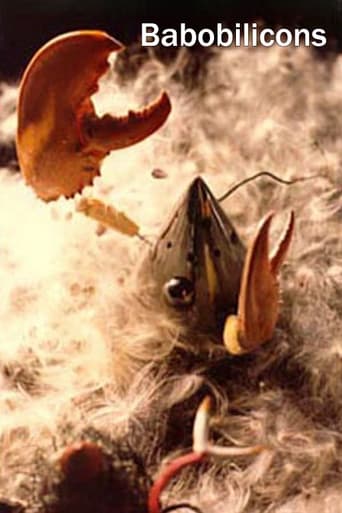
Babobilicons
1982 · ★ 7.5
Krumins’ fantasy sets the world of flora and fauna on its ear. At one moment grotesque greenish mushrooms grow, wither and reverse their life-cycle, at another, strange crustacean-like animals speed around on a bed of feathers, next a room is inundated with giant ladybugs… Preserved by the Academy Film Archive in 2009.
More info →
Things to Come
1953
A vibrant animation by Patricia Marx. Preserved by the Academy Film Archive in 2000.
More info →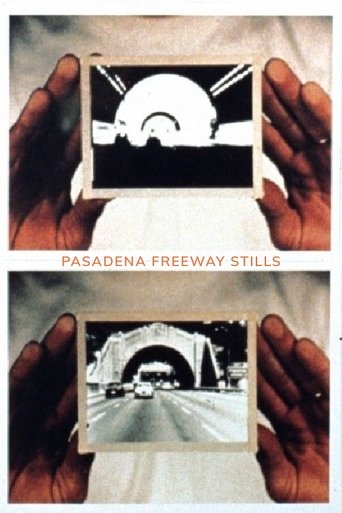
Pasadena Freeway Stills
1974 · ★ 6
Possibly the most lucid, vivid, and awesome demonstration of the building up of still images to create moving ones, Pasadena Freeway Stills simply, gracefully and powerfully shows us the process by which we are fooled by the movies. By doing so, Gary Beydler mines a very rich vein of associations and metaphor, without the slightest ostentation. Constructed as a thrilling arc of realization and, in a quite moving way, disappointment, the film is a beautiful articulation of our emotional entanglement with moving images, while simultaneously creating a form in which the illusion of cinema is brought into incredible relief as the film we're watching gradually catches up to the film Gary is holding up to the camera with his hands, one frame at a time. (Mark Toscano) Preserved by the Academy Film Archive in 2008.
More info →
Kitsch in Synch
1975
The animation, music, and optical printing of Kitsch in Synch was produced by Beckett and the students in two classes he was teaching at CalArts. Although a group project, it is clear that Beckett was the director. The playful, catchy soundtrack is used to create a cycle of building tension and release. The brightly colored shapes create approximate symmetrical formations and become more densely layered, with glimpses of iconographic objects and even live footage near the end. Preserved by the Academy Film Archive, in partnership with the iotaCenter, in 2007.
More info →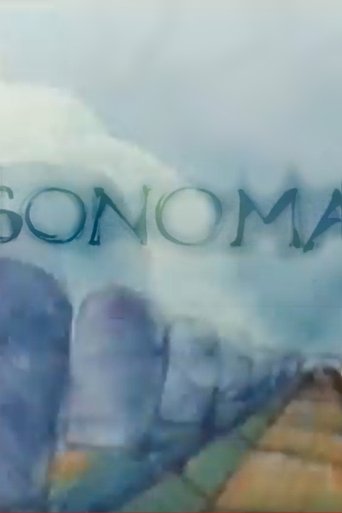
Sonoma
1977
"I relocated to the Redwoods of Sonoma County upon graduation and in that relocation process the animation for Sonoma began. The design was built around the concept of the long wide horizontal 'pan' shot to express the concept of a dynamic landscape that passes across the screen like a traditional Chinese Scroll Painting. The deep personal meaning relates to the 'relocation' that was occurring within my own being after having done 2½ terms of active combat in the jungle as a carrier enlisted with the 82nd Airborne Division of the Army" -D. Pies. Preserved by the Academy Film Archive in 2012.
More info →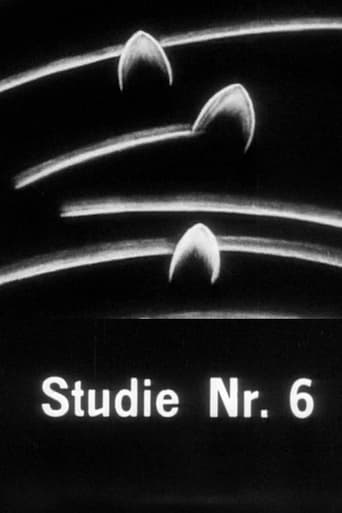
Study No. 6
1930 · ★ 6.6
The first Studies were synchronized with records (Fischinger made a total of 13 Studies all without sound). It was only with the introduction of sound, beginning with Study No 6 that the films did full justice to this musical principle. The play of the white lines, the arcs, and the upside-down U’s running hither and thither like ballet dancers was brought into perfect synchronization with the music, and thus the films offered an abstract illustration of the melodies. Study No 6 is certainly the best of his films in terms of forms. - Hans Scheugl and Ernst Schmidt, Jr. Preserved by the Academy Film Archive in 2001.
More info →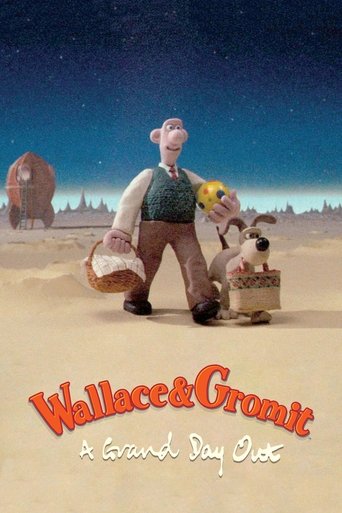
A Grand Day Out
1990 · ★ 7.5
Wallace and Gromit have run out of cheese, and this provides an excellent excuse for the duo to take their holiday to the moon, where, as everyone knows, there is ample cheese.
More info →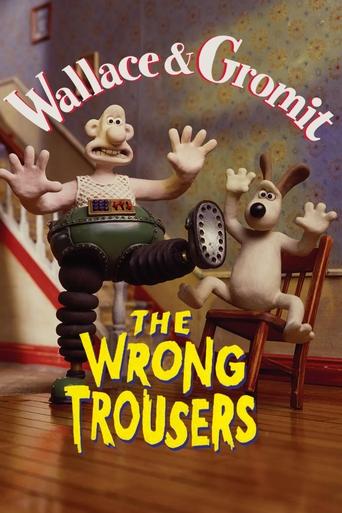
The Wrong Trousers
1993 · ★ 7.8
Wallace rents out Gromit's former bedroom to a penguin, who takes up an interest in the techno trousers created by Wallace. However, Gromit later learns that the penguin is a wanted criminal.
More info →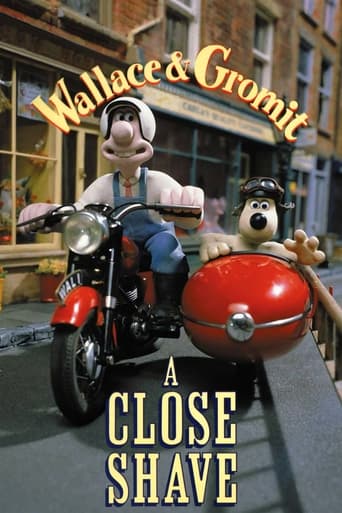
A Close Shave
1996 · ★ 7.6
Wallace's whirlwind romance with the proprietor of the local wool shop puts his head in a spin, and Gromit is framed for sheep-rustling in a fiendish criminal plot.
More info →
Mountain Music
1976 · ★ 5
Mountain Music illustrates what happens when technology gets too advanced too soon. Preserved by the Academy Film Archive in 2012.
More info →
Mutoscope Reels
1945 · ★ 6
An mutoscope motion picture installation commissioned for the 86th anniversary of the Guggenheim museum. Later preserved and turned into a short film. Preserved by the Academy Film Archive in 2000.
More info →