An Index of Metals
2003 · 49m · Music
Shortly before his death, Romitelli together with his friend Paolo Pachini and the poetess Kenka Lèkovich, resurrected the dream of a total scenic art (a furnace of sensations, they called it, an_ initiation rite_) in the manner of the Futurists: rhythms and gleams of light striking metals (for the video part), poems in iron and chrome singing of fusion with matter (Kenka Lekovich), acoustic/electric music highly amplified, filtered, spatialised, in as artificial a manner as possible. An Index of Metals bears vigorous witness to this determination to go beyond: sizzling orchestration, electric and psychedelic; a voice which plays on effects, murmurs with reverb, cackles into a megaphone, screams like a pop star; and an electric guitar score of a kind that no ‘serious’ composer has ever written, sliding across an infinite range of tones with a lightness of touch and blurring of contours.
More Like This
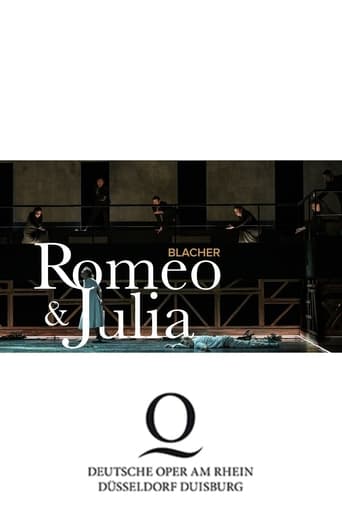
Romeo und Julia - DOR
2021
While a roaring ball stirs up spirits inside, a boy and a girl meet on the sidelines – and fall in love at first sight. But because they belong to warring families, Romeo and Juliet's love may be immortal, but it is above all forbidden. The chamber opera by the German-Baltic composer Boris Blacher, written in 1943, condenses Shakespeare’s famous tragedy to its essence: the fate of Romeo and Juliet. Scenic miniatures conjure a foggy world hostile to love. Characters occasionally materialise like ghostly apparitions, while a Brechtian chansonnier comments with humour and with harshness on the failure of the greatest love story of all.
More info →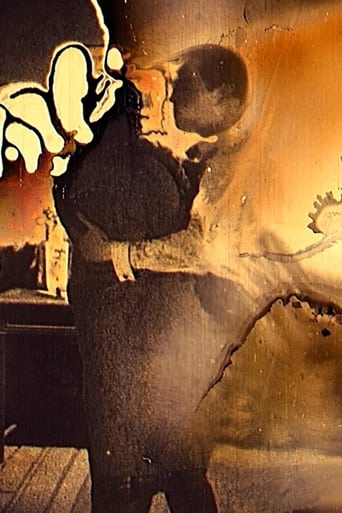
let me come in
2021 · ★ 6.4
Bill Morrison’s experimental short features decayed film reels from the lost, German silent film Pawns of Passion (1928).
More info →
welcome_home.exe
2021 · ★ 10
As technology accelerates, our species' collective imagination of the future grows ever more kaleidoscopic. We are all haunted by temporal distortion, perhaps no more than when we attempt to remember what the future looked like to our younger selves. As the mist of time devours our memories, the future recedes; each of us burdened by the gaping mouth of entropy. Yet, emerging technology provides a glimmer of hope; transhumanism promises a future free from mortality, disease and pain. Does our salvation lie in digital simulacra? We're here to sell you the answer to that question, for the low, low price of four hundred and seventy seconds.
More info →
Out of the Law
2017 · ★ 5.5
Beyond all human restraint lies one's lugubrious layers of paint.
More info →Martha
1916
Two noble women, bored of their lives, disguise themselves as country wenches and go to the market at Richmond Fair, where two young farmers fall in love with them.
More info →The Return of Ulysses to His Homeland
1973 · ★ 7.5
Live recording of a stage performance at the Glyndebourne Theatre, 24 August 1973, directed by Sir Peter Hall.
More info →Rusalka v parku
2021
A concert performance of the most famous parts of Dvořák's opera Rusalka in the park of Liteň Castle, directed by the Caban brothers with multimedia elements and original choreography... The year 2021 marks an important milestone in the history of Dvořák's opera Rusalka, which premiered in 1901, 120 years ago. At the same time, the non-profit organization Liteň Castle and the Jarmila Novotná Festival are celebrating ten years of activity. Its mission is to popularize the name of the legendary diva, actress, patriot, and important personality Jarmila Novotná and to care for the cultural monuments on the grounds of Liteň Castle—and on the occasion of both anniversaries, it did so with an extraordinary performance of the opera Rusalka in the picturesque surroundings and magical summer atmosphere of Liteň Castle.
More info →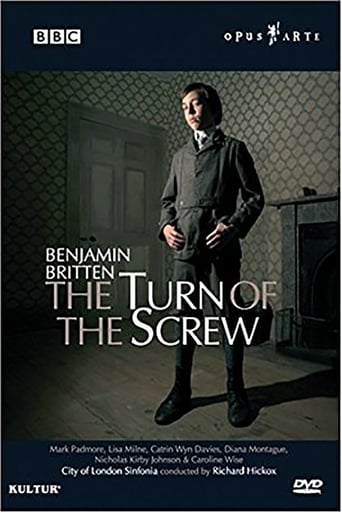
The Turn of the Screw
2004 · ★ 6.7
The operatic version of the famous story about a governess who fears her two charges are possessed.
More info →
Bluebeard's Castle
1981
The great Georg Solti conducts a spectacular studio production of this masterpiece of 20th century opera. Two internationally celebrated Hungarian opera stars perform Bartók's darkly psychological parable with searing dramatic intensity.
More info →
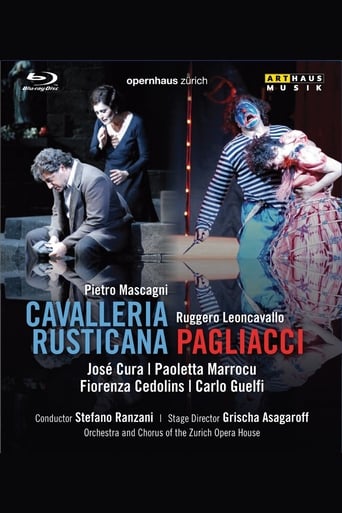
Mascagni: Cavalleria Rusticana
2010
Pietro Mascagni's opera recorded in 2009. Conductor Stefano Ranzani leads the orchestra and chorus of the Zurich Opera House, with performances by Argentinian tenor Jose Cura and soprano Pauletta Marrocu.
More info →