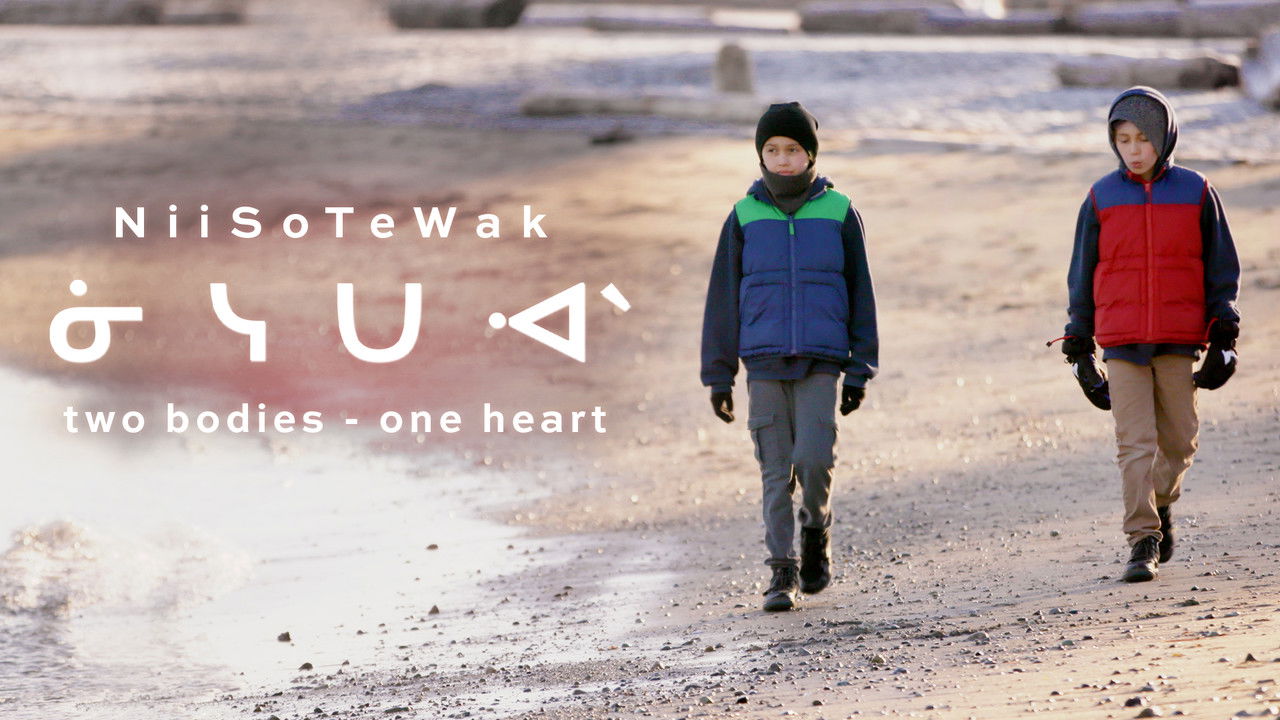
NiiSoTeWak: Two Bodies, One Heart
2017 · 16m · Documentary
NiiSoTeWak means “walking the path together.” Tapwewin and Pawaken are 10-year-old brothers trying to make sense of the world, their family and each other. They’re already grappling with some heady questions about identity. What does it mean to be a twin? What does it mean to be Cree? How do you define yourself when you’re forever linked to someone else? The twins discuss these questions with their two elder brothers — 22-year-old actor Asivak and 20-year-old basketball player Mahiigan — and their parents, Jules and Jake.
More Like This
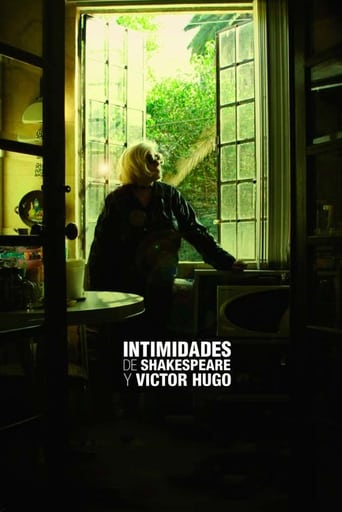
Shakespeare and Victor Hugo's Intimacies
2009 · ★ 8.8
Documentary about a lodging house, owned by Rosa Carbajal, at the corner of Shakespare and Víctor Hugo streets.
More info →
Nan Goldin: I Remember Your Face
2024
Documentary portrait of the New York photographer Nan Goldin.
More info →

Ocana, der Engel der in der Qual singt
1979 · ★ 9
Legendary drag performer Ocaña in performance with a cardboard Marilyn on the west side of the Berlin Wall.
More info →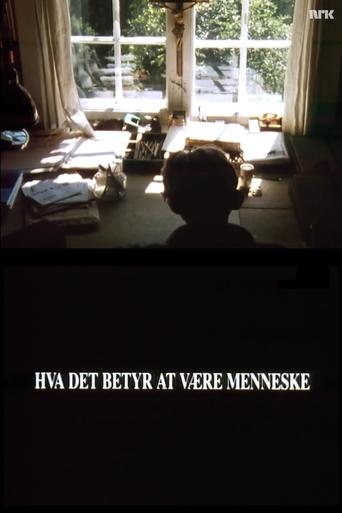
What Does It Mean to Be Human?
1990
A film that conveys some of Peter Wessel Zapffe’s philosophical ideas.
More info →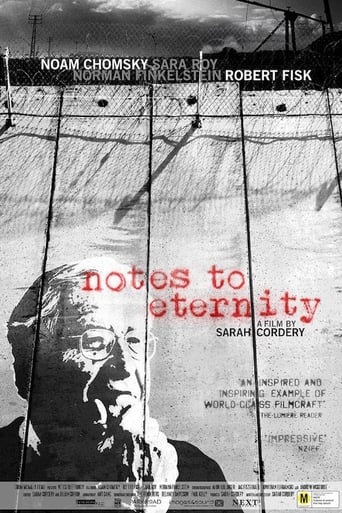
notes to eternity
2016
Renowned critics of Israeli policies – Noam Chomsky, Norman Finkelstein, Sara Roy and Robert Fisk – provide personal substance and historical perspective to their arguments in this impressive film by New Zealander Sarah Cordery.
More info →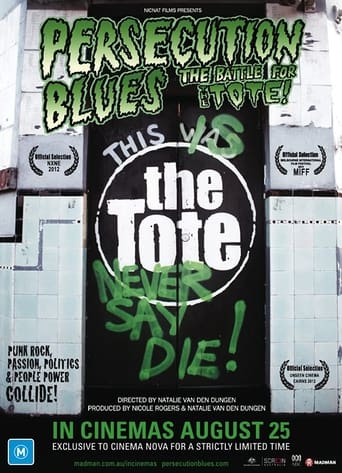
Persecution Blues: the Battle for the Tote!
2011 · ★ 6.3
In 2010, the iconic Tote Hotel – last bastion of Melbourne’s vibrant music counterculture – was forced to close by unfair laws. Filmed over 7 years, “Persecution Blues” depicts the struggle of more than 20,000 fans – and the bands who inspire them – to preserve their history and protect their future, and puts the audience on the front line of an epic-scale culture war.
More info →
Canadian Pacific I
1974 · ★ 4.5
Canadian Pacific I is made up of a series of slowly dissolved shots done from the same framing over several months. The camera frames a window with a railway yard in the foreground, a bay in the space behind it, and misty mountains in the extreme distance. Trains occasionally pass by in the foreground. Huge ships move across the bay. Blue mists hover over the mountain heads.
More info →
Canadian Pacific II
1975 · ★ 5
Canadian Pacific II is designed as a companion piece to Canadian Pacific I. Shot from a window two storeys higher and in the building adjacent to the artists’s studio of the previous year, one enters into a dream state… an involvement with a vocabulary of seeing and feeling by subtle transitions of the passage of time
More info →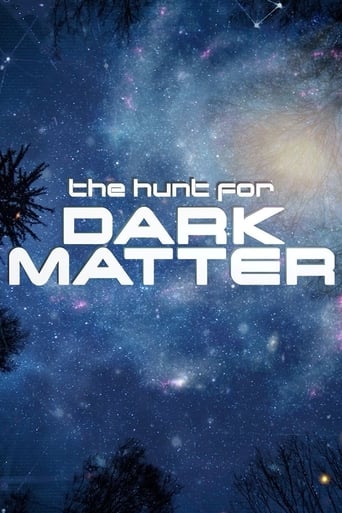
The Hunt for Dark Matter
2017 · ★ 6.2
CERN and the University of California-Santa Barbara are collaborating in the search for the elusive substance that physicists and astronomers believe holds the universe together -- dark matter. Where is this search now in the realm of particle physics and what comes next?
More info →
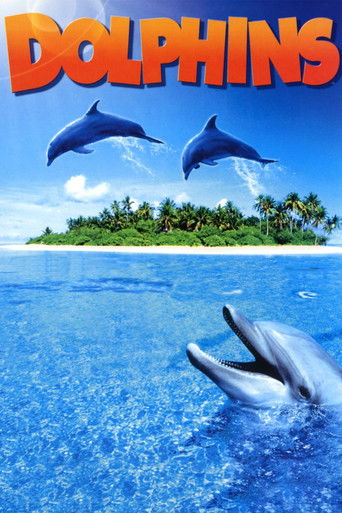
Dolphins
2000 · ★ 6.1
From the banks of the Bahamas to the seas of Argentina, we go underwater to meet dolphins. Two scientists who study dolphin communication and behaviour lead us on encounters in the wild. Featuring the music of Sting. Nominated for an Academy Award®, Best Documentary, Short Subject, 2000.
More info →